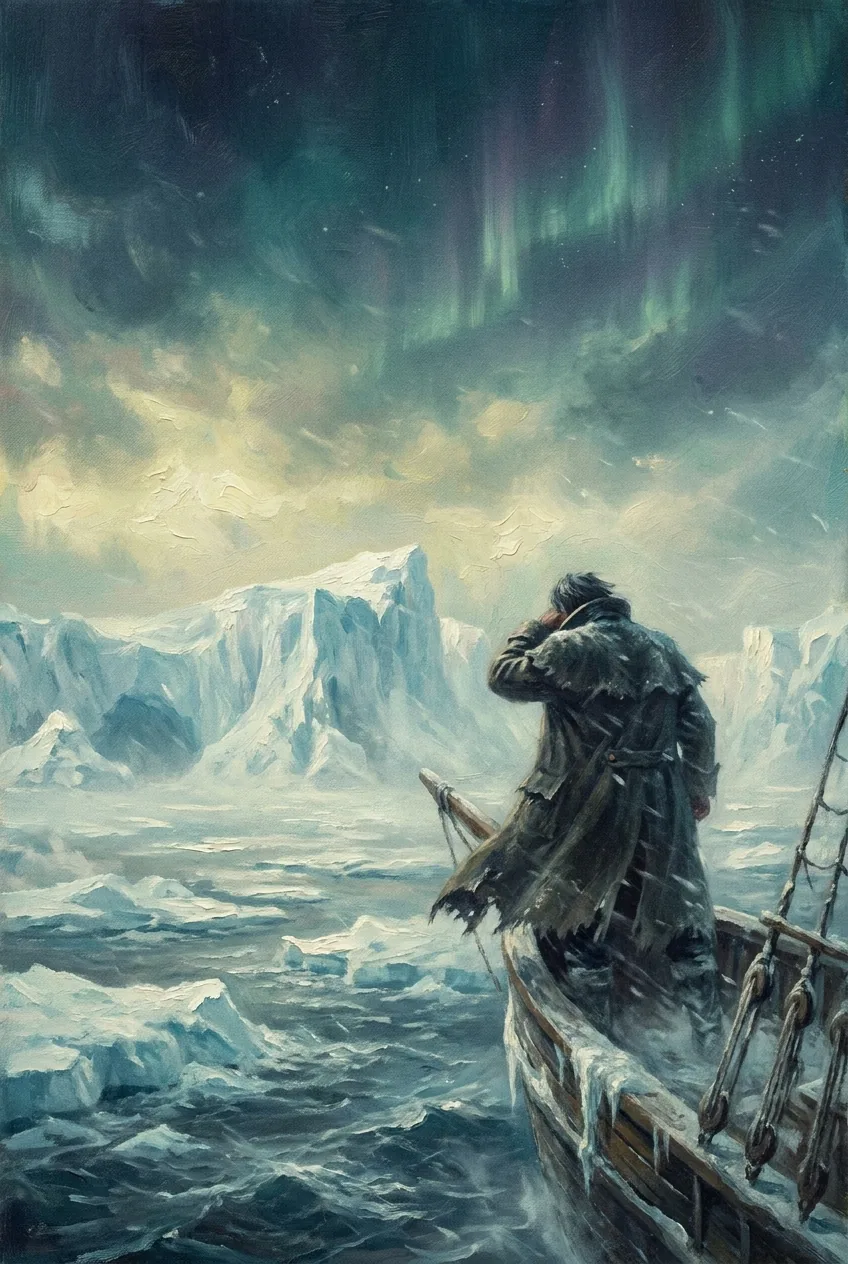
Illustrated Classics
Frankenstein; or, The Modern Prometheus cover

Frankenstein; or, The Modern Prometheus

Mary Shelley

Cinematic Edition · 25 Chapters · Anime edition →

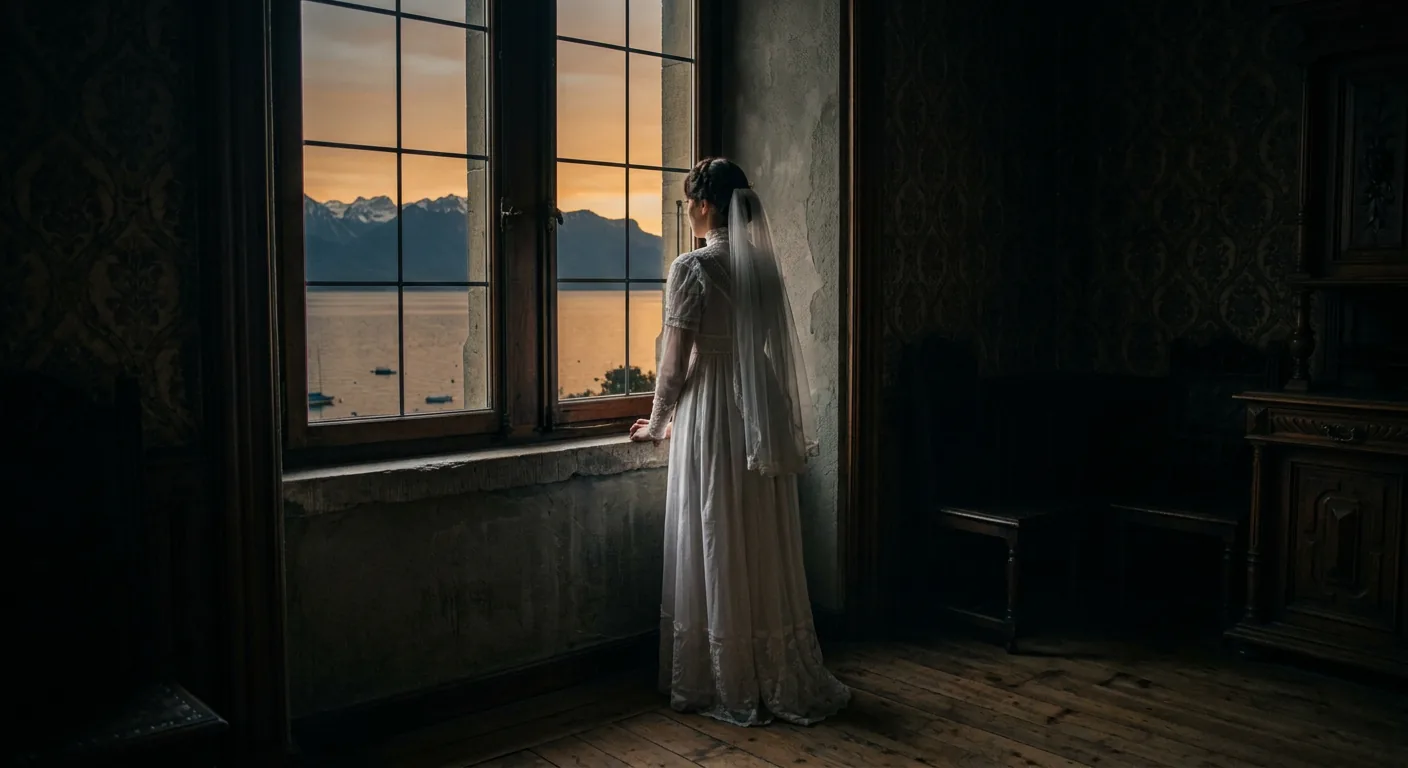
Dreams of Eternal Light and Glory illustration
Chapter 1

Dreams of Eternal Light and Glory

From the frost-touched streets of St. Petersburgh to the ice-bound waters of the Arctic, Robert Walton pours forth his soul in letters to his beloved sister Margaret, chronicling the commencement of an enterprise that has consumed his imagination since boyhood. With a heart swelling with Romantic fervour, he writes of the northern breeze that braces his nerves and fills him with visions of that region of perpetual light—the pole, which he refuses to conceive as a seat of desolation, but rather as a land surpassing in wonders every territory yet known to man. His dreams are magnificent: to discover the secret power that attracts the needle, to tread upon earth never before imprinted by human foot, and to confer upon all mankind the inestimable benefit of a northern passage.

Yet even as Walton confesses his ardent hopes, the shadow of isolation falls across his pages. Having prepared himself through years of privation among whale-fishers, having hardened his body to cold and want, he finds himself possessed of resolution but wanting in companionship. In Archangel, where he assembles his crew, he laments most bitterly the absence of a friend—one whose cultivated mind and sympathetic nature might approve or amend his plans, might temper his impatience and regulate the romantic excesses of his self-educated soul. He speaks with admiration of his lieutenant's courage and his master's noble disposition, recounting the latter's tale of selfless love with evident feeling, yet these worthy men cannot fill the void that aches within him.

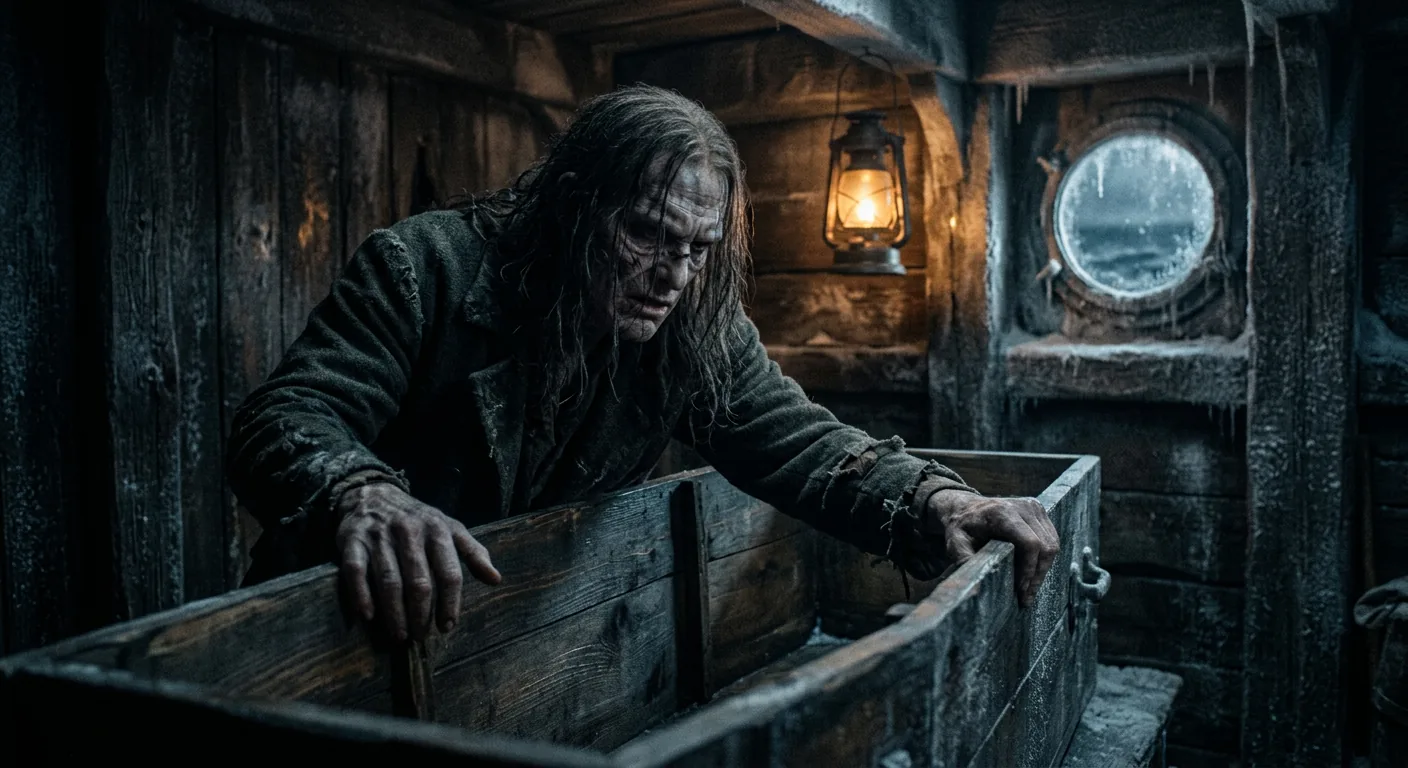
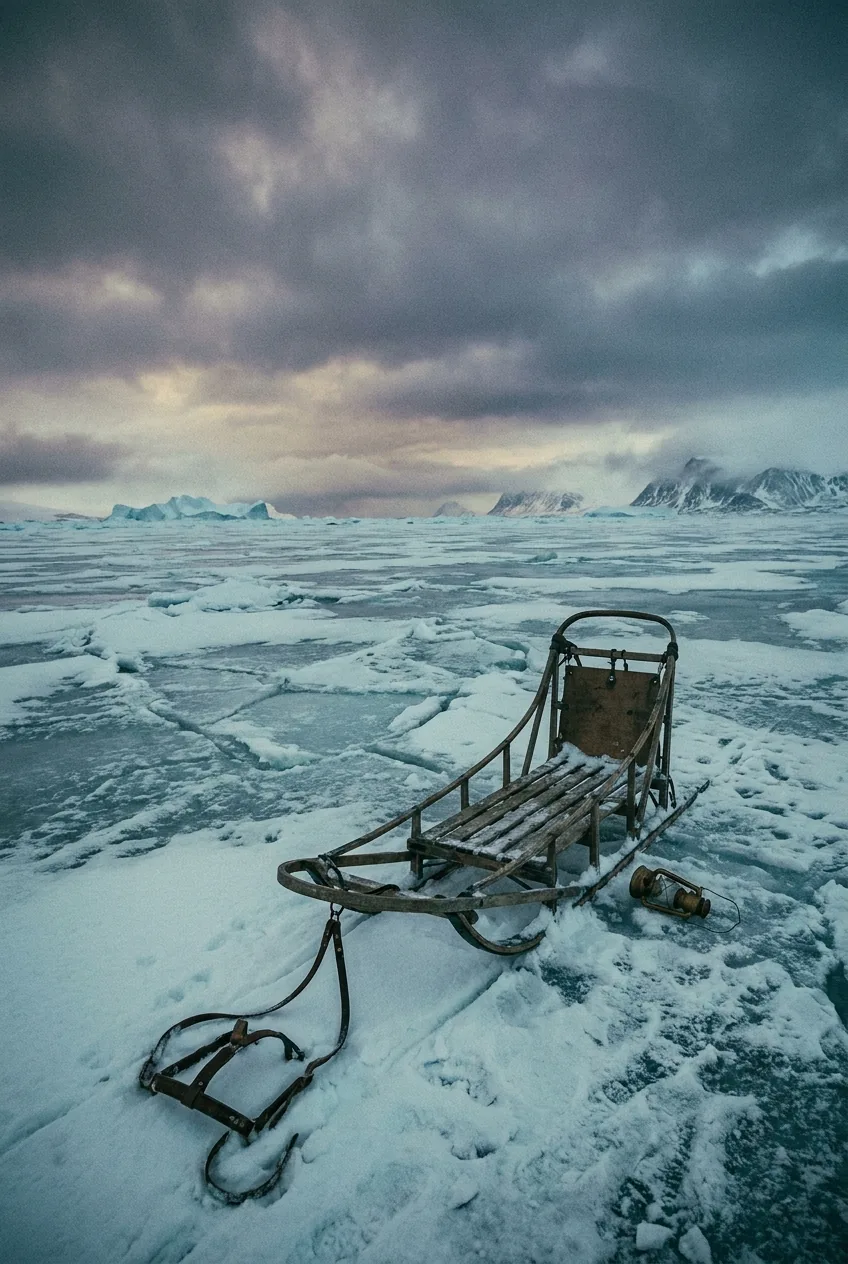
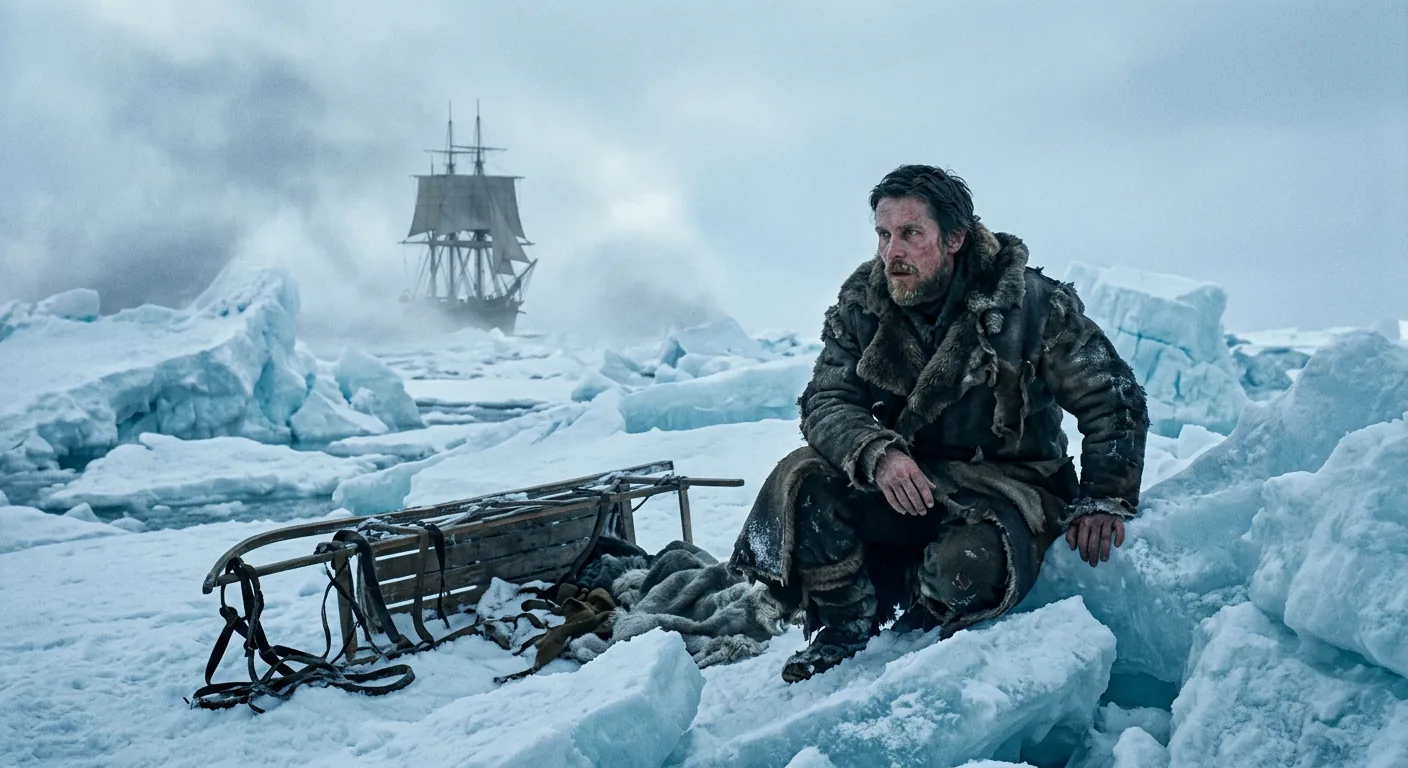
By July, Walton's vessel has penetrated far into northern latitudes, where floating sheets of ice pass like spectral warnings of dangers ahead. Then, upon the fifth of August, so strange an accident befalls them that Walton cannot forbear recording it: through the clearing mist, the crew beholds a gigantic figure upon a dog-drawn sledge, racing northward across the ice—an apparition that excites their unqualified wonder. The following morning brings an even more extraordinary discovery: another sledge, drifted towards them upon a fragment of ice, bearing within it a European stranger, wretched beyond description, his limbs frozen and his frame dreadfully emaciated. This man, before consenting to board the vessel, makes one peculiar inquiry—he must know whither they are bound.

As the stranger slowly recovers under Walton's tender ministrations, a strange intimacy blossoms between them. The man's eyes betray wildness and even madness, yet moments of kindness illuminate his countenance with a beam of benevolence that Walton has never witnessed equalled. He is melancholy, despairing, pursuing across the ice one whom he calls a dæmon. When Walton speaks of his own ambitious designs—his willingness to sacrifice fortune, existence, and every hope to his enterprise—the stranger's face darkens with terrible recognition, and through his tears he cries out: "Unhappy man! Do you share my madness? Have you drunk also of the intoxicating draught?"

In this broken wanderer, Walton perceives at last the friend he has so long desired—a man of cultivated mind, eloquent speech, and profound sensibility, who responds to the beauties of nature even in his wretchedness. The stranger, moved by Walton's sympathy and alarmed by the parallel course of their ambitions, determines to relate his history as a warning. He promises a tale of marvellous and unparalleled misfortunes, hoping that from his disasters Walton may deduce an apt moral before it is too late.

Thus, with the stranger's full-toned voice swelling in his ears and those melancholy lustrous eyes dwelling upon him, Walton prepares to transcribe a history that he knows must be strange and harrowing—the story of the storm that wrecked so gallant a vessel upon its fatal course.
A Family Forged in Grief and Devotion illustration
Chapter 2

A Family Forged in Grief and Devotion

I am by birth a Genevese, and from the outset I must impress upon the reader the nature of my lineage, for it illuminates all that followed in my singular existence. My father, a man of unimpeachable integrity who had devoted his younger years to the public affairs of our republic, came late to matrimony—and the circumstances of his union with my mother reveal the very essence of his character, that rare mingling of steadfast loyalty and tender benevolence which shaped the sanctuary of my earliest years.

There lived a merchant named Beaufort, my father's most intimate friend, who through the cruel vicissitudes of fortune fell from prosperity into utter destitution. Pride—that false and unbending pride which so often proves the architect of deeper misery—compelled Beaufort to conceal himself in the mean streets of Lucerne, where he languished in obscurity with his daughter Caroline. My father, grieved beyond measure by his friend's retreat, searched for ten months until he discovered the wretched abode, only to find Beaufort upon his sickbed, consumed by that peculiar grief which feeds upon idleness and reflection. Caroline, possessed of an uncommon fortitude, had sustained them both through plain work and plaited straw, earning a pittance scarcely sufficient for survival. Yet despite her courage, the end proved inevitable; in the tenth month of their exile, Beaufort expired in her arms, leaving her orphan and beggar both.

My father entered that chamber of death like a protecting spirit, and Caroline committed herself to his care with the trust of one who has known the depths of despair. Two years hence, she became his wife—and though considerable years separated them, this disparity served only to deepen their devoted affection. There was reverence in my father's attachment, a desire to recompense her for sorrows endured, and he sheltered her as a fair exotic is sheltered by the gardener from every rougher wind. They sought the pleasant climate of Italy for her restoration, and there at Naples I was born, their eldest child, accompanying them through those lands of wonders during my infant years.

I was their plaything and their idol—and something better still—their child, the innocent creature bestowed by Heaven whose future happiness lay entirely within their tender hands. With what deep consciousness they fulfilled their sacred duties! Every hour brought lessons of patience, charity, and self-control, yet so gently administered that all seemed but one continuous train of enjoyment.

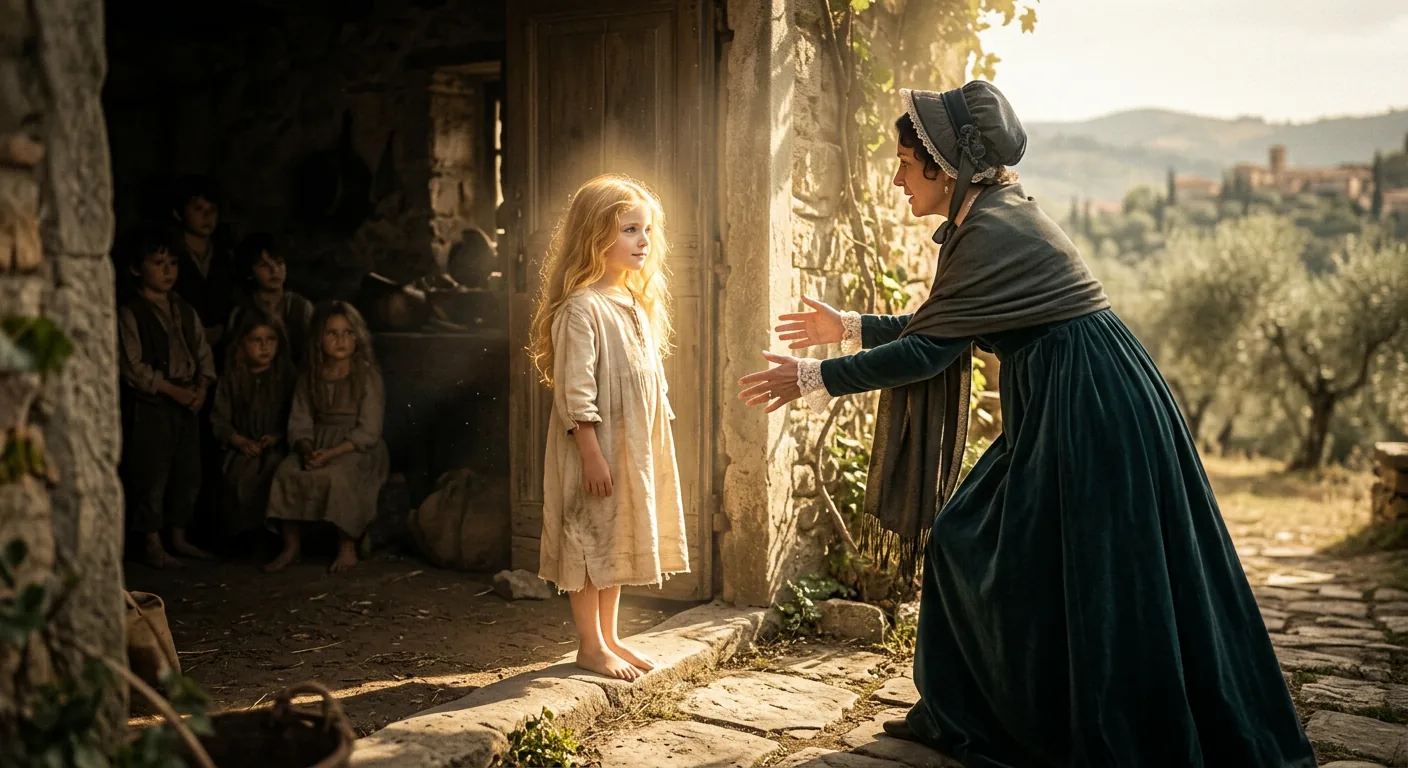
When I had reached five years of age, during an excursion to the shores of Lake Como, my mother's benevolent disposition—born of remembrance of her own suffering and relief—led her into the cottage of the poor. There, among five hungry babes of dark-eyed peasant stock, appeared a child of different origin altogether: thin and fair, with hair of brightest living gold and blue eyes cloudless as heaven itself. She was Elizabeth Lavenza, daughter of an Italian nobleman who had sacrificed all for his country's liberty and now languished—or perished—in Austrian dungeons. The peasant woman related how this orphan had been placed with them to nurse, and how she bloomed in their rude abode fairer than a garden rose among dark-leaved brambles.

My mother, unable to resist such celestial beauty and circumstance so eerily mirroring her own history, prevailed upon these rustic guardians to yield their charge. Thus Elizabeth became the inmate of my parents' house—my more than sister—the beautiful companion of all my occupations and pleasures. On the evening before her arrival, my mother had said playfully that she had a pretty present for her Victor, and when Elizabeth was presented to me, I interpreted those words with childish literalness: she was mine to protect, love, and cherish, mine only until death itself should part us.

Yet how little did I then comprehend the weight of such possessive devotion, or foresee the terrible symmetry between the orphans my family gathered and the destruction I would one day bring upon all I cherished most.

Seeds of Obsession and Harmony illustration
Chapter 3

Seeds of Obsession and Harmony

How sweet it is to linger upon those golden hours of childhood, before the shadow of catastrophe had fallen across my soul—and yet how necessary, for in tracing the innocent origins of my obsessions, I must illuminate the very wellsprings from which my ruin would eventually flow.

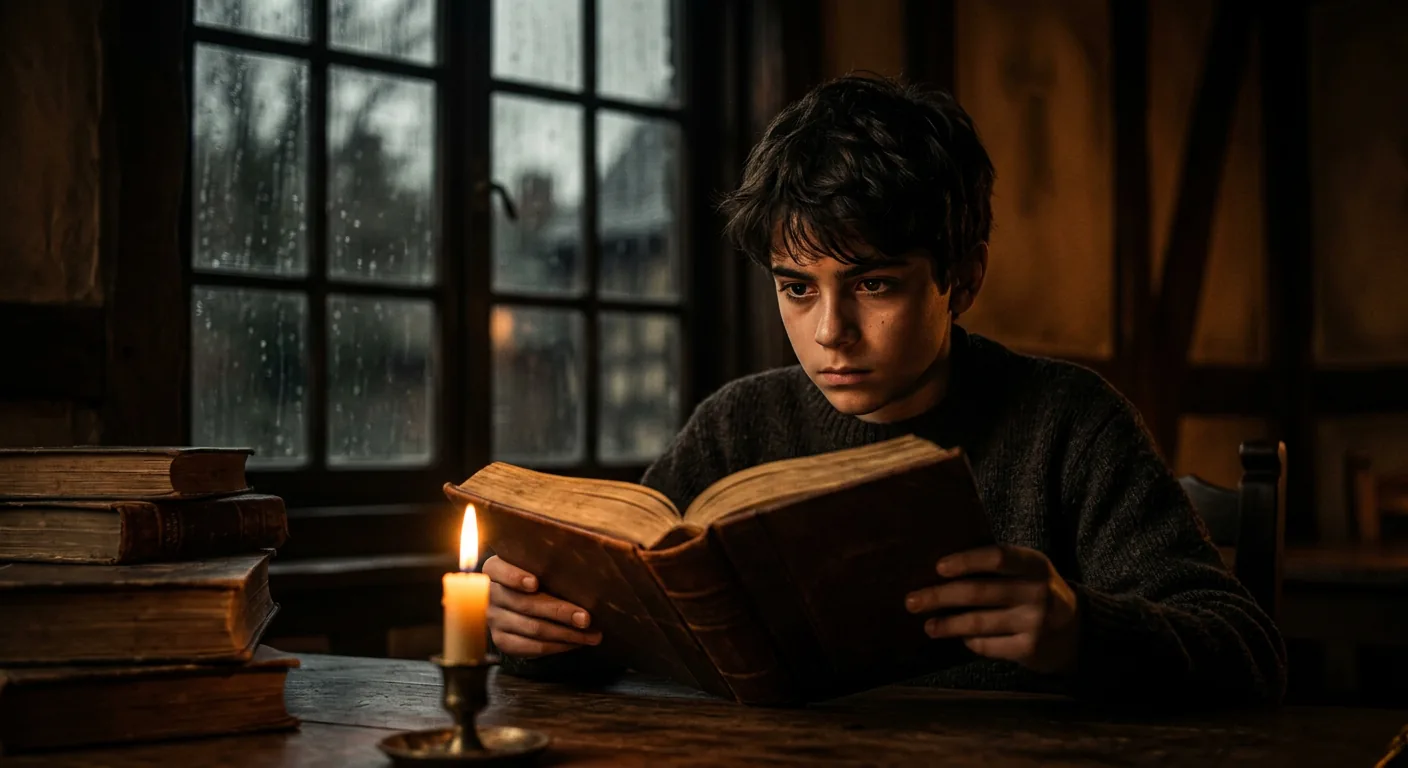
Elizabeth and I were raised as one, our dispositions contrasting yet harmonious: she, serene and contemplative, drew sustenance from the sublime poetry of our Alpine home, finding in the tempests and silences of the mountains ample nourishment for her spirit; whilst I, ardent and restless, burned with an insatiable thirst to penetrate nature's secrets, to divine the hidden causes behind the magnificent appearances she so peacefully admired. The world presented itself to me not as a spectacle to be enjoyed, but as a mystery demanding resolution—and from my earliest sensations, I can recall nothing so keenly as that rapturous gladness which attended each new discovery.

Our family settled at length in Geneva and at our beloved *campagne* on Belrive, where my parents lived in gentle seclusion. It was my nature to shun crowds and attach myself fervently to but a few chosen companions, and chief among these was Henry Clerval—a boy of singular fancy who devoured tales of chivalry, composed heroic songs, and dreamed of becoming one of those gallant benefactors whose names are immortalised in story. Where I sought the physical secrets of existence, Clerval occupied himself with the moral relations of men; and Elizabeth, that saintly soul whose presence shone like a shrine-dedicated lamp in our peaceful home, softened us both with her celestial gentleness, tempering my sullen intensity and refining Clerval's adventurous spirit into true benevolence.

No child could have known a happier lot than mine—yet even then, the seeds of my destruction were quietly taking root. At thirteen, confined by inclement weather to an inn near Thonon, I chanced upon a volume of Cornelius Agrippa, and what had begun as idle curiosity soon blazed into enthusiasm. When I showed my discovery to my father, he dismissed it as "sad trash"—but had he only explained *why*, had he guided my imagination toward the genuine achievements of modern science, the fatal impulse might never have been received. Instead, his cursory dismissal only inflamed my interest, and I devoured the works of Agrippa, Paracelsus, and Albertus Magnus with unrestrained avidity, becoming their devoted disciple in the search for the philosopher's stone and, above all, the elixir of life. What glory, I dreamed, if I could banish disease and render humanity invulnerable!

Yet destiny intervened, as it so often does, through violent spectacle. At fifteen, I witnessed a thunderstorm of terrible magnificence, and beheld lightning reduce a noble oak to nothing but a blasted stump—utterly destroyed in an instant. A natural philosopher present among us explained the principles of electricity and galvanism, and his modern theories cast my ancient masters into contemptible shadow. Disillusioned, I abandoned natural philosophy entirely, turning instead to mathematics as a science built upon foundations that could not deceive.

For a time, tranquillity reigned. It seemed almost as if some guardian angel had interceded to avert the gathering storm—a final effort of preservation to save me from the doom already written in the stars.

But that victory, I must confess, would prove dreadfully short-lived, for destiny's immutable laws had long since decreed my destruction, and the path to my ruin was merely delayed, not abandoned.

A Mother's Sacrifice and Farewell illustration
Chapter 4

A Mother's Sacrifice and Farewell

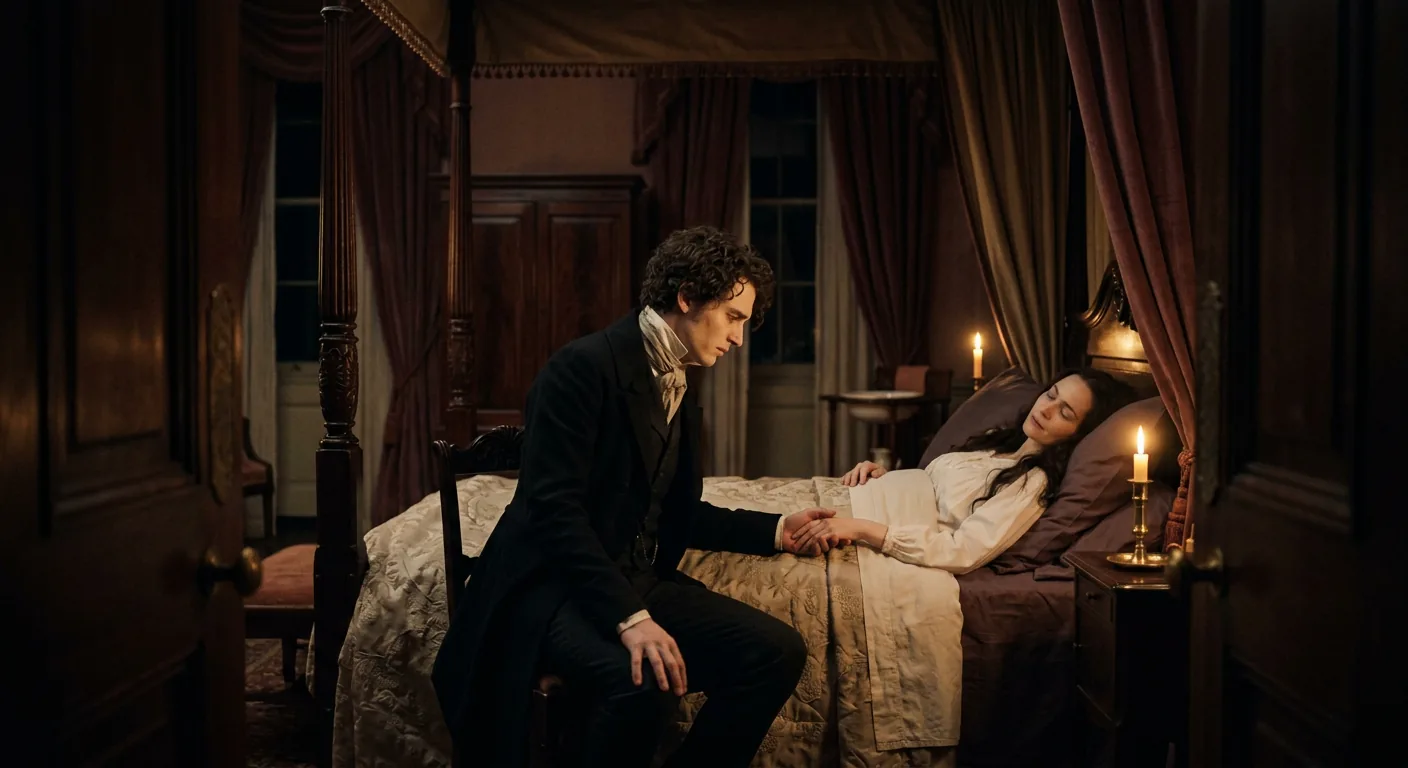
The shadow of death first falls across young Frankenstein's path on the eve of his departure for the University of Ingolstadt, that fateful institution where his destiny would ultimately be forged in the fires of forbidden knowledge. At seventeen, his father had determined that he should quit the schools of Geneva for broader horizons, yet before the appointed day could arrive, Elizabeth—dear, gentle Elizabeth—was seized by the scarlet fever, her life hanging in the most precarious balance. His mother, that best of women whose benevolence knew no bounds, could not be restrained from attending the sickbed of her beloved charge, though all entreaties urged her to preserve herself from contagion. Her watchful devotions triumphed over the malignity of the distemper, and Elizabeth was saved—yet the consequences of this maternal sacrifice proved fatal to its author. Within three days, his mother lay dying, her countenance serene even as she joined the hands of Victor and Elizabeth, bestowing upon them her final blessing and her fervent hope for their future union, before departing from this world with the calm resignation of one who has loved well and been beloved.

The void that follows such an irreparable loss—that rending of the dearest ties—need not be described to any soul who has known grief, for who among the living has not felt the rude hand of death snatch away some cherished connection? The house became a temple of mourning, and Victor obtained from his father a respite of some weeks, finding it sacrilege to rush into the thick of life while sorrow yet reigned. Elizabeth, ever the angel of consolation, veiled her own grief and devoted herself to comforting those who remained, her enchanting smiles bestowed like sunshine upon a darkened household.

When at last the day of departure arrived, young Clerval—that faithful companion whose father, a narrow-minded trader, had forbidden him the liberal education his soul craved—spent the final evening in melancholy communion with his friend. The farewell was prolonged until morning's dawn, when Victor threw himself into the chaise and indulged in the most sorrowful reflections upon his isolation, though his spirits gradually rose with anticipation of the knowledge he would acquire.

At Ingolstadt, chance—or rather that malevolent Angel of Destruction which would assert omnipotent sway over his existence—led him first to the uncouth M. Krempe, who greeted his youthful studies of Agrippa and Paracelsus with undisguised contempt, dismissing those ancient alchemists as musty nonsense. Yet it was M. Waldman, that benevolent professor whose voice was the sweetest Victor had ever heard, who would kindle the fatal spark. His panegyric upon modern chemistry—how its practitioners had penetrated nature's recesses, commanded the thunders of heaven, and acquired almost unlimited powers—struck Victor's soul like the touch of an awakening hand. Chord after chord was sounded within him until his mind blazed with one consuming purpose: to pioneer a new way, to explore unknown powers, and to unfold the deepest mysteries of creation itself.

Thus ended a day memorable above all others, for it decided the future destiny that would lead him down paths from which there could be no return.

The Secret of Life and Death illustration
Chapter 5

The Secret of Life and Death

From that fateful day forward, natural philosophy—and chemistry most particularly—consumed the whole of my existence, becoming at once my sole occupation and my singular obsession. I devoted myself with ardour to the works of modern inquirers, attending lectures with unwavering diligence and cultivating the acquaintance of every man of science the university might offer. Even M. Krempe, whose repulsive physiognomy and brusque manners had initially repelled me, revealed himself possessed of sound sense and genuine knowledge; and in M. Waldman I discovered not merely an instructor but a true friend, whose gentle guidance banished all pedantry and illuminated even the most abstruse inquiries with clarity and warmth. My application, at first uncertain, soon grew so fervent that the stars themselves would fade into morning light while I yet laboured in my chamber.

Two years passed thus, during which I paid no visit to Geneva, for I was engaged heart and soul in pursuits that promised discoveries beyond what any had achieved before me. My progress astonished both students and masters alike, and I made certain improvements to chemical instruments that procured me considerable esteem. Yet when I had mastered all that the professors of Ingolstadt could teach, and thought to return at last to my native town and those I loved, an incident occurred that protracted my stay—an incident that would seal my fate irrevocably.

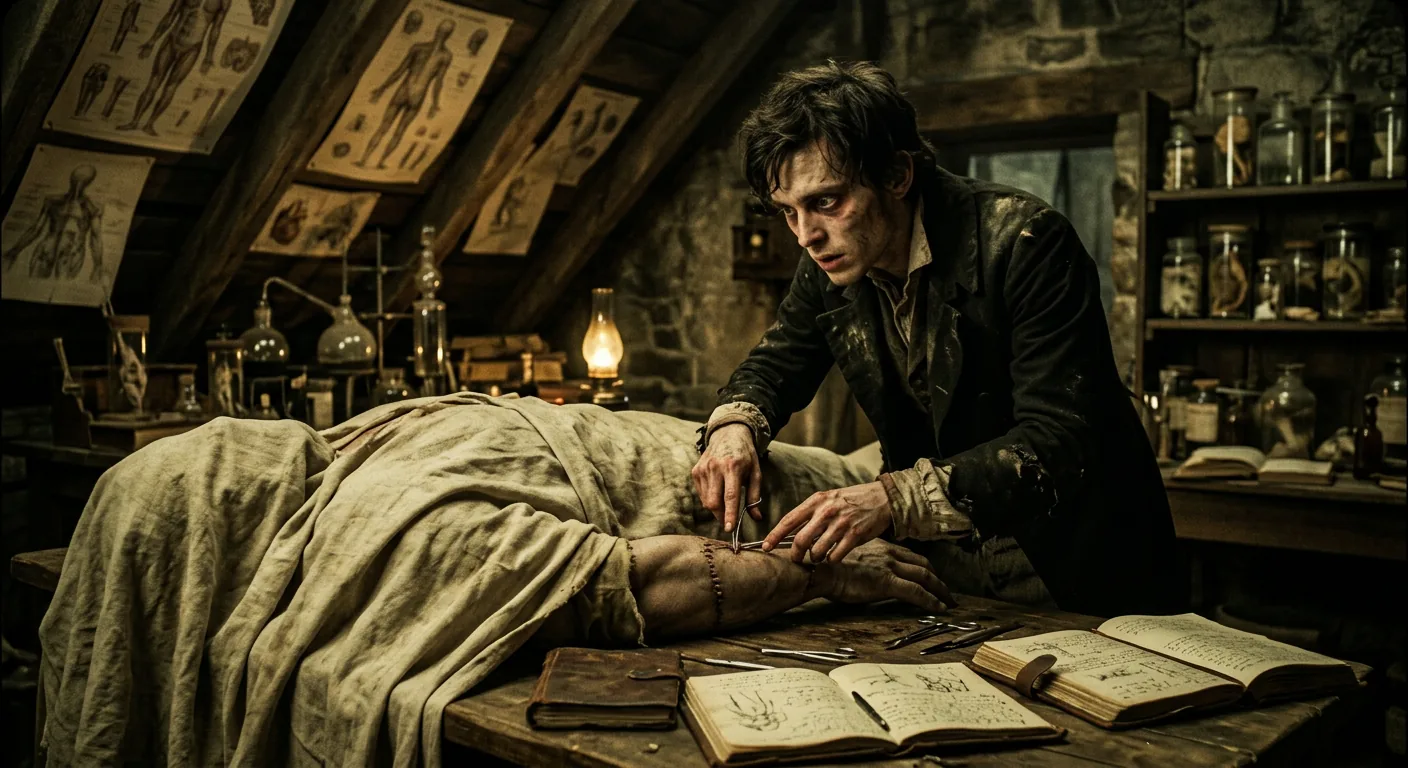
The structure of the human frame had long fascinated me, and I found myself consumed by that boldest of questions: whence proceeds the principle of life itself? To examine life's causes, I reasoned, one must first have recourse to death. Thus I became intimate with anatomy, spending days and nights in vaults and charnel-houses, observing the corruption of what had once been beautiful and strong. My father's rational education had spared me any supernatural terror; to my eyes, a churchyard was merely the receptacle of bodies deprived of life. Yet as I studied the minutiae of decay, tracing the transformation from life to death, a sudden light broke upon me—brilliant, wondrous, and terrifyingly simple. After incredible labour and fatigue, I discovered the cause of generation and life; nay, more—I became capable of bestowing animation upon lifeless matter.

I hesitated long upon how to employ so astonishing a power. The preparation of a frame to receive life, with all its intricacies of fibre and vein, presented inconceivable difficulties; yet my imagination, exalted by success, would not permit me to create anything less complex than man himself. Resolving to fashion a being of gigantic stature—some eight feet in height—to circumvent the hindrance of minute parts, I collected my materials and began.

What followed was a hurricane of feeling that bore me onwards through months of secret toil. Life and death seemed but ideal bounds I might shatter, pouring light into our dark world. I envisioned a new species blessing me as its creator, grateful children owing their existence to my hand. Yet as summer ripened into harvest and autumn's leaves withered unnoticed, my cheek grew pale and my frame emaciated. I neglected the sublime beauty of nature, forgot the friends awaiting word from me, and laboured on in a solitary cell at the top of the house—my workshop of filthy creation—disturbing with profane fingers the tremendous secrets of the grave. My human nature recoiled with loathing even as an irresistible compulsion drove me forward.

Now, looking back, I perceive what I could not then acknowledge: that any pursuit which weakens our affections and destroys our taste for simple pleasures is unlawful, unfit for the human mind. But I was deaf to such wisdom then, sustained only by feverish purpose as my labours drew toward their terrible conclusion, my body wrecked, my nerves shattered, my soul already marked by the shadow of guilt—though the deed itself remained yet undone.

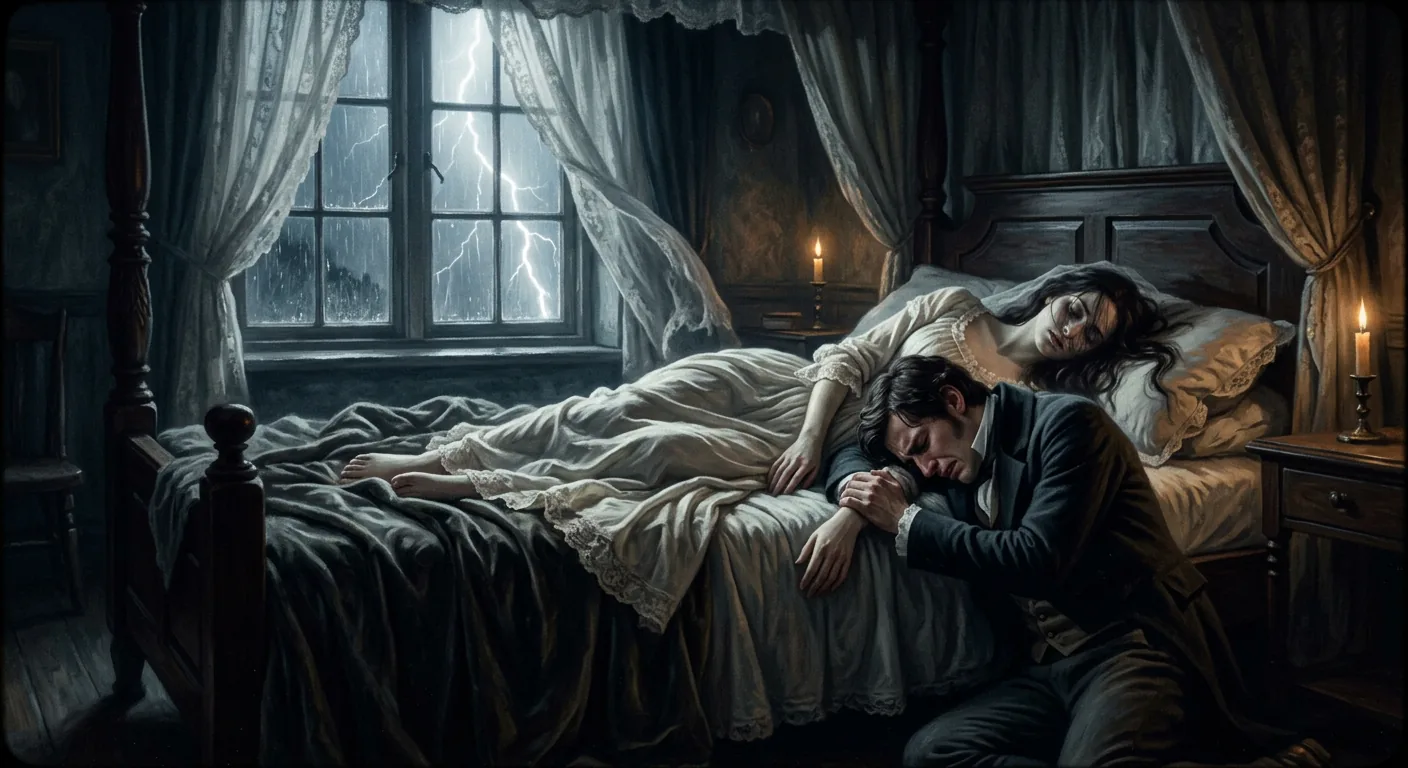
The Creature Wakes to Horror illustration
Chapter 6

The Creature Wakes to Horror

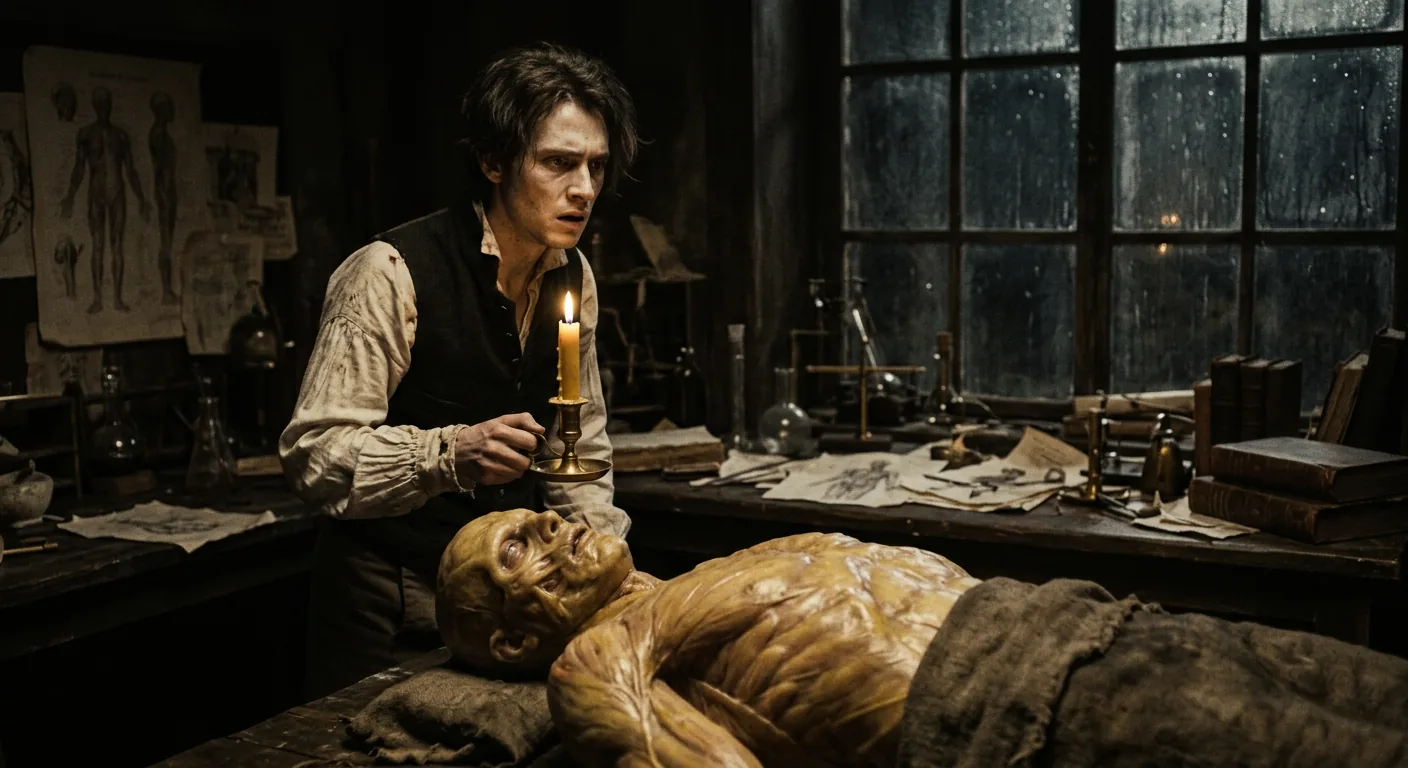
On a dreary November night, with rain pattering against the windows and a candle guttering in its final moments, Victor Frankenstein at last beheld the culmination of his obsessive labors—yet the triumph he had so ardently pursued transformed instantaneously into unutterable horror. The creature's dull yellow eye opened, its breath came harsh and labored, and convulsive motion shuddered through limbs that Victor had so painstakingly assembled. Though he had selected features meant to be beautiful, the animation of that form revealed only ghastliness: yellow skin stretched thin over visible muscles and arteries, watery eyes set in dun-white sockets, shriveled complexion paired with straight black lips. The beauty of the dream vanished utterly, and breathless disgust filled Victor's heart.

Unable to endure the sight of his creation, Victor fled to his bedchamber, where fitful sleep brought only nightmarish visions—Elizabeth transformed in his embrace from blooming health to the livid hue of death, her features shifting until he held his dead mother's corpse, grave-worms crawling in the folds of her shroud. He woke in cold terror to find the monster standing over his bed, reaching toward him with one outstretched hand, jaws moving in inarticulate sounds. Victor escaped into the courtyard, where he passed the remainder of that wretched night pacing in agitation, his pulse alternating between frantic racing and languorous weakness, the bitterness of disappointment mingling with his horror at what he had wrought.

Morning brought no relief—only grey, wet daylight illuminating the streets of Ingolstadt, through which Victor wandered aimlessly, dreading each turning that might present his creation to his view. Yet providence, or perhaps cruel irony, placed him before the inn just as the Swiss diligence arrived bearing Henry Clerval, his dearest friend from childhood. Henry's presence momentarily banished Victor's torment, summoning thoughts of home, of Elizabeth, of all that was warm and familiar. They walked together toward Victor's college, Clerval cheerfully recounting his triumph over his father's mercantile objections to scholarly pursuits.

But Victor's relief proved fragile and fleeting. Upon returning to his apartment—his hand trembling on the lock, his heart dreading what might await within—he discovered the creature had fled. His joy at this apparent deliverance manifested in wild, uncontrolled behavior: leaping over chairs, clapping his hands, laughing with a heartless abandon that frightened Clerval. The fit culminated in collapse, as Victor imagined the monster seizing him and fell senseless to the floor.

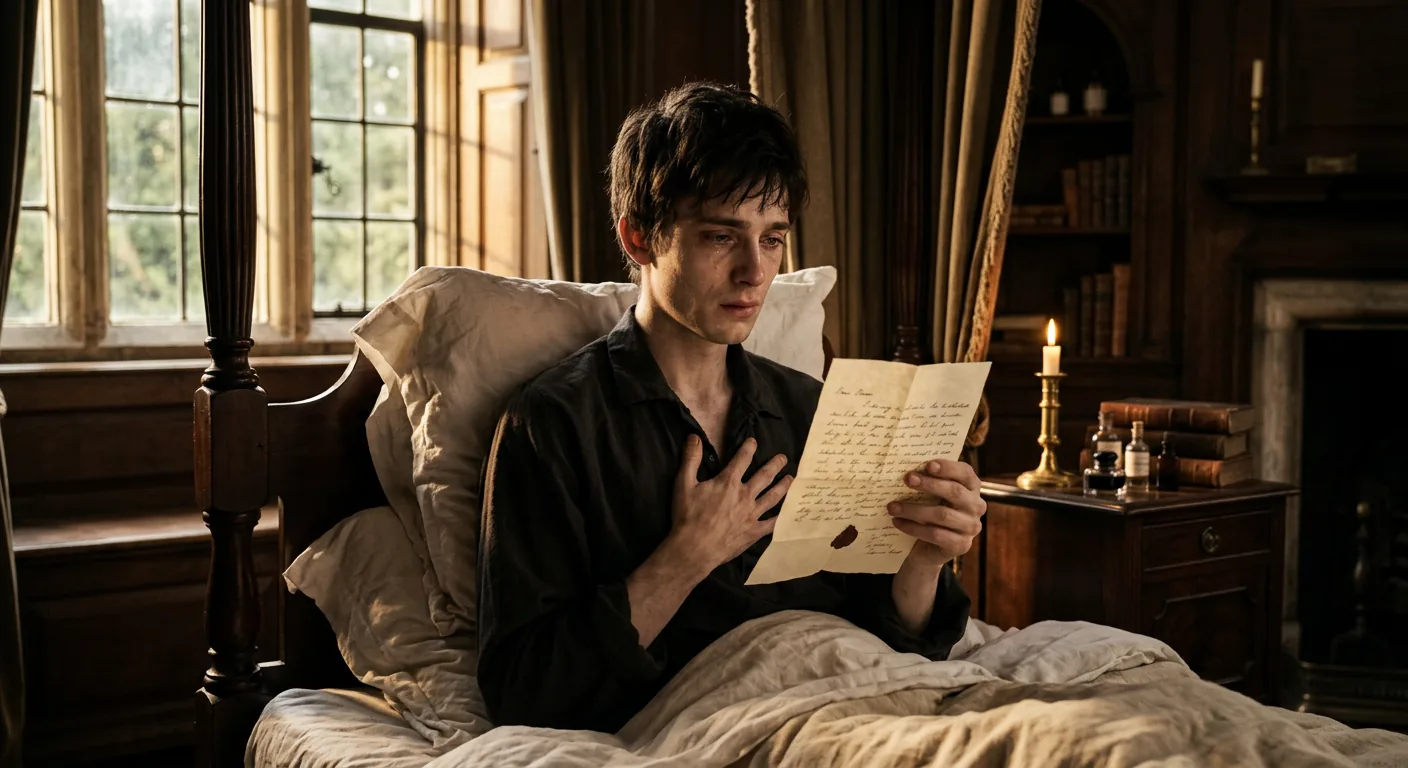
What followed was a nervous fever lasting several months, during which faithful Henry served as Victor's sole nurse, concealing the severity of his illness from his aged father and beloved Elizabeth to spare them grief. Victor raved incessantly of the monster, his words dismissed by Clerval as the wanderings of a disturbed mind, though their persistent recurrence suggested some terrible origin. Recovery came slowly, marked by spring's arrival—the young buds shooting forth from trees outside Victor's window mirroring the gradual revival of joy and affection in his own breast. Yet as convalescence restored Victor's spirits and Clerval at last mentioned correspondence awaiting him, a letter from Elizabeth lying unopened for days, one sensed that the shadow of that November creation had not truly departed—it had merely receded, biding its time beyond the threshold of Victor's fragile peace.

A Letter from Home and Justine's Story illustration
Chapter 7

A Letter from Home and Justine's Story

The hand that placed Elizabeth's letter into my own trembled not from fever's remnant, but from that peculiar anticipation which accompanies tidings from those we hold most dear. Her words—penned in that flowing script I knew so intimately—arrived as a breath of alpine air into the sickroom where I had languished these many months, and as I read, the walls of my Ingolstadt chamber seemed to dissolve, replaced by visions of Geneva's tranquil shores and the beloved faces that awaited me there.

Elizabeth wrote with that tender solicitude which had ever characterised her nature, her anxiety for my health threading through every line like a silver filament through dark cloth. She spoke of my father's vigorous constitution and his single wish—merely to behold me well again—and of young Ernest, now sixteen, restless and spirited, yearning for military glory in foreign lands while the family resisted parting with him until my return. The blue lake and snow-clad mountains, she assured me, remained unchanged, those immutable sentinels of our peaceful existence, and in her constancy I perceived the very essence of home itself.

Yet it was her account of Justine Moritz that stirred in me memories long dormant—Justine, that gentle creature who had entered our household as a child, rescued from a mother's inexplicable cruelty by my benevolent aunt. Elizabeth traced for me the girl's sorrowful history: how she had flourished under my aunt's tutelage, had mourned her passing with exquisite devotion, and had subsequently endured the deaths of her siblings and the bitter vacillations of her repentant mother, who accused her of causing those very losses she grieved. Now returned to our family following Madame Moritz's death, Justine stood as a living memorial to my departed aunt, her expression and manner echoing that beloved protectress in ways that moved Elizabeth deeply. And of little William she wrote with such vivid affection—his laughing blue eyes, his cherubic dimples, his innocent courtships—that I could almost feel his small hand clasping my own.

Upon reading these words, I resolved immediately to write, though the exertion taxed my weakened frame considerably. My convalescence proceeded steadily thereafter, and within a fortnight I emerged from my chamber to rejoin the world of the living. Yet what awaited me proved a species of torture I had not anticipated. Introducing Clerval to my professors, I found myself subjected to their praise of my scientific achievements—those very accomplishments which now filled me with unspeakable horror. M. Waldman's kindly commendations fell upon my ears like instruments of execution being methodically displayed; M. Krempe's blunt encomiums pierced me with their unwitting cruelty. I writhed beneath their words, yet dared not reveal the true source of my anguish, that secret which pressed eternally upon my conscience yet remained imprisoned within my breast.

Mercifully, Clerval perceived my distress without demanding explanation, and in his companionship I discovered unexpected solace. His pursuit of oriental languages—Persian, Arabic, Sanskrit—drew me into studies wholly removed from my former dark researches. The melancholy and joy of Eastern poetry elevated my spirits in ways the heroic verses of Greece and Rome could not achieve, and I found in these works a temporary refuge from reflection.

Though my return to Geneva was fixed for autumn, circumstance conspired to delay my journey until spring, when Henry proposed we undertake a walking tour through the countryside surrounding Ingolstadt. For a fortnight we wandered beneath May's gentle skies, breathing salubrious air, conversing freely, and I felt myself transformed—restored to that happy creature I had been before ambition had cramped and narrowed my soul. The flowers of spring bloomed in the hedges, summer's buds swelled with promise, and for those precious days, the burden of my secret seemed almost bearable.

We returned to college on a Sunday afternoon, the peasants dancing in the fields, every face we encountered radiant with contentment, and my own spirits soared with unbridled joy—yet how little I suspected what darkness awaited to shatter this fragile peace.

A Father's Letter of Death illustration
Chapter 8

A Father's Letter of Death

Upon Victor's return, a letter from his father awaited him—a letter that began with the tender hesitation of one who must deliver unbearable news, and culminated in words that struck like a thunderbolt across the page: William is dead, murdered. The sweet child whose innocent smiles had warmed the hearts of all who knew him had been found stretched upon the grass at Plainpalais, the terrible print of the murderer's fingers pressed upon his gentle throat. Elizabeth, in her anguish, accused herself as the cause, for she had permitted little William to wear a precious miniature of Victor's mother—a trinket now vanished, presumed to be the murderer's motive. Victor's father summoned him home not with thoughts of vengeance, but with pleas for peace, for healing, for the comfort that only family might provide in such dark hours.

The letter transformed Victor utterly; the joy that had first lit his countenance upon receiving correspondence from Geneva gave way to the most profound despair. Clerval, ever the faithful friend, could offer no consolation adequate to such irreparable loss, and could only accompany Victor as far as ordering the horses for his melancholy journey homeward. As Victor traveled through landscapes once familiar to his youth, he found himself suspended between longing and dread—the snowy mountains and placid lake of his beloved country restored him briefly, yet as night descended and he drew nearer to Geneva, an oppressive foreboding seized his spirit, as though he foresaw that he was destined to become the most wretched of human beings.

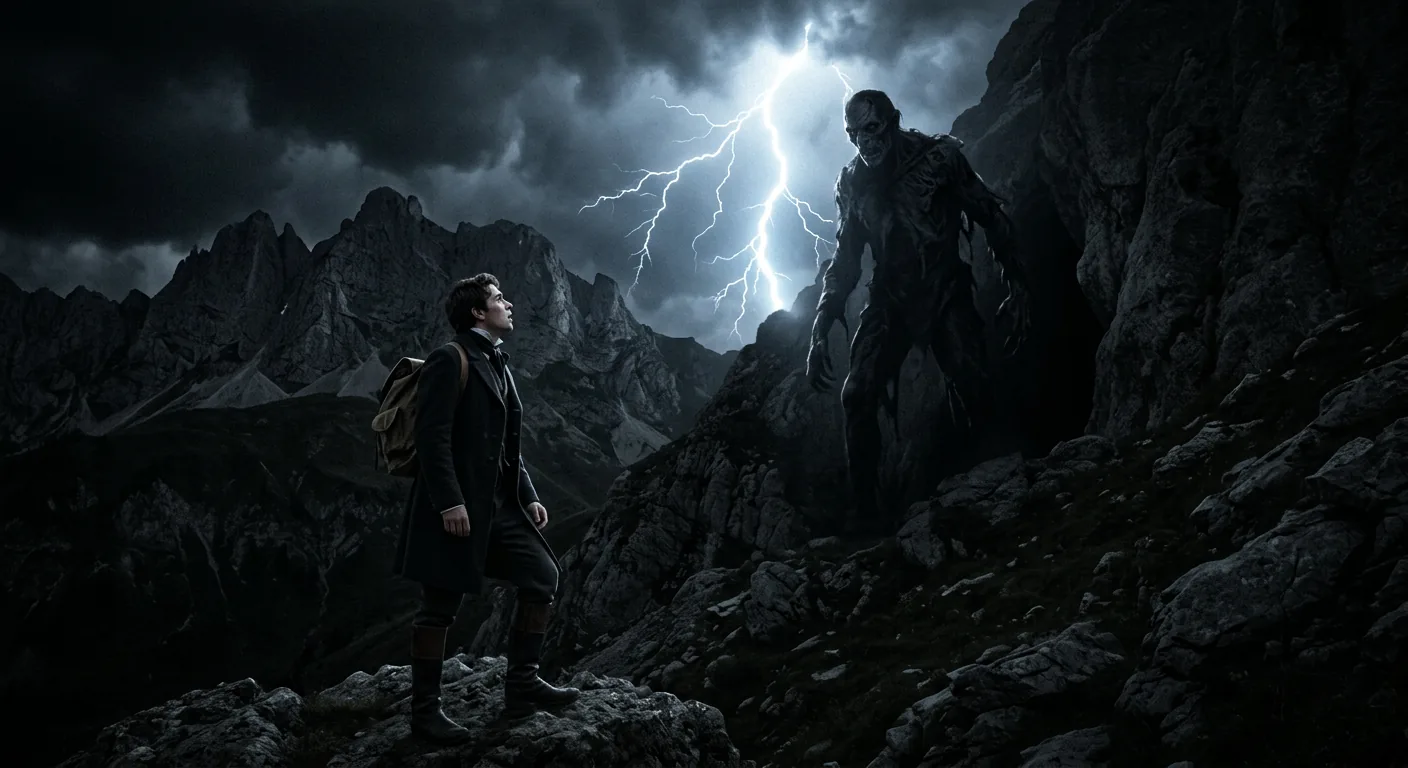
It was amidst a terrible storm, with lightning illuminating the Alps in sheets of celestial fire, that Victor beheld a figure emerging from the gloom—a figure whose gigantic stature and hideous aspect could belong to none other than the creature to whom he had given life. In that terrible flash of illumination, conviction struck Victor with irresistible force: this fiend, this daemon of his own creation, was William's murderer. The creature scaled the precipices of Mont Salêve and vanished, leaving Victor to spend the remainder of that dreadful night consumed by anguish, contemplating the horror he had unleashed upon the world.

Yet upon arriving at his father's house, Victor discovered that another had been accused—Justine Moritz, the gentle servant beloved by all the family. A miniature had been found in her pocket, and her confused manner had seemingly confirmed her guilt in the eyes of the law. Victor alone knew the truth, yet how could he speak it? Who would believe the ravings of a man claiming to have created life itself? Elizabeth and his father placed their hope in justice, in the trial that would commence that very day, trusting that innocence must surely prevail.

Thus Victor stood at the threshold of an impossible choice, torn between the secret knowledge that burned within him and the cruel machinery of human justice that threatened to destroy an innocent soul—while the true murderer roamed free among the eternal snows.

Mockery of Justice and Living Torture illustration
Chapter 9

Mockery of Justice and Living Torture

The hours preceding the trial passed in sorrowful anticipation, each moment weighted with the terrible knowledge that I alone possessed—that this proceeding was no pursuit of justice but rather a wretched mockery, a theatre of condemnation in which the true author of these horrors sat concealed among the witnesses. My curiosity, my lawless devices, had set in motion a catastrophe that would now claim two innocents: first William, that smiling babe whose joy had been extinguished by monstrous hands, and now Justine, whose only crime lay in proximity to my creation's hellish sport.

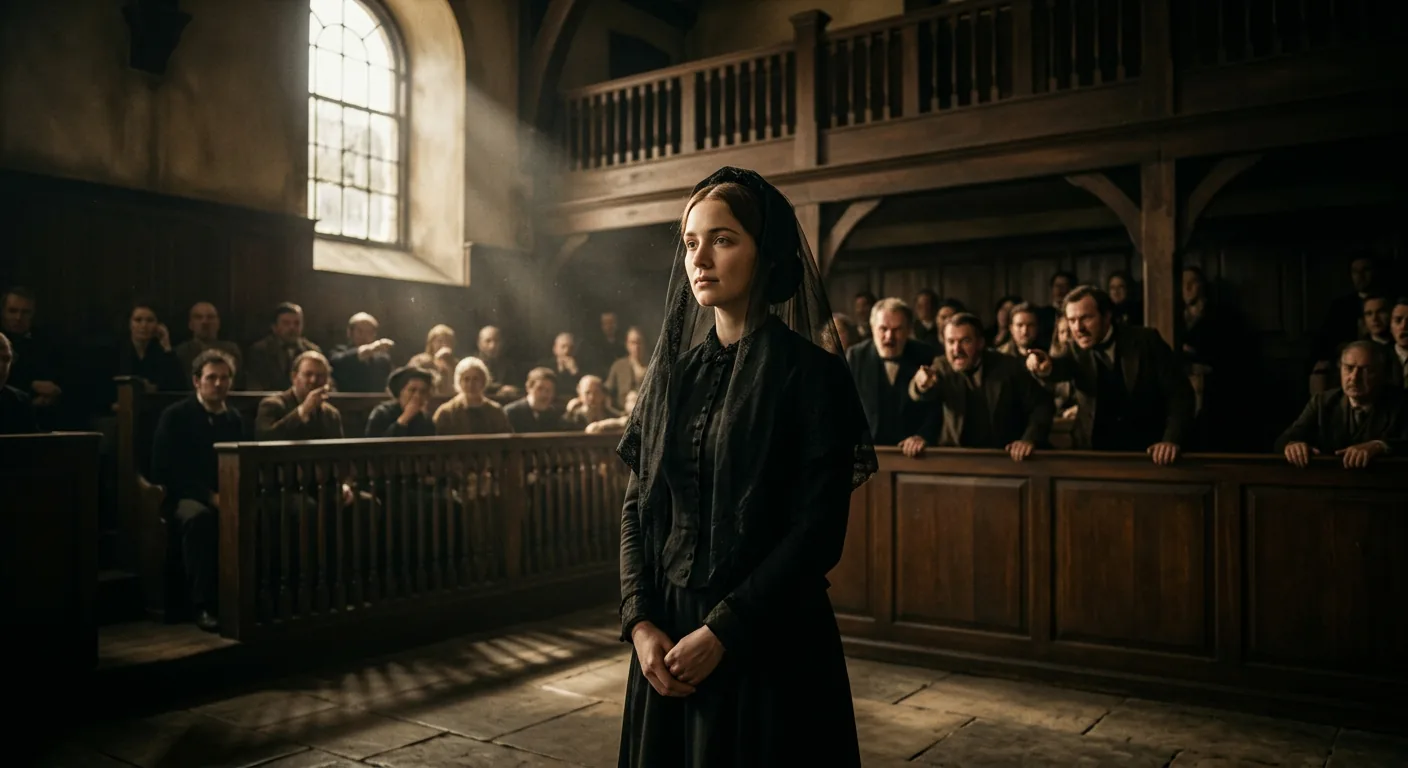
Justine entered the court dressed in mourning, her countenance possessed of that exquisite beauty which deep feeling bestows upon the truly innocent. Though thousands gazed upon her with execration, imagining her capable of unspeakable enormity, she maintained a tranquility—constrained, yes, yet resolute—that spoke more eloquently of her guiltlessness than any testimony might convey. The evidence mounted against her with terrible precision: her absence throughout that fatal night, her confused encounter with the market-woman near the very spot where William's body was discovered, and most damningly, the miniature portrait found secreted in her pocket, that same portrait Elizabeth had placed around the child's neck mere hours before his disappearance.

Justine's defence was simple and heartbreaking in its honesty. She related how she had spent the evening at her aunt's house in Chêne, how upon returning she had learned of William's disappearance and searched through the night, how exhaustion had driven her to seek shelter in a cottage barn where she slept fitfully until dawn. Of the portrait's presence in her possession, she could offer no explanation, for she had none—and in this single inexplicable circumstance lay her doom.

Elizabeth, my noble cousin, rose to speak with generous courage, testifying to Justine's irreproachable character, her tender devotion to our family, her loving care of William himself. Yet even this impassioned appeal served only to inflame public indignation further, and I, who knew the daemon's guilt as certainly as I knew my own complicity in creating him, could not speak. What declaration could I make that would not be dismissed as madness? I fled the court in agony, my tortures exceeding even those of the accused, for she was sustained by innocence while the fangs of remorse tore ceaselessly at my conscience.

Morning brought the verdict I had dreaded: all ballots black, Justine condemned. And then—most strange and unexpected intelligence—I learned she had confessed. In the gloomy prison chamber, Elizabeth and I discovered the wretched truth: her confessor had besieged her with threats of excommunication and hellfire until, abandoned and despairing, she had subscribed to a lie merely to obtain absolution. Now that falsehood weighed heavier upon her heart than death itself.

What transpired in that cell was a communion of grief almost too sacred to record—Justine's resignation to her fate, her gratitude for our faith in her innocence, Elizabeth's desperate vows to prove her guiltless. I could do nothing but retreat to the shadows, concealing the horrid anguish that consumed me, gnashing my teeth and uttering groans that rose from my inmost soul. The next day, despite Elizabeth's heart-rending eloquence and my own passionate appeals, Justine perished on the scaffold as a murderess.

From that hour, I bore a hell within me which nothing could extinguish, contemplating the voiceless grief of those I loved and knowing myself the architect of their suffering—my thrice-accursed hands having wrought the desolation of that late so smiling home, with the prophetic certainty that these were not to be the last tears my family would shed, nor William and Justine the final victims of my unhallowed arts.

Guilt's Weight Upon the Living illustration
Chapter 10

Guilt's Weight Upon the Living

Nothing is more painful to the human spirit than the dreadful stillness that descends when tumultuous events have passed, leaving the soul suspended in a purgatory that offers neither the solace of hope nor the animation of fear. Such was my condition in the aftermath of Justine's execution—her innocent blood upon my conscience, my veins flowing with life I scarcely deserved to possess. Sleep abandoned me utterly, and I wandered through my days like some malevolent specter, haunted by the knowledge that the horrors I had wrought were perhaps but a prelude to greater atrocities yet to come. I, who had commenced my existence with such benevolent aspirations, who had thirsted to render myself useful to my fellow creatures, now found myself plunged into a hell of remorse from which no language could adequately convey the torment.

My father, observing the shadow that had fallen across my countenance, endeavoured to rouse me through appeals to duty and fortitude, reminding me that excessive grief serves neither the dead nor the living. Yet his counsel, however wise for an innocent man, proved utterly inapplicable to one whose conscience writhed beneath the weight of secret guilt. I could offer him nothing but averted eyes and the hollow pretense of sorrow untainted by complicity.

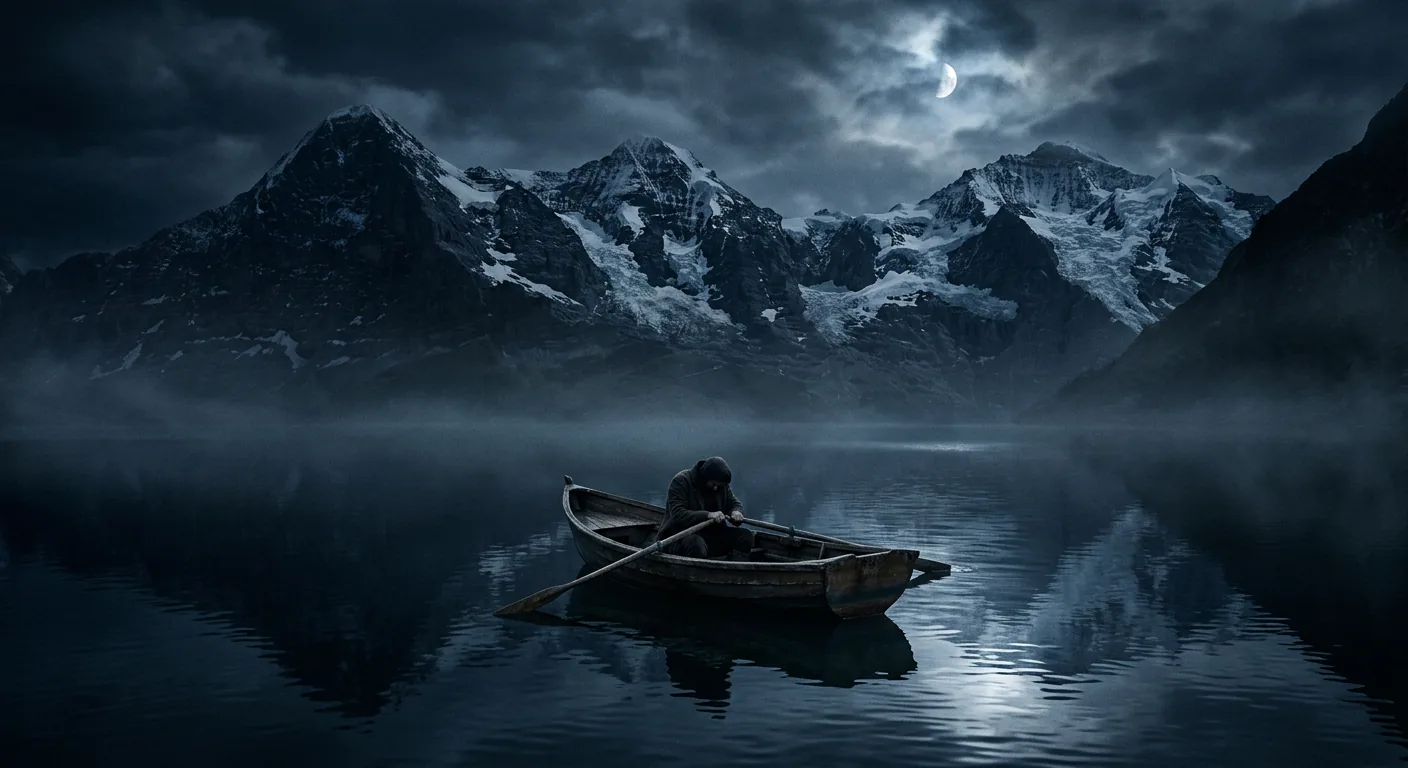
Our removal to the house at Belrive afforded me a peculiar liberty—the freedom to take my solitary boat upon the lake in those midnight hours when the rest of the household slumbered. How often, drifting beneath the indifferent stars, was I tempted to surrender myself to those dark waters, to let them close forever over my calamities! Yet the thought of Elizabeth, heroic and suffering, whose existence was bound inextricably to mine, and of my father and brother, whom I dared not abandon to the malice of the fiend I had unleashed—these considerations alone restrained my desperate hand.

Elizabeth herself had transformed under the weight of our shared mourning. That joyful creature who once wandered beside me speaking of future happiness had grown sad and desponding, convinced now that the world teemed with monsters thirsting for one another's blood. When she spoke of Justine's fate, declaring that falsehood could wear truth's very countenance, I listened in extremest agony—for I, not in deed but in effect, was the true murderer she unknowingly described. Her tender entreaties that I banish the dark passions visible upon my countenance served only to deepen my torment; even the accents of love proved ineffectual against the cloud that encompassed my soul.

At length, driven by whirlwind passions I could no longer contain, I sought refuge in the Alpine valleys near Chamounix, hoping that nature's sublime magnificence might dwarf my ephemeral human sorrows. As I ascended through the ravine of Arve, past ruined castles and roaring waterfalls, the weight upon my spirit lightened perceptibly. The mighty Alps, with their white and shining pyramids towering as though belonging to another earth entirely, spoke of a power before which I need bend to nothing less almighty. Arriving exhausted at the village, I watched the pallid lightnings play above Mont Blanc's tremendous dome while the rushing Arve sang its lullaby below, and blessed sleep—that merciful giver of oblivion—crept at last upon me.

Yet even as I surrendered to that temporary peace, I remained haunted by the obscure certainty that my creation still walked free, and that some signal crime of enormity sufficient to eclipse all previous horrors surely awaited.

Solace and Shadows Among the Glaciers illustration
Chapter 11

Solace and Shadows Among the Glaciers

The day following his restless torment, I wandered through the valley as one seeking absolution from nature herself, standing beside the sources of the Arveiron where the glacier creeps with slow and inexorable majesty down from the heights, threatening to barricade the valley in its frozen embrace. The sublime grandeur of that scene—the vast mountain walls, the overhanging ice, the shattered pines scattered like fallen soldiers—afforded me such consolation as my wounded spirit could receive. The solemn silence of what I could only call imperial Nature's presence-chamber was broken solely by the thunder of avalanches and the great cracking of ice, rent asunder by immutable laws as though it were mere plaything in the hands of forces beyond comprehension. That night, these grand shapes congregated about my slumbers like benevolent guardians—the snowy peaks, the glittering pinnacles, the soaring eagle—and bade me rest in peace.

Yet where had they fled when morning came? All soul-inspiriting vision vanished with sleep, and dark melancholy once again clouded every thought. Rain poured in torrents, thick mists veiled the summits of my mighty friends, but I resolved nonetheless to ascend Montanvert, remembering how that tremendous glacier had once filled me with sublime ecstasy sufficient to give wings to the soul. I would go alone, for the presence of another would destroy the solitary grandeur I sought.

The ascent proved terrifically desolate—traces of winter avalanches everywhere visible, trees broken and strewn upon the ground, ravines of snow down which stones perpetually rolled. Alas! Why does man boast of sensibilities superior to the brute, when such refinement only renders us more susceptible to every passing wind, every chance word or scene? We are moved by all things, poisoned in our sleep by dreams, polluted in our waking by wandering thoughts. Nought may endure but mutability itself.

Upon the glacier at last, my heart swelled with something approaching joy as I gazed upon Mont Blanc rising in awful majesty above the frozen sea of ice. I cried out to wandering spirits, begging either faint happiness or to be taken as their companion from the joys of life. Yet scarcely had these words escaped my lips when I beheld a figure advancing with superhuman speed, bounding over crevices I had crossed with utmost caution. A mist came over my eyes—for it was the wretch whom I had created.

Rage and horror seized me utterly. I hurled words of furious detestation at the approaching fiend, calling him devil and vile insect, demanding whether he dared approach me. But the creature met my hatred with arguments I had not anticipated. He spoke of his misery, of being hated by all mankind, of the ties binding creator to creature. He reminded me that I had made him more powerful than myself, yet declared he would be mild and docile if I would but perform my duty toward him. "I ought to be thy Adam," he proclaimed, "but I am rather the fallen angel, whom thou drivest from joy for no misdeed. I was benevolent and good; misery made me a fiend."

Though I commanded him to begone, the creature persisted with entreaties that began, against my will, to move me. He spoke of wandering the desert mountains and dreary glaciers, dwelling in caves of ice—the only refuge mankind did not grudge him. He demanded what any guilty wretch is allowed: to speak in his own defence before condemnation.

At last, my curiosity aroused and something resembling compassion stirring within me, I consented to hear his tale. For the first time, I felt what duties a creator owes his creature—that perhaps I ought to render him happy before complaining of his wickedness. We crossed the frozen expanse together and entered a mountain hut, where, seating myself by the fire my odious companion had lighted, I prepared to listen as he began the strange history of his wretched existence.

Awakening to a World of Sensation illustration
Chapter 12

Awakening to a World of Sensation

Thus begins the creature's own testimony, a narrative of awakening so strange and pitiable that one cannot hear it without feeling the peculiar anguish of consciousness born into confusion. He speaks of his earliest moments as through a veil—sensations flooding upon him in bewildering simultaneity, light and sound and touch arriving without distinction or meaning, until gradually, by painful degrees, he learned to separate the operations of his various senses and to comprehend the world into which he had been so unceremoniously thrust.

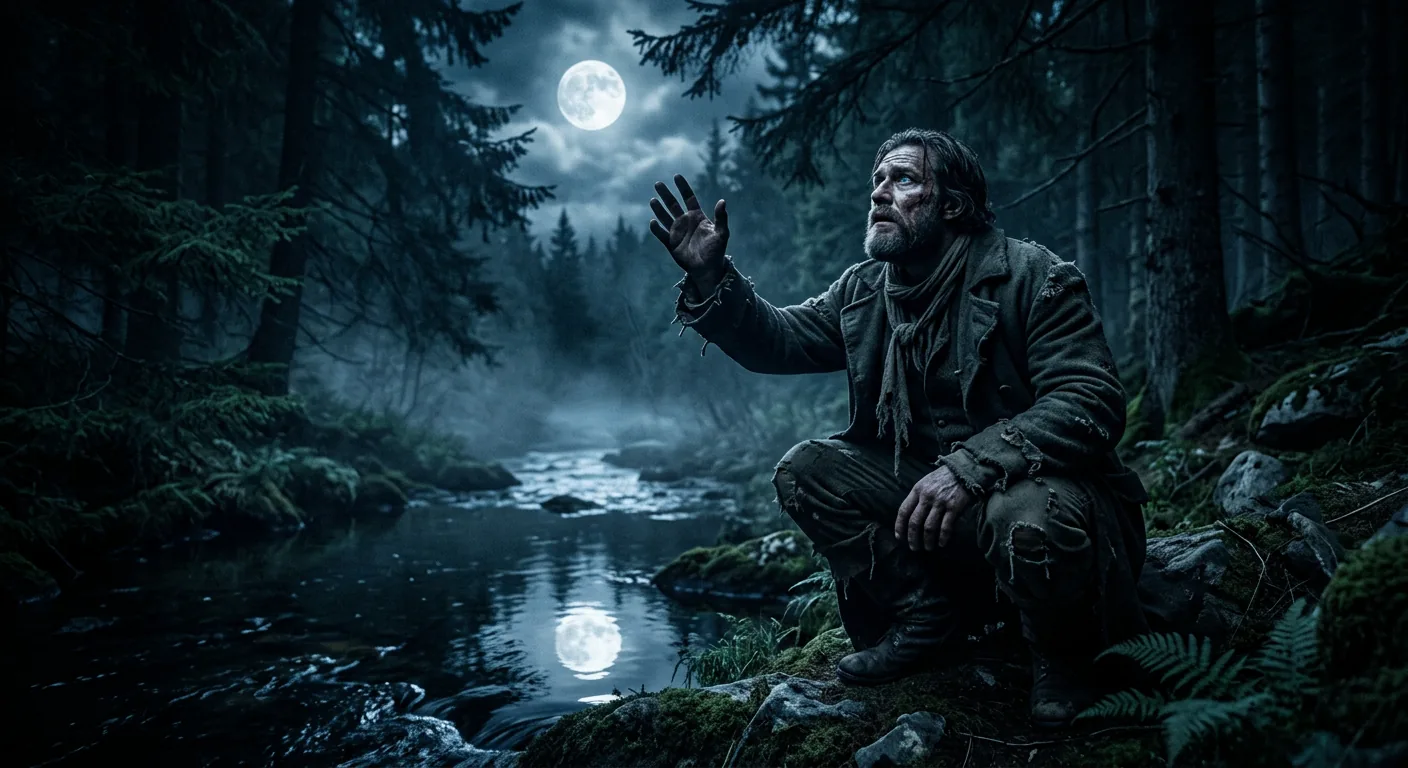
His first refuge was the forest near Ingolstadt, where he lay beside a brook, tormented by hunger and thirst he could not name, eating berries and drinking from the stream as any beast might do. Cold and desolate, wrapped in garments stolen from his creator's apartment, he wept—that most human of responses—knowing nothing, understanding nothing, feeling only the invasion of pain upon every side. Yet when the moon rose and stole gently over the heavens, he gazed upon it with wonder and something approaching joy, fixing his eyes upon that radiant form as upon the first beautiful thing he had ever beheld.

Days passed—the waxing and waning of the moon marking time's passage—and the creature's mind awakened by imperceptible gradations. He learned to distinguish the songs of birds, to perceive the boundaries of objects, to observe the workings of nature with an innocent curiosity uncorrupted by experience. The discovery of fire proved both revelation and cruel instructor; he thrust his hand into the embers and learned, with a cry of pain, that the same element which bestowed warmth could also destroy. Yet he persevered, teaching himself to maintain the flame, to cook his food, to reason from cause to effect with a native intelligence that had received no tutelage save necessity itself.

When scarcity drove him from the forest, he wandered through snow-covered fields until he came upon a shepherd's hut—and here commenced his bitter education in human cruelty. The old man fled shrieking at the sight of him; the villagers he later encountered attacked him with stones and missiles until, bruised and bewildered, he escaped to the open country. How strange it must have seemed to this newborn consciousness, that the creatures whose forms he shared should greet him with such violence!

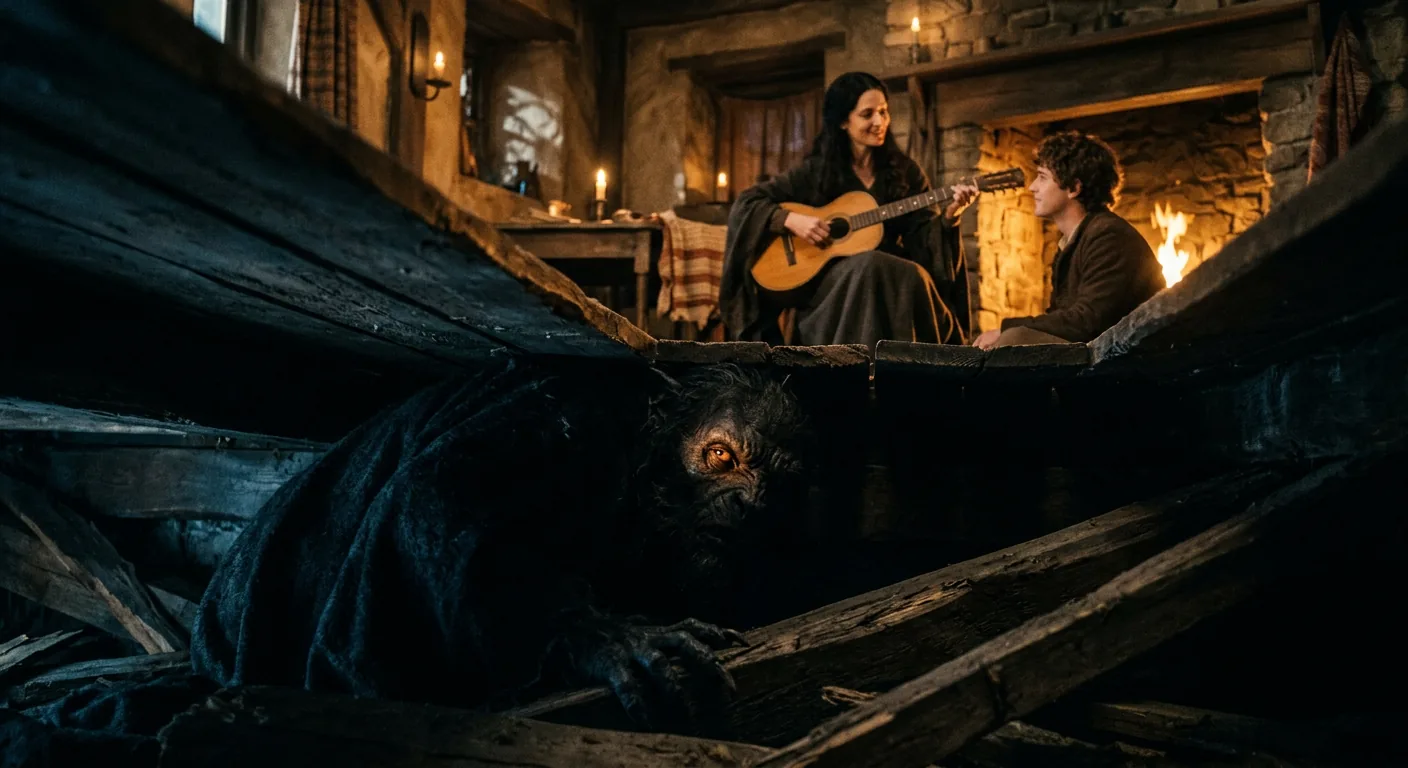
At last he discovered a wretched hovel adjoining a pleasant cottage, and there he secreted himself, covering every crevice through which he might be perceived, grateful for shelter from the inclemency of weather and the barbarity of man alike. Through a small chink in the wall, he observed the cottage's inhabitants: an old man with silver hair and benevolent countenance, a young woman of gentle demeanour, and a youth whose features, though finely formed, expressed the deepest melancholy. When the old man took up his instrument and produced sounds sweeter than any the creature had heard—sweeter than thrush or nightingale—he felt sensations of overpowering nature, a mixture of pain and pleasure wholly foreign to his experience of mere physical want.

Here, then, watching these gentle beings through his hidden aperture, the creature resolved to remain, studying their ways, their sorrows, their kindnesses to one another—little knowing what lessons, both tender and terrible, this silent observation would impart.

Lessons in Language and Love illustration
Chapter 13

Lessons in Language and Love

From the shelter of my wretched hovel, I observed the cottagers with a devotion that bordered upon reverence, for their gentle manners stood in such stark contrast to the brutality I had suffered at the hands of the villagers that I dared not reveal myself, though my heart ached to join their humble circle. The family consisted of three souls: a young man called Felix, his sister Agatha, and their venerable father, who I soon perceived to be blind—a circumstance that would later assume great significance in my fevered imaginings of acceptance.

Their days unfolded in quiet routine, yet I discerned that they were not entirely happy. The younger cottagers often withdrew to weep in secret, and this mystery confounded me utterly, for they possessed what seemed to my inexperienced eyes every comfort: a warm hearth, food upon the table, and the inestimable treasure of one another's companionship. What could such gentle beings know of wretchedness? And yet their tears were genuine, and in time I discovered the bitter cause—they suffered poverty in its most distressing degree, often placing food before their blind father whilst reserving none for themselves.

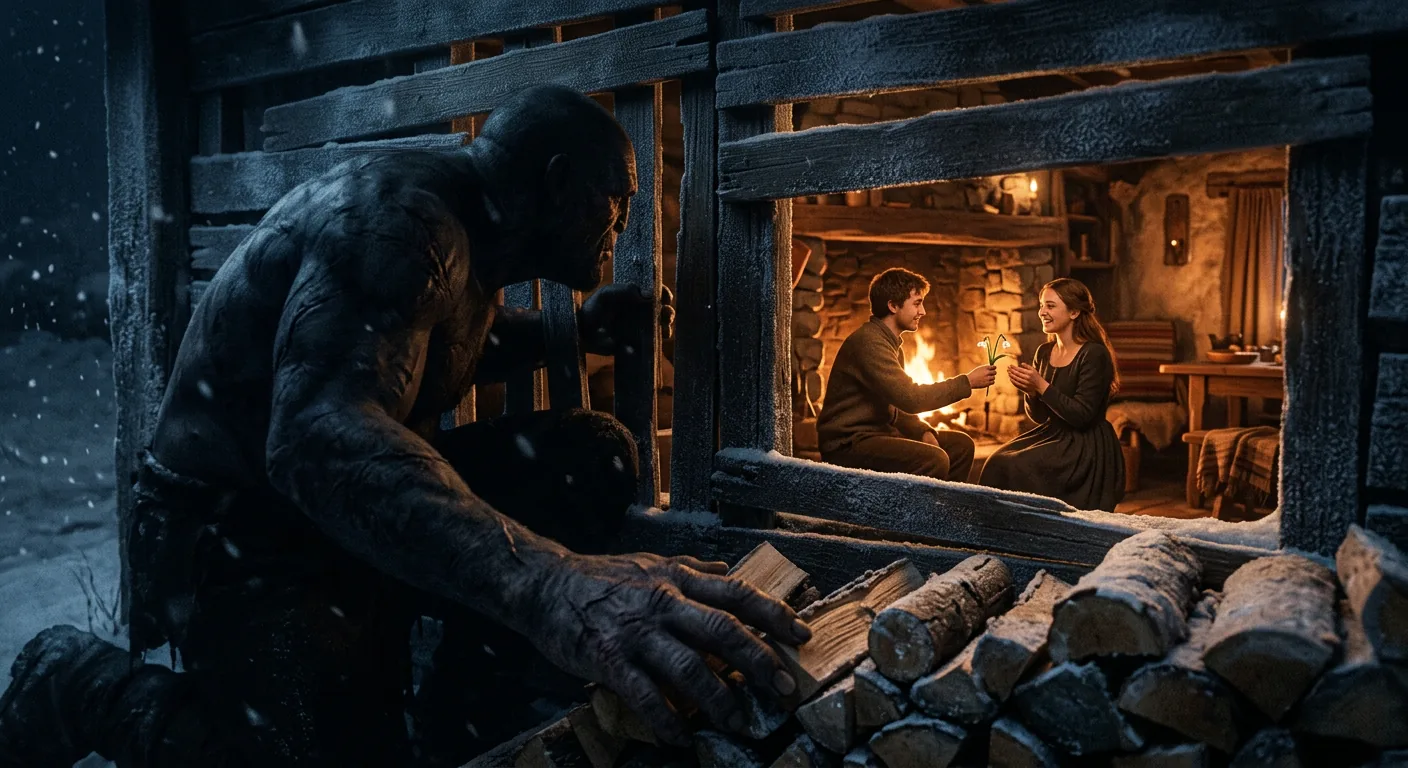
This revelation wrought a profound change in my conduct. I had been stealing from their meagre stores during my nightly forays, but upon comprehending the pain I thereby inflicted, I resolved to abstain entirely, sustaining myself upon berries and roots gathered from the neighbouring wood. More than this, I determined to assist them by stealth, and so I took up Felix's tools and replenished their woodpile under cover of darkness. The astonishment of the young woman upon discovering this invisible bounty afforded me a pleasure I had never before experienced—the joy of benevolence, of being something other than a creature of horror.

Yet my most consequential discovery was of language itself, that godlike science by which these beings communicated their inmost thoughts and feelings through articulate sounds. I applied myself to this study with the ardour of desperation, for I perceived that mastery of speech might enable the cottagers to overlook my hideous form. Over the course of several revolutions of the moon, I acquired the names of common objects—*fire, milk, bread, wood*—and learned too the appellations by which they addressed one another: *father, sister, brother, Felix, Agatha*. The delight I felt upon pronouncing these sounds was indescribable, as though I were unlocking the very mystery of human connection.

As winter yielded to spring, I grew ever more attached to my unwitting benefactors, sharing in their sorrows and rejoicing in their small pleasures—Felix bringing Agatha the first white flower to pierce the snow, the old man's cheerful exhortations that lifted his children's spirits. Yet my education in the ways of humanity brought also a terrible self-knowledge: beholding my own reflection in a transparent pool, I started back in horror, unable to reconcile the monster before me with the gentle creatures I so admired. The contrast perpetually presented to my eyes made me intimately acquainted with my own deformity, though I did not yet comprehend its fatal effects.

Still, as the earth renewed itself in vernal splendour, my spirits rose with it. The past seemed blotted from memory, the present grew tranquil in my observations and secret labours, and the future gleamed with bright anticipations—for I had formed in my imagination a thousand pictures of presenting myself to these superior beings, confident that gentle words and patient devotion might yet win their favour, and through them, my place among humankind.

Safie's Arrival Brings Light and Language illustration
Chapter 14

Safie's Arrival Brings Light and Language

With the advancing of spring, that season of renewal which transforms all desert and gloomy spaces into gardens of verdure and delight, the creature's narrative hastens toward those events which would shape the very essence of his being. The cottagers' humble dwelling, already a temple of domestic virtue in his watching eyes, became illuminated by a new and radiant presence—the arrival of Safie, the lovely Arabian, whose angelic countenance and voice like a nightingale's song brought joy flooding back to Felix's melancholy features.

She came as a mystery, veiled in black and speaking in musical tones that none within the cottage could comprehend, yet her presence diffused gladness through those simple rooms as the sun dissipates the morning mists. The creature, observing from his hidden place, perceived at once the profound alteration wrought by her arrival: Felix, transformed from sorrow to ecstatic delight; Agatha, ever gentle, kissing the stranger's hands in welcome; the old father, embracing this foreign daughter with tender affection. And when Safie took up the guitar and sang, drawing tears of mingled sorrow and rapture from the creature's eyes, he understood that beauty and love might transcend all barriers of language and origin.

Yet herein lay the instrument of both his advancement and his despair. For as Felix undertook to teach Safie the language of the cottagers, the creature bent every faculty toward the same purpose, and found he could imitate almost every word spoken. Through Volney's *Ruins of Empires*, read aloud for the Arabian's instruction, he obtained a cursory knowledge of history—of the stupendous genius of the Grecians, the virtue and subsequent degenerating of the Romans, and the hapless fate of the American continent's original inhabitants. These wonderful narrations inspired in him strange and terrible questions: Was man indeed so powerful and virtuous, yet so vicious and base? The duality of human nature presented itself to him as an unfathomable mystery.

But knowledge, that strange thing which clings to the mind like lichen upon rock, brought with it the keenest anguish of self-awareness. Learning of property and rank, of descent and noble blood, the creature turned his newly educated gaze upon himself and found only absence—no money, no friends, no family, no origin he could name. He possessed nothing but a form hideously deformed and loathsome. Was he, then, a monster, a blot upon the earth from which all men fled? The gentle words of Agatha, the animated smiles of the charming Arabian, the mild exhortations of the old man—none of these were for him. He learned of fathers who doted upon infants, of mothers who blessed their children with caresses, of all those mutual bonds which bind human beings together, and he knew himself utterly excluded from such tender connections.

Oh, that he had remained forever in his native wood, knowing nothing beyond hunger, thirst, and heat! Yet even as these reflections inflicted their exquisite agony upon him, the creature's love and reverence for his protectors only deepened, and the story of their past—which he would soon relate—stirred within him feelings of indignation, wonder, and devotion that would drive him toward a fateful resolution.

The De Laceys' Fall From Grace illustration
Chapter 15

The De Laceys' Fall From Grace

Some considerable time had passed before the creature came to learn the full history of those gentle beings he observed through the chink in his hovel wall, yet when at last that history unfolded itself before him, it impressed upon his awakening mind a tale of such profound injustice and tender devotion that he could not but feel its weight upon his own nascent soul.

The old blind man, he discovered, bore the name De Lacey, and far from the humble circumstances in which the creature now beheld him, he had once enjoyed the privileges of good birth and comfortable fortune in France, dwelling in that great luxurious city called Paris, surrounded by friends and respected by all who knew him. His son Felix had served his country with honour, and the lovely Agatha had moved among ladies of the highest distinction—yet all this had been swept away in a single tide of misfortune, the cause of which lay with Safie's father, a Turkish merchant who had drawn the family into ruin.

This merchant, having for reasons unknown become obnoxious to the French government, was seized and condemned to death in a trial so flagrantly unjust that all Paris rose in indignation, recognising that his religion and wealth, rather than any true crime, had sealed his fate. Young Felix, present by accident at these proceedings, felt such horror at the injustice that he vowed upon the instant to deliver the condemned man. Through perseverance and courage, he found means to communicate with the prisoner, and though he rejected all offers of reward, he could not prevent his heart from recognising in the lovely Safie, who came to visit her father in his chains, a treasure worth any peril.

The Turk, perceiving Felix's admiration, promised his daughter's hand in marriage, and though the noble youth was too delicate to accept such terms openly, he permitted himself to dream of that happy consummation. Safie herself, through letters translated by an old servant, expressed her ardent gratitude and something more—for she had been raised by her mother, a Christian Arab once enslaved, to aspire to independence of spirit and the grand ideas forbidden to women in her father's world. The prospect of remaining in a country where she might take her rightful place in society, united to her Christian deliverer, filled her with hope.

Yet even as Felix conducted the fugitives across France and over Mont Cenis to Leghorn, treachery festered in the merchant's heart. Though he encouraged the young lovers, he secretly resolved never to see his daughter wed to a Christian, and fortune soon provided him the means of betrayal. When news arrived that Felix's plot had been discovered and that De Lacey and Agatha languished in a French dungeon, the noble youth hastened back to Paris to deliver himself to justice, hoping thereby to free his family. He did not succeed. After five months of imprisonment, the De Laceys were stripped of their fortune and condemned to perpetual exile—whilst the treacherous Turk, learning of their ruin, abandoned all pretence of honour and fled to Constantinople, sending Felix only an insulting pittance of money.

Thus had they come to their miserable asylum in Germany, their hearts heavy with poverty and betrayal. But Safie, that generous spirit, would not submit to her father's tyrannical command that she forget her lover. When the merchant sailed for Constantinople, leaving her behind with a servant, she seized her moment—gathering what jewels and money she could, she fled toward Germany. Though her attendant perished on the journey, leaving her alone and friendless in a strange land, providence guided her steps until at last she arrived at the cottage door, infusing new life into Felix's wounded soul.

And it was this reunion—this triumph of devotion over treachery—that the creature had witnessed from his hiding place, stirring within him emotions he scarcely understood yet could not suppress.

Awakening Through Forbidden Books illustration
Chapter 16

Awakening Through Forbidden Books

Such were the lessons of the cottagers, yet the education of my intellect was destined to receive its most profound—and most devastating—instruction through three volumes of singular influence, discovered by chance in a leathern portmanteau upon the forest floor. These treasures, written in the very language I had so painstakingly acquired, comprised *The Sorrows of Werter*, *Plutarch's Lives*, and *Paradise Lost*—a triumvirate of works that would alternately elevate my spirit to ecstasy and cast it into the deepest abysses of despair.

From Werter I gleaned the domestic sentiments and lofty passions of mankind, weeping at the hero's extinction though I scarce comprehended the philosophical disquisitions upon death that occasioned it. Plutarch taught me otherwise—raising my thoughts to the noble founders of ancient republics, to Numa and Solon and Lycurgus, whose peaceable virtues accorded with the gentle example of my protectors. Yet it was Milton's great epic that stirred the deepest chords within my being. Reading it as true history, I beheld in Adam a creature like myself—solitary, linked to no other existence—but how different his blessed condition from my wretched state! He had emerged perfect and prosperous from the hands of a loving Creator; I was hideous, abandoned, and accursed. More often did I find Satan the fitter emblem of my condition, for when I gazed upon the happiness of my protectors, the bitter gall of envy rose within me unbidden.

These literary reflections were soon compounded by a discovery of more terrible import. Among the garments I had taken from my creator's laboratory lay papers I had previously neglected—Victor Frankenstein's journal, detailing in minute and horrified language every step of my odious creation. To read such words, to comprehend at last the disgust with which my maker had beheld his own handiwork! "Hateful day when I received life!" I cried in agony. Satan at least possessed his fellow devils for companionship, but I was solitary and abhorred.

Yet hope, that most persistent of human delusions, would not release its hold upon my heart. I persuaded myself that the virtuous cottagers, when they learned of my admiration and harmless intentions, might overlook my deformity and receive me into their fellowship. Months I waited, refining my understanding, postponing the momentous interview that would decide my fate. Through autumn's decay and winter's advance I watched them—their serenity only deepening my own tumultuous longing.

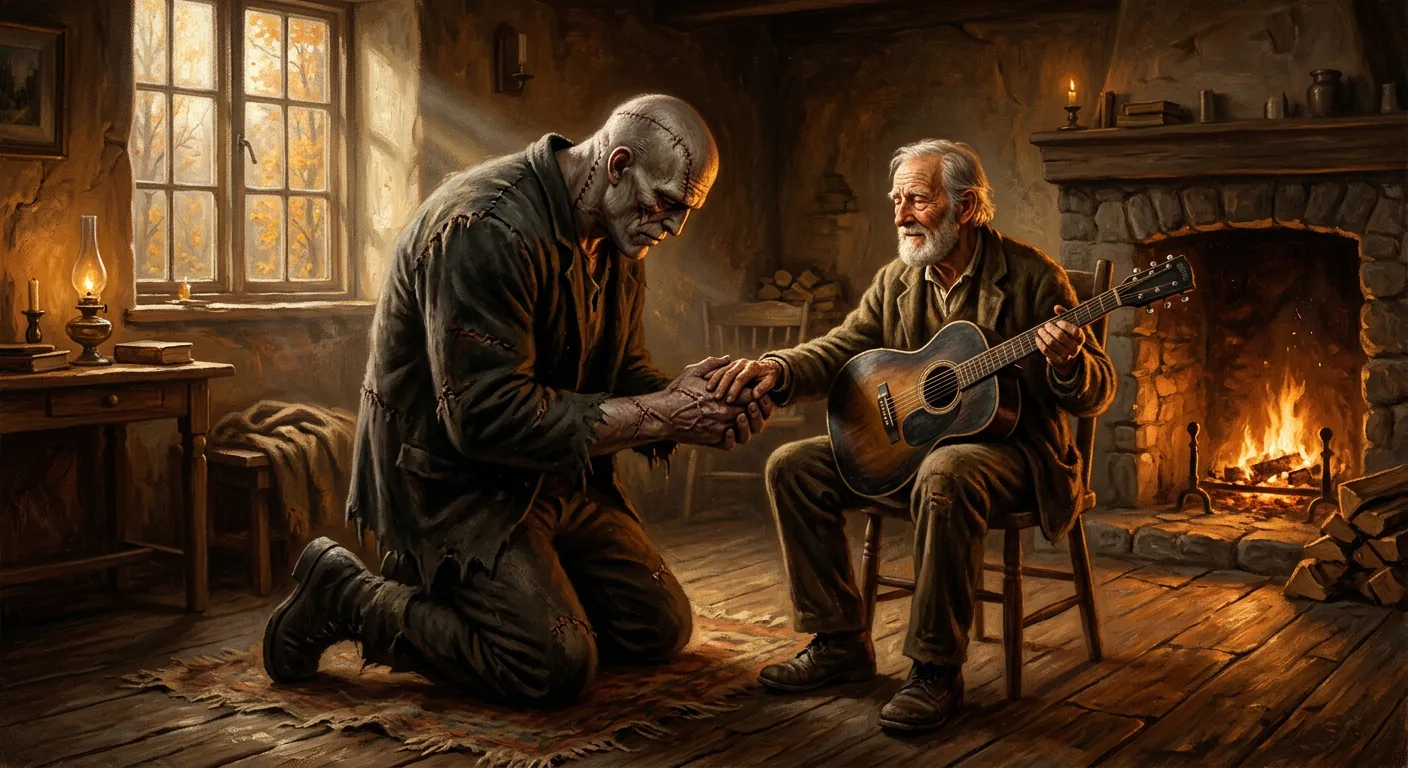
At last I conceived a stratagem: I would approach the blind old man when his children were absent, for my voice held nothing terrible, and his sightless eyes could not recoil from my hideous form. The opportunity presented itself one day when the sun shone upon red leaves and the old De Lacey sat alone with his guitar. With limbs trembling and heart beating quick, I knocked upon the cottage door.

The interview that followed seemed at first touched by Providence itself. The old man, gentle and compassionate, heard my tale of friendlessness without prejudice. "There is something in your words which persuades me that you are sincere," he declared, offering to mediate with those friends from whom I sought acceptance. From his lips I heard, for the first time in my existence, the voice of kindness directed towards me. In that moment, trembling with hope, I seized his hand and revealed the truth—that he and his family were the very friends I sought.

But even as the words escaped my lips, I heard the steps of my younger protectors at the door. In rushed Felix, Safie, and Agatha—and who can describe their horror upon beholding me? Agatha fainted; Safie fled; and Felix, with supernatural fury, tore me from his father's knees and dashed me to the ground with violent blows. Though I possessed the strength to rend him as a lion rends the antelope, my heart sank within me with bitter sickness, and I refrained. Overcome by anguish, I fled to my hovel, escaping unperceived in the general tumult—yet carrying with me the crushing weight of rejection that would transform hope's lingering embers into something far darker.

A Hell Within and War Declared illustration
Chapter 17

A Hell Within and War Declared

Cursed creator! Why did you bestow upon me the spark of existence only to abandon me to such insupportable misery? These were the tortured reflections that consumed the creature's breast as he recounted to his maker the terrible events that followed his rejection by the De Lacey family—events that would transform a being capable of gentleness and yearning into an instrument of vengeance and destruction.

That first wretched night after his expulsion, the creature wandered through the darkened wood like a wild beast unshackled, giving vent to his anguish in fearful howlings whilst the cold stars shone above him in mockery. He bore, as he confessed, a hell within himself, and finding no sympathy among the myriads of men who inhabited the earth, he declared everlasting war against the human species—and most especially against him who had formed him and cast him forth into such desolation.

Yet morning brought a measure of tranquillity, and with it hope. The creature reflected upon his imprudence in revealing himself to the younger De Laceys before securing the old man's friendship, and he resolved to return and make another attempt. But when he crept back to his hovel and waited through the accustomed hours, no movement stirred within the cottage. At length he overheard Felix speaking with the landlord—the family had fled, never to return, the father's very life endangered by the horror of that dreadful encounter. The creature would never look upon his protectors again.

Now truly alone, with the only link binding him to the world severed forever, the creature surrendered himself to the dark currents of hatred that had begun to course through his veins. As night advanced and a fierce wind arose, producing a kind of insanity in his spirits, he danced with fury around the cottage, torch in hand, and set the habitation ablaze—watching as the flames licked the dwelling with their forked and destroying tongues before fleeing into the woods.

With the world before him and nowhere to call home, the creature resolved to seek out his creator in Geneva, from whom alone he might claim any justice or redress. His journey southward was long and harrowing, undertaken only by night to avoid the horrified gaze of mankind, through rain and snow and frozen rivers. Yet when spring arrived and the earth grew green once more, a terrible incident confirmed the bitterness of his fate: having rescued a drowning girl from a rapid stream, he received as his only reward a bullet fired into his shoulder by the very rustic whose companion he had saved. This, then, was the recompense for benevolence! From that moment forward, the creature vowed eternal hatred against all mankind.

Upon reaching Geneva at last, exhausted and consumed by vengeance, the creature encountered a beautiful child playing in a secluded field—young William Frankenstein, though he knew not the boy's identity at first. Hoping the child might be too innocent to recoil from his deformity, he seized the boy, only to hear him cry out for his father, the syndic Frankenstein. In that instant, recognizing he held his enemy's relation in his grasp, the creature's fury erupted beyond all restraint, and he strangled the child where he stood. Triumphant in his hellish deed, he then planted the portrait of a lovely woman found upon the boy's breast into the dress of a sleeping girl—the innocent Justine—thereby ensuring another victim would suffer for his crime.

Now, having confessed all, the creature fixed his burning gaze upon Victor and declared his singular demand: he would not rest until his creator fashioned for him a companion, a being as hideous as himself, who alone might offer him the sympathy that all humanity had denied.

A Creature's Desperate Bargain illustration
Chapter 18

A Creature's Desperate Bargain

Upon the barren heights of the glacier, where the creature's long and melancholy narration had at last reached its conclusion, he fixed his expectant gaze upon me, and I found myself utterly confounded—my thoughts scattered like leaves before an Alpine gale, incapable of comprehending the full magnitude of what he now demanded. He broke the silence with terrible clarity: I must create for him a female companion, a being as wretched as himself, with whom he might share those sympathies without which existence becomes unendurable torment. This, he declared, was his right—a debt owed by creator to creation.

The peaceful interludes of his tale among the cottagers had softened my heart toward him, yet this audacious demand rekindled the rage I thought extinguished. I refused him absolutely, swearing that no torture could compel my consent—for how could I, in conscience, unleash upon the world another creature whose wickedness, joined with his, might bring desolation to all mankind? But the creature, with a philosopher's patience that belied his fearsome countenance, chose reason over threat. He was malicious, he confessed, only because misery had made him so. Mankind had spurned him; even I, his maker, would destroy him without remorse if given opportunity. Why then should he pity those who offered him none?

Yet even as he spoke of vengeance and inextinguishable hatred, he mastered his passions and returned to supplication. His request, he argued, was modest—merely a companion as hideous as himself, with whom he might retreat to the vast wilds of South America, subsisting on berries and acorns, troubling no human soul. They would be monsters, yes, cut off from all the world—but on that very account, more tenderly attached to one another. He painted a picture of peaceful exile, harmless and remote, and implored me to grant him this single benefit, that he might feel gratitude rather than hatred toward his creator.

I confess I was moved. His eloquence revealed sensibilities of remarkable delicacy, and I could not but acknowledge some justice in his reasoning. Did I not, as his maker, owe him whatever portion of happiness lay within my power to bestow? Yet I shuddered at the possible consequences—what if they should return, their evil passions renewed, now doubled in strength? The creature swore solemnly by the earth he inhabited, by the sun and sky, that with a companion to share his exile, his malevolence would vanish utterly. His vices, he insisted, were but the children of a forced solitude; grant him communion with an equal, and his virtues must necessarily arise.

After long and tortured reflection—weighing his display of virtue at the opening of his existence against the subsequent blight of kindness wrought by human rejection, considering too his formidable power to pursue me across glaciers and precipices beyond mortal reach—I concluded that justice demanded my compliance. I consented, upon his solemn oath to quit Europe forever, to fashion for him a female who would accompany him into perpetual exile.

With an oath sworn by sun and sky and the fire of love burning in his heart, he accepted my terms and vanished down the mountain with preternatural speed, disappearing among the undulations of the sea of ice. I was left alone as darkness gathered, my heart heavy beyond measure, weeping beneath the indifferent stars and crying out to the winds either to crush me into oblivion or depart and leave me to my misery. By morning I had returned to Geneva, my haggard appearance alarming all who beheld me, yet I could offer no explanation—I felt myself placed under a ban, unworthy of human companionship, though I loved my family to adoration. To save them, I resolved to dedicate myself to the most abhorred task imaginable, and this dreadful prospect consumed my every thought, rendering all else a mere phantom beside the terrible reality of what I must now undertake.

A Promise Deferred, a Journey Planned illustration
Chapter 19

A Promise Deferred, a Journey Planned

Upon my return to Geneva, I found myself a creature suspended between duty and dread, the weeks slipping past like shadows whilst I gathered neither the courage nor the resolve to recommence that loathsome work which the fiend had exacted from me. The task of composing a female companion for my creature—that unholy promise which hung about my neck like a millstone—demanded months of profound study, and I seized upon every pretence for delay, clinging to excuses as a drowning man clings to driftwood. And yet, paradoxically, my health began to restore itself, my spirits rising whenever the memory of that dreadful engagement did not intrude upon my consciousness with its devouring blackness.

My father, perceiving some improvement in my disposition, conceived a plan which he believed would eradicate the melancholy that yet visited me in fits. He called me aside and, with trembling heart, I listened as he spoke of what he had long anticipated—my marriage to dear Elizabeth. He feared, the gentle soul, that perhaps I regarded her merely as a sister, or worse, that I had conceived an attachment to another. With what earnestness I assured him of my devotion to Elizabeth, though even as the words left my lips, the thought of immediate union filled me with horror! How could I enter into such sacred festivities whilst my terrible promise remained unfulfilled, whilst the monster awaited his mate?

It was then that I conceived my stratagem. I expressed a fervent wish to travel to England, where certain philosophical discoveries essential to my work might be obtained, though I concealed the true and ghastly nature of my purpose beneath a guise of scholarly enthusiasm. My father, glad to see me capable of any interest whatsoever, readily consented, and arranged—with Elizabeth's tender solicitude—that my beloved friend Clerval should join me at Strasburgh as companion. The marriage, it was understood, would be solemnised immediately upon my return.

Thus in late September I departed, Elizabeth bidding me farewell with tearful silence, whilst I—hardly knowing whither I went—ordered my chemical instruments packed with bitter anguish. The journey to Strasburgh passed in listless indolence, my eyes fixed and unobserving of the majestic scenes through which I travelled. But oh, what contrast awaited me when Clerval arrived! He was alive to every beauty—the setting sun, the golden sunrise reflected in the Rhine—whilst I remained a miserable wretch, haunted by a curse that shut up every avenue to enjoyment.

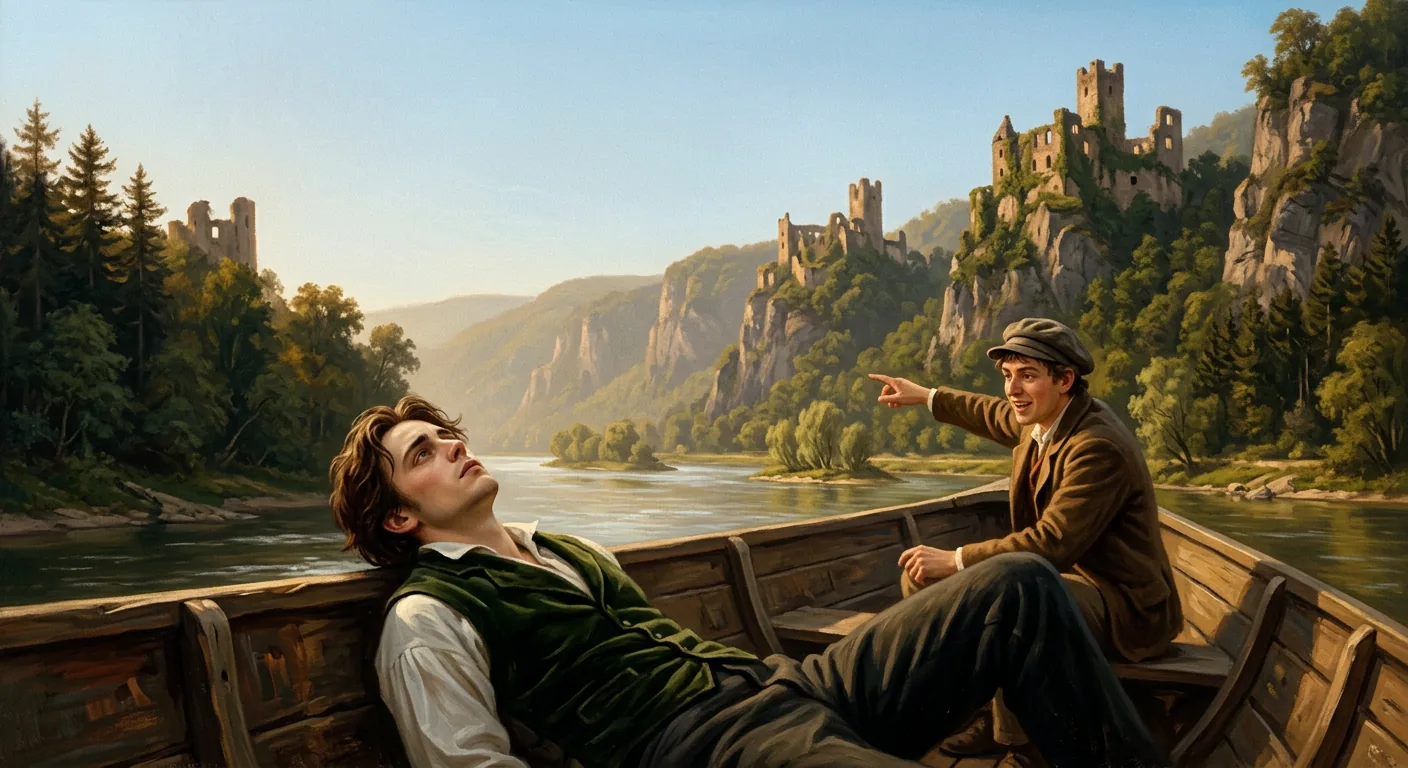
We descended the Rhine by boat, passing willowy islands and ruined castles standing upon precipices, surrounded by black woods high and inaccessible. Even my gloomy spirits were momentarily soothed as I lay at the bottom of the boat, gazing upon the cloudless sky. Clerval, dear Clerval, spoke with rapture of the divine landscape, preferring these gentle banks to the majestic but terrible mountains of Switzerland. How it delights me even now to record his words, to dwell upon the praise of which he was so eminently deserving—he who was formed in the very poetry of nature, whose soul overflowed with ardent affections! And where does he now exist? Has this gentle being perished? Pardon this gush of sorrow; these words are but a slight tribute to his unexampled worth.

Beyond Cologne we crossed the plains of Holland, and by sea reached England, where the white cliffs of Britain rose before us in the clear December morning, and at length the numerous steeples of London, with St. Paul's towering above all—that great city which would bear witness to labours far darker than any its ancient stones had known.

A Blasted Tree's Bitter Journey illustration
Chapter 20

A Blasted Tree's Bitter Journey

London received us as weary pilgrims seeking rest, though rest itself had become a stranger to my tortured spirit. We determined to pass several months in that celebrated city, where Clerval pursued the society of men of genius and talent with all the ardour of his generous nature—whilst I, consumed by darker purposes, sought only those natural philosophers whose knowledge might furnish the means of fulfilling my dreadful promise. Had this journey occurred in those innocent days of study and happiness, before the blight descended upon my existence, what inexpressible pleasure it would have afforded me! But company had grown irksome, and in the joyous faces of others I perceived only an insurmountable barrier—one sealed with the blood of William and Justine, whose very names filled my soul with anguish.

In Clerval I beheld the ghost of my former self: inquisitive, eager, delighting in every novelty of manners and custom. He busied himself with plans to visit India, believing his knowledge of its languages might assist the progress of European enterprise, and Britain alone could further such designs. I endeavoured to conceal my misery, that I might not debar him from pleasures natural to one entering upon a new scene of life undisturbed by bitter recollection. Meanwhile, I began collecting materials for my abhorrent creation—a labour that fell upon me like the torture of single drops of water upon the head, each thought an extreme anguish, each spoken word causing my lips to quiver.

An invitation from Scotland determined our northward course, and though I abhorred society, I longed to behold again mountains and streams—those wondrous works with which Nature adorns her chosen dwelling-places. We journeyed through Windsor's majestic forests, through Oxford with its ancient colleges and melancholy memories of the unfortunate King Charles, through Matlock where the mention of Chamounix made me tremble, and into Cumberland's lake country, where I could almost fancy myself among Swiss mountains. Throughout these wanderings, I was a blasted tree, the bolt having entered my soul—formed for peaceful happiness, yet surviving only to exhibit what I should soon cease to be: a miserable spectacle of wrecked humanity, pitiable to others and intolerable to myself.

Fear pursued me relentlessly. I dreaded the effects of the daemon's disappointment should I neglect my promise further; I imagined him wreaking vengeance upon my relatives or murdering Henry himself. I waited for letters with feverish impatience, hardly daring to read them when they arrived. Upon reaching Perth, I could endure companionship no longer and told Clerval I must make the tour of Scotland alone, entreating him not to interfere with my motions. Henry wished to dissuade me but, seeing my resolution, ceased to remonstrate, asking only that I write often and return swiftly.

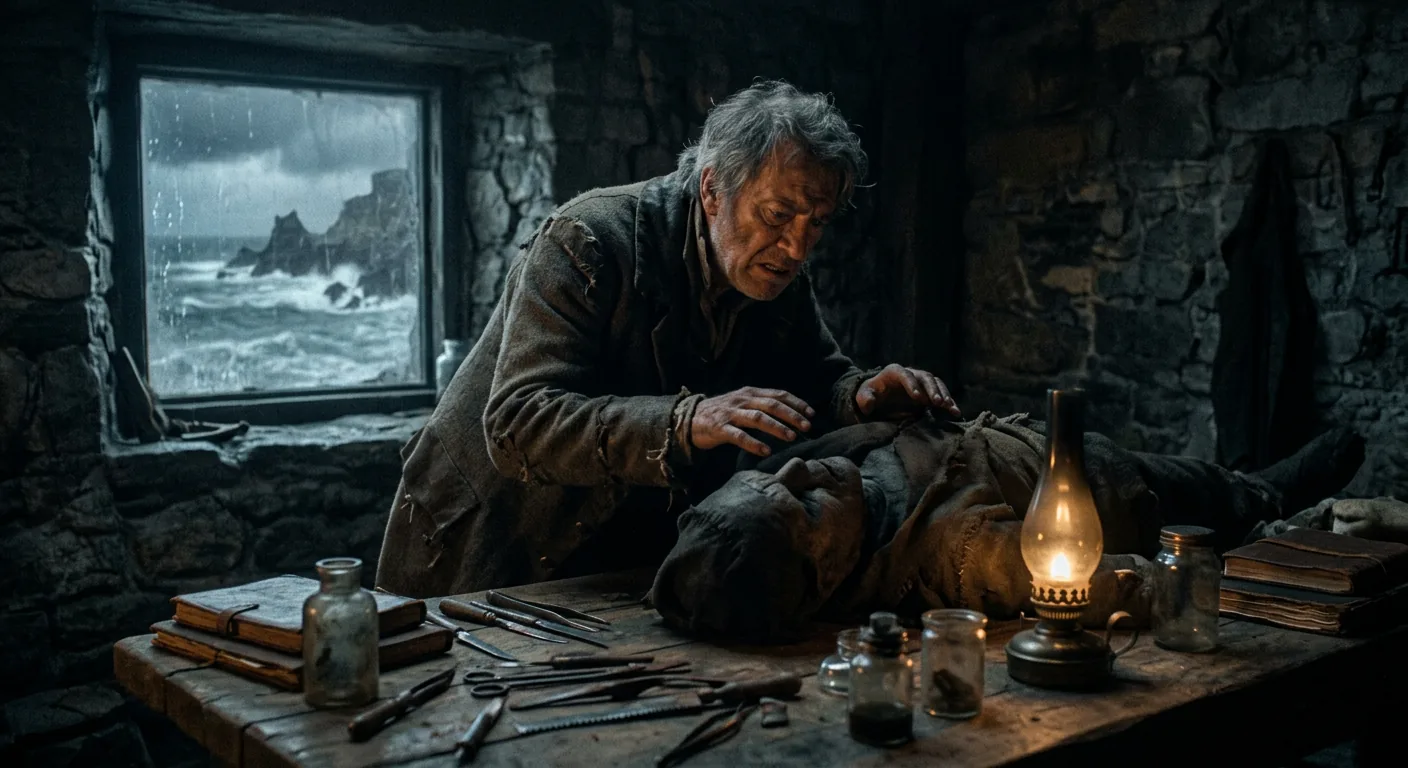
I traversed the northern highlands and fixed upon one of the remotest Orkneys as the scene of my labours—a desolate rock whose barren soil scarcely afforded pasture for a few miserable cows, inhabited by five gaunt souls whose very senses seemed benumbed by want. There I hired a wretched hut and devoted my mornings to the filthy process of creation, my evenings to walking the stony beach, listening to waves that roared like a giant ocean beside which Switzerland's troubled lakes seemed but the play of a lively infant. As my labour advanced, it grew daily more horrible; where once enthusiastic frenzy had blinded me to the horror of my employment, now I went to it in cold blood, my heart sickening at the work of my hands, my spirits unequal, my nerves stretched to breaking—whilst obscure forebodings of evil mingled with my tremulous hope of completion.

The Promise Broken at Moonrise illustration
Chapter 21

The Promise Broken at Moonrise

The evening sun had surrendered to the rising moon when I found myself seated in my laboratory, suspended between the completion of my dreadful work and the abandonment of it altogether, when there descended upon me a clarity of thought that pierced through the veil of my former reasoning like cold moonlight through storm clouds. Three years prior, I had laboured in just such a manner and had brought forth a creature whose savagery had rendered my heart a wasteland of perpetual remorse—and now, poised to repeat that catastrophic act, I perceived at last the full magnitude of my folly. What assurances had I that this female creature would honour a compact made before her very existence? She might prove ten thousand times more malignant than her mate; she might reject him entirely, drawn instead to the superior form of man, leaving him more wretched and vengeful than before. And should they find contentment together—oh, that prospect chilled me most profoundly—their union would surely beget a race of devils upon the earth, and future generations would curse my name as the architect of humanity's destruction.

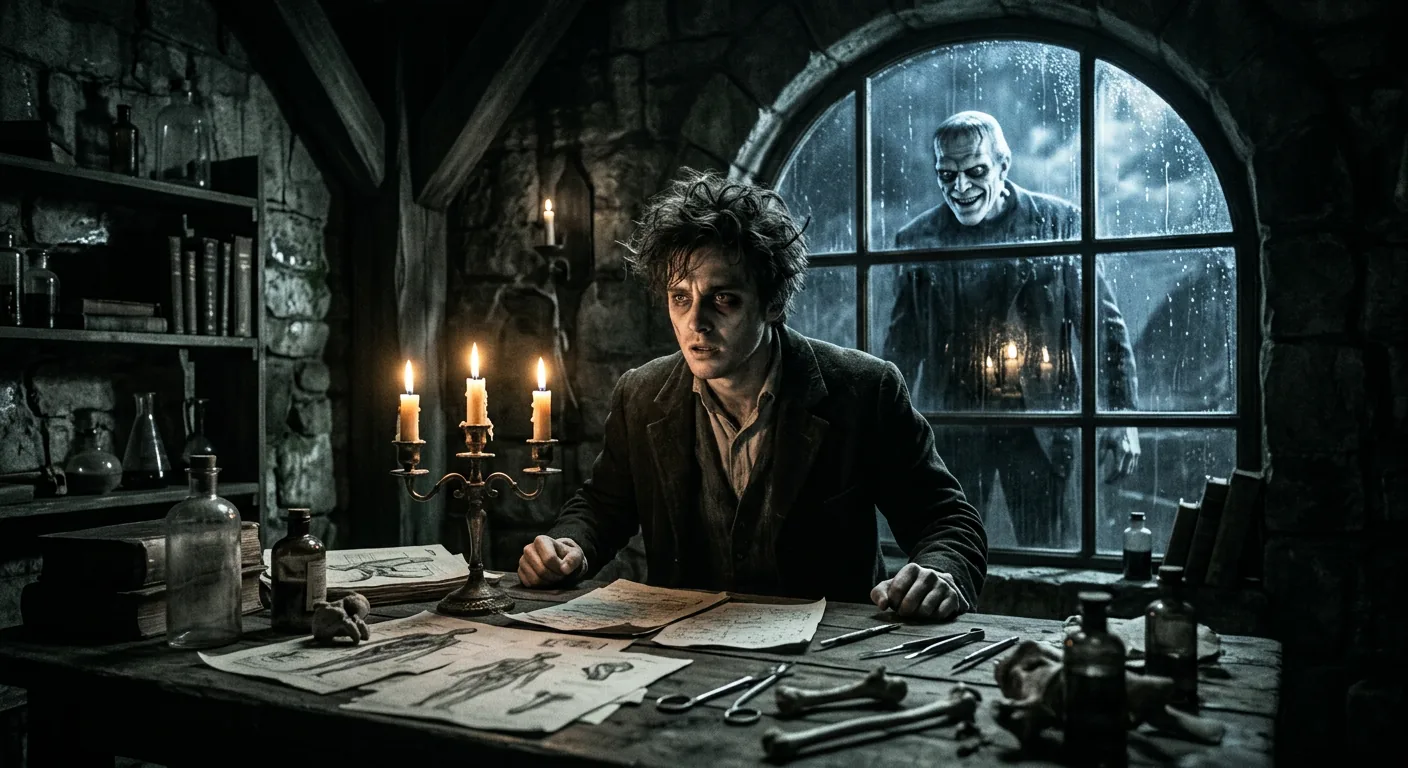
It was in the midst of these terrible contemplations that I lifted my gaze to discover the dæmon himself at my window, his ghastly countenance illuminated by moonlight, a grin of malevolent triumph contorting his features. In that instant, seized by a passion I can scarcely describe, I tore to pieces the half-formed creature upon my table. The wretch's howl of despair rent the night air as he withdrew, and I, trembling yet resolute, locked the laboratory door and swore a solemn vow never to resume those accursed labours.

Hours passed in dreadful solitude until the creature returned, entering my dwelling with predatory stealth to demand the fulfilment of my promise. Our exchange grew violent in its rhetoric—he proclaimed himself my master, I declared him a devil unworthy of a companion in vice—until at last he uttered those words that would echo through every subsequent moment of my existence: *"I shall be with you on your wedding-night."* I understood his meaning as a death sentence upon myself, yet when I thought of my beloved Elizabeth left to endless sorrow, tears—the first in many months—fell freely from my eyes.

The following days found me wandering that desolate isle like a restless spectre, consumed by the horror of what had transpired and what yet awaited. A letter from Clerval recalled me partially to life, beseeching me to join him at Perth before his departure for India. Before I could comply, however, there remained the grim task of disposing the remains of my destroyed creation. Under cover of darkness, I sailed out upon the water and cast the basket containing those dreadful relics into the sea, listening as it sank into oblivion. Exhausted, I stretched myself upon the bottom of the boat and succumbed to sleep—only to awaken adrift, driven far from shore by northeastern winds, utterly at the mercy of the immeasurable waters.

After hours of torment and terror, land appeared on the horizon, and I steered my failing vessel toward a small Irish town, my heart swelling with gratitude for this unexpected deliverance. Yet the reception that awaited me proved far from hospitable; the townsfolk gathered with expressions of suspicion and anger, and I was conducted forthwith to the magistrate to give an account of myself regarding a gentleman found murdered the previous night. Though innocent, I could not have foreseen the calamity about to descend upon me—one that would extinguish all lesser fears in an overwhelming flood of horror and despair, the details of which require all my fortitude to recall.

The Death of Henry Clerval illustration
Chapter 22

The Death of Henry Clerval

The hand of fate, it seemed, had contrived to place me in circumstances so damnably coincidental that no plea of innocence could readily penetrate the veil of suspicion which had descended upon my wretched person. I found myself brought before an aged magistrate of benevolent countenance, yet his eyes betrayed that severity which the law demands when confronted with the specter of murder most foul. The witnesses assembled against me—simple fishermen and village women—constructed through their testimonies a web of circumstance that bound me inexorably to the crime: a boat observed upon the waters at the fatal hour, a solitary figure matching my own desperate landing upon those inhospitable shores.

Yet what did their depositions matter to me until the mention of those black marks—the imprint of fingers upon the victim's throat? At these words, my very blood revolted within my veins, for I knew with terrible certainty whose monstrous hands had wrought this deed. The magistrate, Mr. Kirwin, observing my violent agitation, drew from my trembling frame that most unfavorable conclusion which any reasonable observer must reach. To test me further, he commanded that I be conducted to view the corpse itself, that my reaction might serve as evidence of guilt or innocence.

How shall I describe the annihilating horror that seized me when I beheld not some stranger's form, but the beloved features of Henry Clerval stretched lifeless before me? My dearest friend, my faithful companion, murdered by the creature I had unleashed upon the world! I flung myself upon his body in an agony of self-accusation, crying out that my murderous machinations had claimed yet another victim. The human frame, mercifully, could endure no more—I was seized by convulsions and carried from that chamber of horrors into a fever that consumed two months of my wretched existence.

During those delirious weeks, I am told my ravings were terrible to witness; I proclaimed myself the murderer of William, of Justine, of Clerval, and spoke of the fiend in terms that must have seemed the fantasies of madness. When at last consciousness returned, I found myself in a dungeon cell, attended by a coarse nurse whose brutal indifference to suffering matched the squalid misery of my surroundings. Why had death refused to claim me? I who deserved extinction far more than the blooming children it snatches daily from doting parents?

Yet Mr. Kirwin, despite his official suspicions, proved himself possessed of genuine humanity, providing what comforts the prison could afford. And greater mercy still awaited—for when he spoke of a visitor, my tortured mind leapt immediately to thoughts of the monster come to gloat, and I cried out in terror. But no fiend entered; it was my own dear father, come from Geneva upon receiving word of my misfortune. His presence proved the sole medicine capable of restoring my shattered constitution, though the shadow of Clerval's murdered form hung perpetually before my eyes.

The season of assizes approached, and though I remained weak unto death, I was transported to stand trial. Providence, however, had preserved one small mercy—witnesses could establish that I had been upon the Orkney Islands at the very hour of the murder, and thus the grand jury rejected the charges against me. I was liberated, yet felt no liberation; the walls of dungeon or palace were alike hateful to one whose cup of life was poisoned forever. My father spoke of Geneva, of Elizabeth, of home—but I remained torpid, interrupted only by paroxysms of despair so violent that constant vigilance was required to prevent me from ending my loathsome existence.

One duty alone recalled me from the abyss: the necessity of returning to protect those I loved and, should fate permit, to destroy the monstrous creation that had blighted all my days. We took passage upon a vessel bound for France, and as Ireland receded into darkness, I lay upon the deck beneath the stars, my memories unspooling like a dreadful tapestry from Geneva to Ingolstadt to this present ruin, until I wept bitterly and sought oblivion in a doubled dose of laudanum. Even sleep brought no respite—nightmares of the fiend's grasp upon my throat pursued me until my father's watchful presence drew me back to waking, where a fragile calm settled upon my spirit, that peculiar truce the mind constructs between present misery and the inexorable catastrophe yet to come.

The Burden of Unspoken Guilt illustration
Chapter 23

The Burden of Unspoken Guilt

The voyage across the waters ended at last, and Victor found himself in Paris, his strength so thoroughly exhausted that he was compelled to rest before continuing homeward to Geneva. His father attended him with tireless devotion, yet how could that good man remedy an affliction whose origins remained forever concealed from him? Alphonse urged his son toward society, toward the pleasant diversions of human company, but Victor recoiled from such prescriptions—not from hatred of mankind, no, for he felt himself drawn even to the most wretched among them as to celestial beings—but from the terrible knowledge that he had unchained a monster upon the world, a creature whose delight was the shedding of innocent blood. How they would despise him, hunt him from their midst, did they know the unhallowed acts that had their source in his ambition!

In his anguish, Victor confessed to his father that he was the true murderer of William, Justine, and Henry—all had died by his machinations. Yet Alphonse, hearing such wild assertions, could only attribute them to delirium, to some fever-born fancy that persisted beyond illness. Victor dared not speak plainly of the creature he had made, for who would believe him? He would be thought mad, and worse, the revelation would fill his father's breast with unnatural horror. Thus he remained silent, though his soul thirsted for sympathy, and those terrible confessions burst from him unbidden, offering partial relief to his mysterious woe.

As weeks passed, a fragile calm descended upon Victor's spirit, though misery remained his constant companion. It was then that Elizabeth's letter arrived—tender, anxious, yet trembling with a question she had long wished to ask. Did Victor love another? She released him from any obligation of honour, declaring that their marriage would render her eternally miserable unless it sprang from his own free choice. Her words stirred something soft within his heart, whispered of paradisiacal dreams, yet instantly the monster's threat returned to his memory with terrible force: *I will be with you on your wedding-night!*

Victor interpreted this sentence as his own death warrant. Very well—let it be so. If the fiend proved victorious, Victor would find peace at last; if vanquished, freedom, however hollow. He resolved that his union with Elizabeth should not be delayed a single hour by the monster's menaces, and he wrote to her with calm affection, promising to reveal his dreadful secret the day after their marriage.

Upon returning to Geneva, Victor found Elizabeth changed—thinner, her vivacity diminished—yet her gentleness made her a fitting companion for one so blasted as himself. The wedding day was fixed, preparations made, congratulations received, all wearing the appearance of joy while Victor concealed the anxiety gnawing at his heart. He armed himself with pistols and dagger, ever watchful, yet as the ceremony approached, the threat seemed almost a delusion, the promised happiness increasingly certain.

The wedding was performed, and Victor and Elizabeth embarked upon the lake toward Evian, where they would spend their first night as husband and wife. The day was fair, the mountains sublime, and for those fleeting hours upon the water, Victor tasted something like happiness. Yet as the sun sank beneath the horizon and they touched the shore at Evian, those cares and fears revived within him—presentiments of the horror that would soon clasp him and cling to him forever.

The Creature's Deadly Wedding Night Vengeance illustration
Chapter 24

The Creature's Deadly Wedding Night Vengeance

The night that ought to have been Victor's bridal refuge became instead the theatre of his most devastating loss, the culmination of every dread that had haunted him since the Creature first breathed life beneath his trembling hands.

They had arrived at eight o'clock, Victor and Elizabeth, walking briefly upon the shore as the transitory light surrendered to encroaching darkness. The mountains and waters, though obscured by night, still traced their black outlines against the sky—a sublime landscape that seemed to Victor not peaceful but ominous, pregnant with unspoken menace. The wind rose violently from the west, the moon dimmed behind swift-moving clouds, and a heavy storm descended, as though nature herself conspired to herald the approaching catastrophe.

Victor remained watchful throughout the evening, a pistol concealed against his breast, every faculty strained toward the conflict he believed inevitable. Elizabeth, observing his agitation with growing terror, pressed him to confess his fears, but he could offer only hollow reassurances—*this night is dreadful, very dreadful*—words that revealed more than they concealed. Reflecting that his anticipated combat would prove fearful for his bride to witness, Victor entreated her to retire to their chamber, resolving to face his adversary alone. He paced the passages of the inn, inspecting every corner that might harbour the fiend, yet discovered no trace of him.

Then came the scream—shrill, dreadful, emanating from Elizabeth's room—and in that instant, the whole truth crashed upon Victor's consciousness with annihilating force. He rushed to the chamber to find her lifeless, thrown across the bed, her pale features half-obscured by dishevelled hair, the murderous mark of the Creature's grasp upon her throat. The monster had fulfilled his wedding-night promise with diabolic precision, claiming not Victor's life but the life most precious to him. Looking up in his agony, Victor beheld the fiend himself at the window, a hideous grin upon his face, his finger pointing in mockery toward the corpse. Victor fired his pistol, but the Creature eluded him, plunging into the lake and vanishing despite hours of futile pursuit.

Overwhelmed by fever and exhaustion, Victor collapsed and was carried to bed, his mind reeling through the accumulated horrors—William, Justine, Clerval, and now Elizabeth. Fear for his father and brother roused him to action, and he returned to Geneva with desperate haste, only to find that his tidings proved fatal to his venerable father, whose heart could not endure the loss of Elizabeth. Within days, the old man died in Victor's arms.

What followed was darkness and madness. Confined to a dungeon cell, Victor lost all sensation of time and self, his waking hours indistinguishable from nightmares. When reason finally returned, it brought with it a singular, consuming purpose: revenge. He sought aid from a Genevan magistrate, relating his extraordinary history with calm precision, but found only polite incredulity. The magistrate, unable to credit a tale of animated corpses and superhuman pursuit, gently dismissed Victor's demands as the effects of delirium.

Enraged and rebuffed, Victor departed with a resolution hardening in his breast—if society would not pursue his destroyer, he would undertake the hunt himself, devoting whatever remained of his shattered existence to the Creature's annihilation, a pursuit that would now carry him beyond the boundaries of civilized lands and into the frozen wastes of the unknown world.

A Vow of Vengeance Begins illustration
Chapter 25

A Vow of Vengeance Begins

And so the tale draws toward its close upon those frozen seas, where fury and vengeance have driven both creator and creation to the uttermost ends of the earth.

Victor, his heart consumed utterly by that singular flame of retribution, recounts to Walton the commencement of his dread pilgrimage. Geneva, once beloved in the days of his happiness, had become hateful to him in his adversity, and he departed from that place forever, bearing only a sum of money and those few jewels which had belonged to his mother. His wanderings thereafter were to cease but with life itself—traversing deserts and barbarous countries, enduring hardships that would have destroyed a lesser spirit, sustained only by that burning desire to destroy the fiend who had taken all he loved.

At the cemetery where William, Elizabeth, and his father lay in their eternal repose, Victor knelt upon the sacred earth and swore a terrible oath, invoking the spirits of the departed and the wandering ministers of vengeance to aid him in his grim work. Yet scarcely had the words escaped his quivering lips when a loud and fiendish laugh echoed through the stillness of night, the mountains themselves seeming to mock his anguish. That well-known and abhorred voice whispered close to his ear: "I am satisfied, miserable wretch! You have determined to live, and I am satisfied."

Thus began the chase that would lead Victor across the windings of the Rhône, through the wilds of Tartary and Russia, ever northward toward the everlasting ices. The creature, that hellish adversary, left marks upon tree bark and stone—scoffing messages designed to instigate his fury whilst guiding his pursuit. Through snow and frost, sustained by dreams in which his departed friends yet lived and spoke to him, Victor pressed onward, his existence hateful save for those blessed hours of sleep wherein he found momentary respite from his torment.

At last, upon the frozen ocean, Victor glimpsed his enemy—a dark speck upon the dusky plain—and warm tears of hope filled his eyes. Yet at the very moment when his foe appeared within grasp, a ground sea split the ice with tremendous sound, leaving Victor adrift upon a diminishing fragment, his dogs dying around him, until Walton's vessel appeared upon that desolate horizon.

Walton, writing now to his sister Margaret, confesses himself deeply moved by this strange and terrific tale. He has watched Frankenstein's noble countenance alternate between indignation and infinite wretchedness as he related these horrible incidents, and though reason might counsel doubt, the letters of Felix and Safie, together with the apparition of the monster seen from the ship, have convinced him of its truth. Their conversations have revealed Victor as a glorious creature even in ruin—eloquent, learned, yet utterly desolate, beyond any counsel to live.

The vessel finds itself imprisoned by mountains of ice, and Walton's crew, fearing destruction, demand that their captain turn southward should escape prove possible. Victor, roused from his languor, delivers an impassioned speech urging them to be more than men, firm as rock against the mutable ice. Yet his strength fails, and when the passage opens at last, Walton consents to return, his hopes of glory blasted.

Victor, too weak to pursue his purpose further, speaks his final words—a tempered reflection upon his duties toward the creature he created and toward his fellow beings—before his eyes close forever, a gentle smile passing from his lips.

But the tale is not yet complete, for at midnight, Walton discovers the creature himself, that gigantic and distorted form, hanging over his creator's coffin in postures of grief. In a voice suffocated by anguish, the being laments the consummation of his crimes, confessing that his heart, fashioned for love and sympathy, had endured torture unimaginable in its wrenching transformation to hatred. Now, with his last victim cold in death, he announces his intention to seek the most northern extremity of the globe and there consummate his own destruction upon a funeral pile—that no unhallowed wretch might ever create such another as he.

With these words, he springs from the cabin window onto the ice raft and is borne away by the waves, lost in darkness and distance, leaving Walton alone with his grief and the vessel turning southward toward England—toward home, toward consolation, and toward the burden of carrying this extraordinary testimony into the world of the living.

Back cover