قِصّهٔ بازرگان و طوطی
The Story of the Parrot and the Merchant
The Generous Merchant
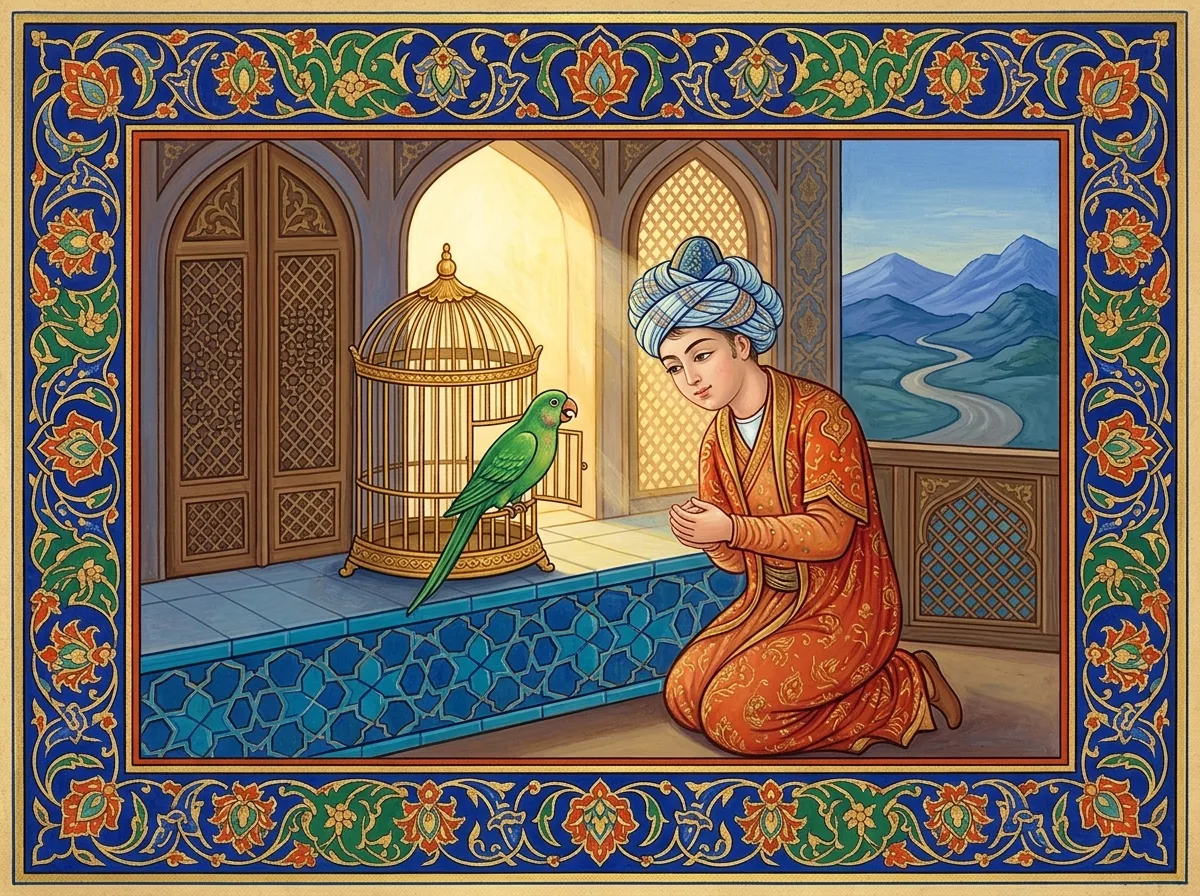
در قفس محبوس زیبا طوطیی
a beautiful parrot in a fine cage.
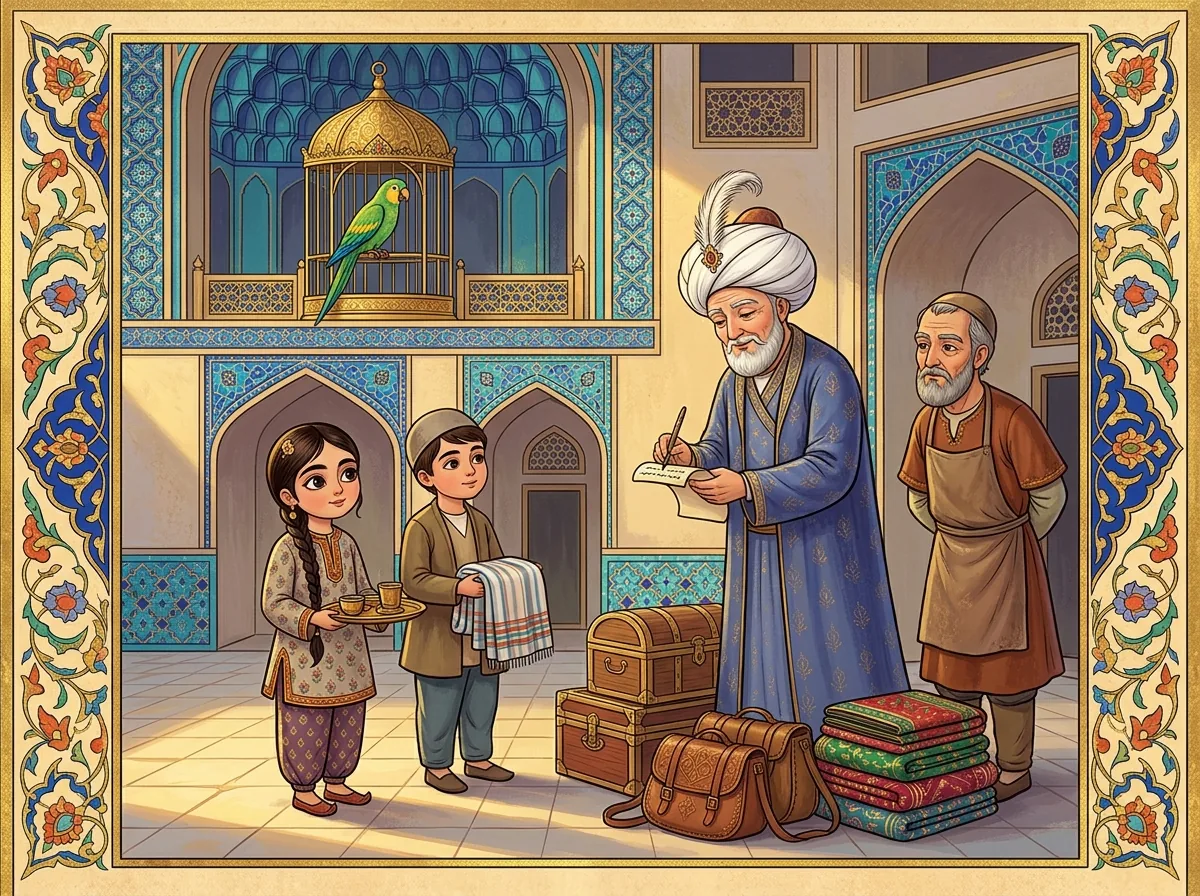
There was once a merchant in old Persia, and in his house there was a parrot — a beautiful green parrot kept all its life in a fine gilded cage on the windowsill. The bird could speak. It spoke kindly. The household loved its small voice in the morning.
When the merchant prepared to journey east to Hindustan to trade, he was a generous man. Before he left he went room by room asking each servant — every page-boy, every kitchen girl — what souvenir they would like him to bring back. To each one he listened. To each he made a promise. At last he came to the parrot. "And you, little friend?"
The Parrot's Only Request
چون ببینی کن ز حال من بیان
tell them, please, of how I am."
The parrot did not ask for a thing. "When you are there in Hindustan," it said, "and you see a flock of parrots in some great tree — green like me, every one of them — give them this message from me. Say: there is a parrot in a city far away who longs for you. By the decree of heaven I am held in a cage. I sent my greetings. I asked for a way out."
It paused. Its small head tilted. "Tell them: is this how it is between friends? That I sit in iron and you sit in the rose-garden? When you drink the morning, drink one cup in memory of this poor caged bird." The merchant gave his word. He did not know yet what he had agreed to carry.
Among the Free Parrots of Hindustan
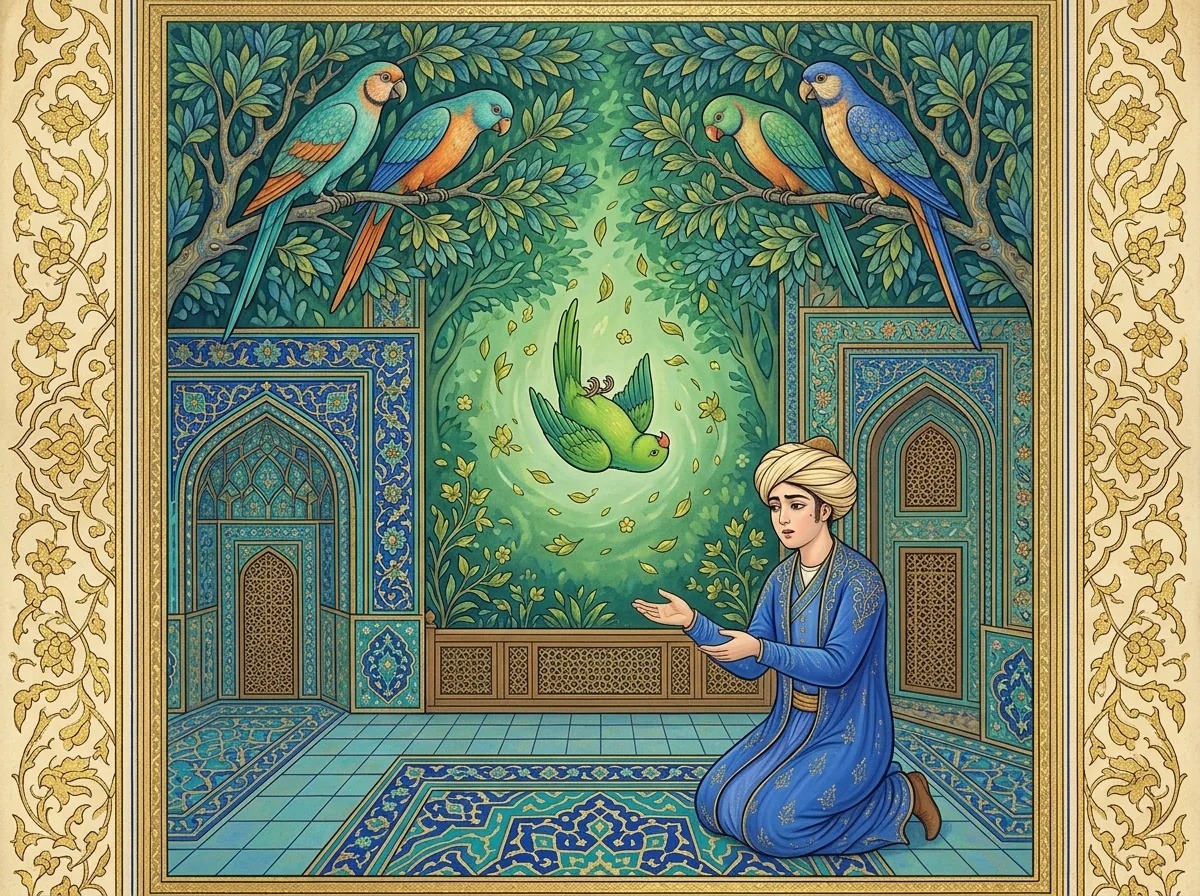
زهرهاش بدرید و لرزید و بمرد
its courage burst. It trembled. It fell.
The road was long. He crossed mountains. He sold his goods at the bazaar of Hindustan. The work of the journey took the days, and the parrot's message slept folded inside him like a letter inside a coat.
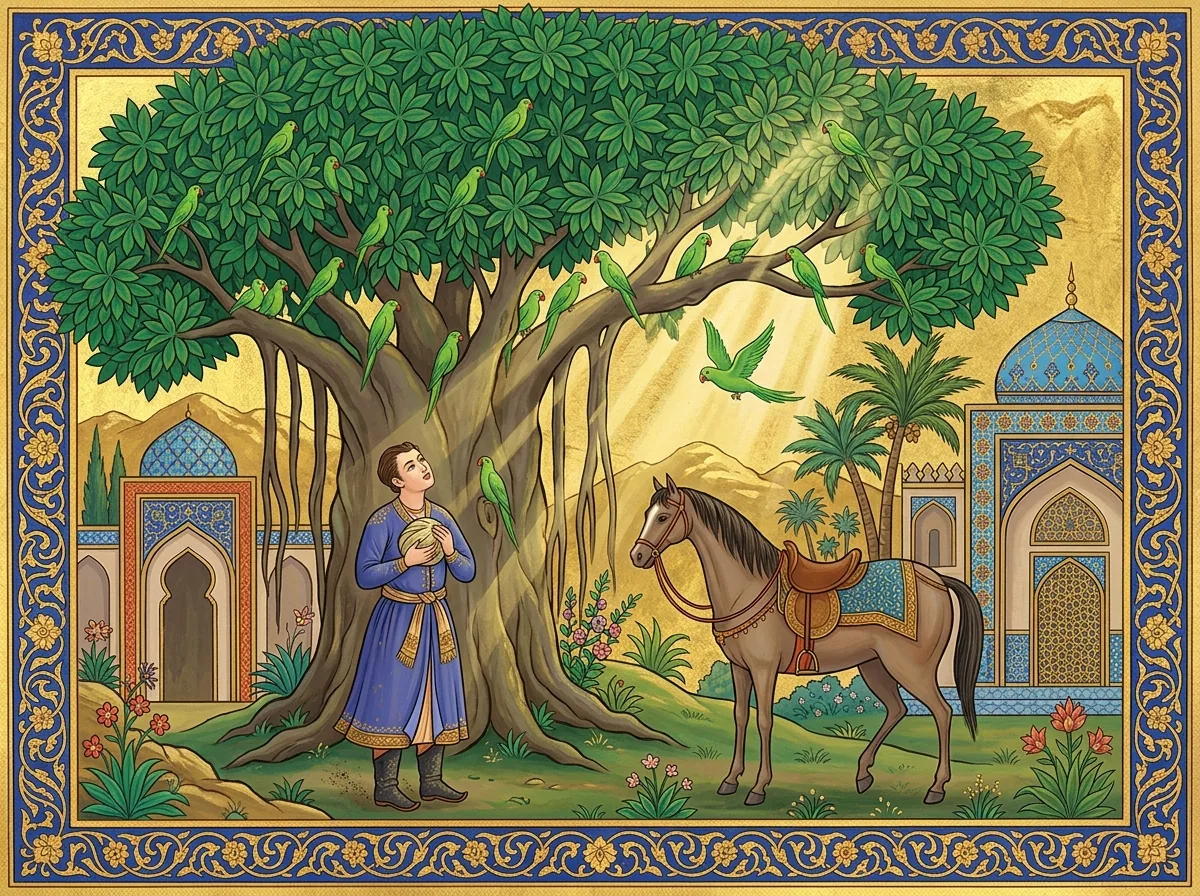
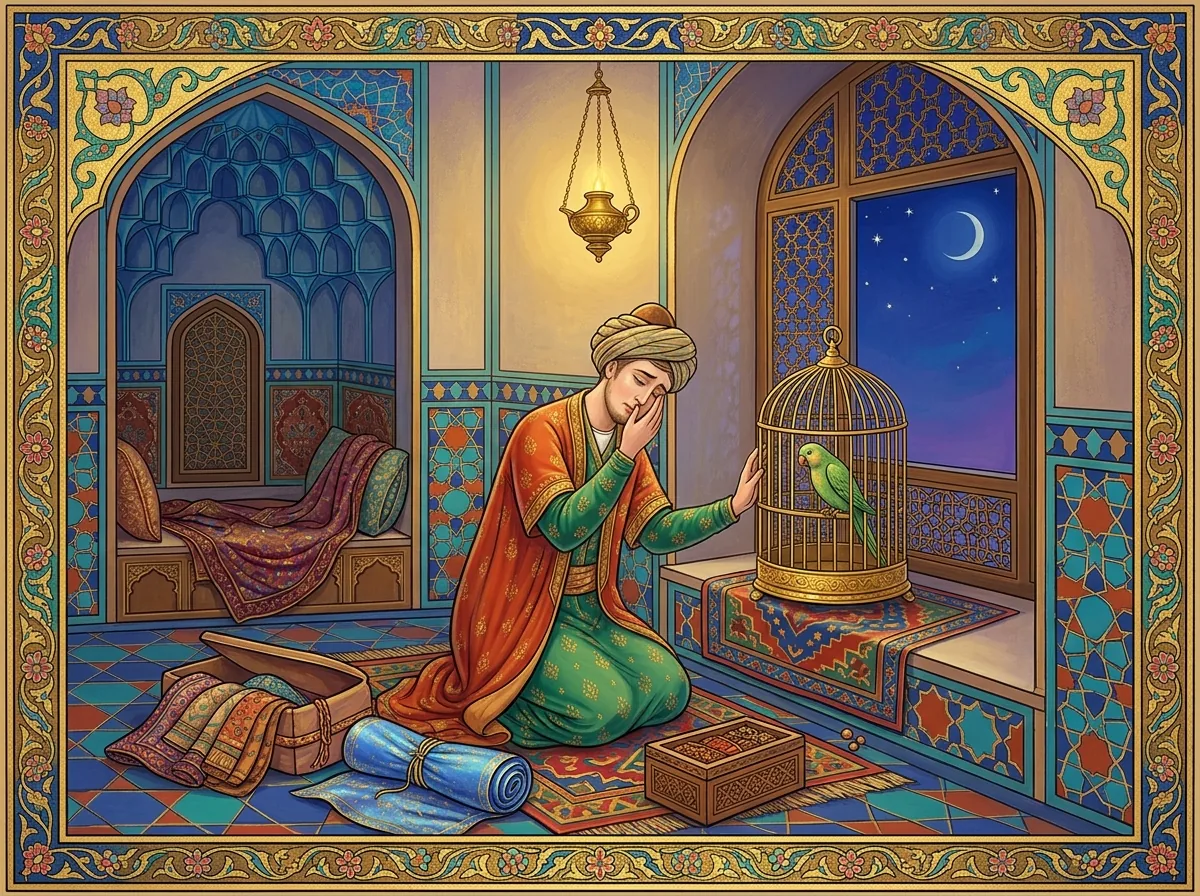
Then one afternoon, riding home through forest at the edge of the trade road, he looked up — and the trees above him were full of parrots. A whole company of them, green as the one in his window. He climbed down. He stood beneath the canopy with his face turned up to them. He repeated every word the caged parrot had asked him to say. He was still speaking when one bird — one out of all that bright crowd — went still, trembled, and fell straight down through the dappled green light. It struck the soft earth at his feet and did not move.
The Return and the Confession
همچو تیری دان که آن جست از کمان
count it an arrow already gone from the bow.
He came back to his own city after many months. He gave the silk for one, the spices for another, the sandalwood beads for a third. Every promise paid. Then he climbed the stairs to the windowsill where the parrot was waiting in the same gilded cage.
"And my gift, master?" the bird said. The merchant put his hand to his face. "Don't ask me. I bite my own fingers when I think of it. I had no idea what I was carrying. I told them about you, and one of them — the moment it heard your name — trembled and fell at my feet. I have wished a thousand times I had kept silent. But the word once said cannot be unsaid."
The Body Cast from the Window
دست را در هر گیاهی میزند
his hand reaches for any blade of grass.
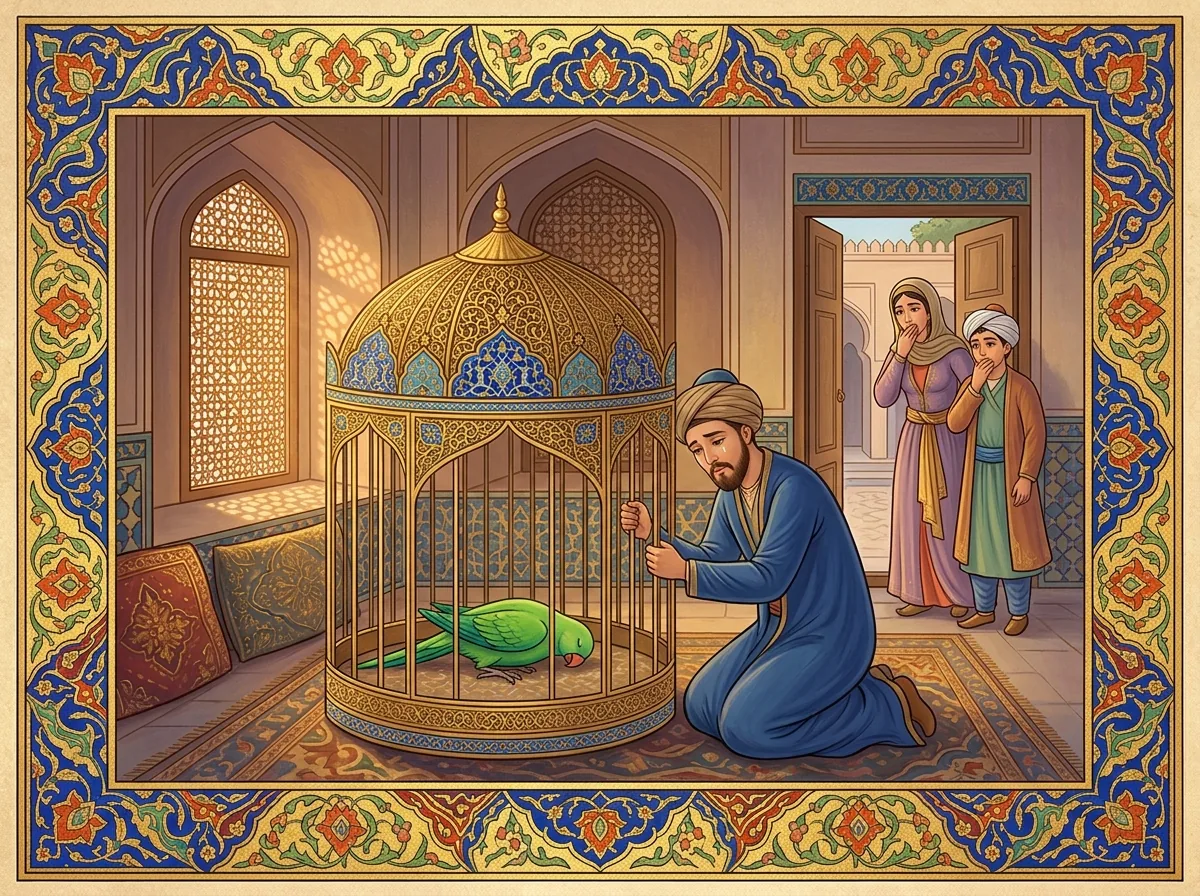
The parrot in the cage listened to the whole story. When the merchant finished, the parrot trembled — exactly the same tremble. The shudder ran from its small head down through its tail. Then it fell. It dropped from the perch onto the floor of the cage and lay on its side and did not move.
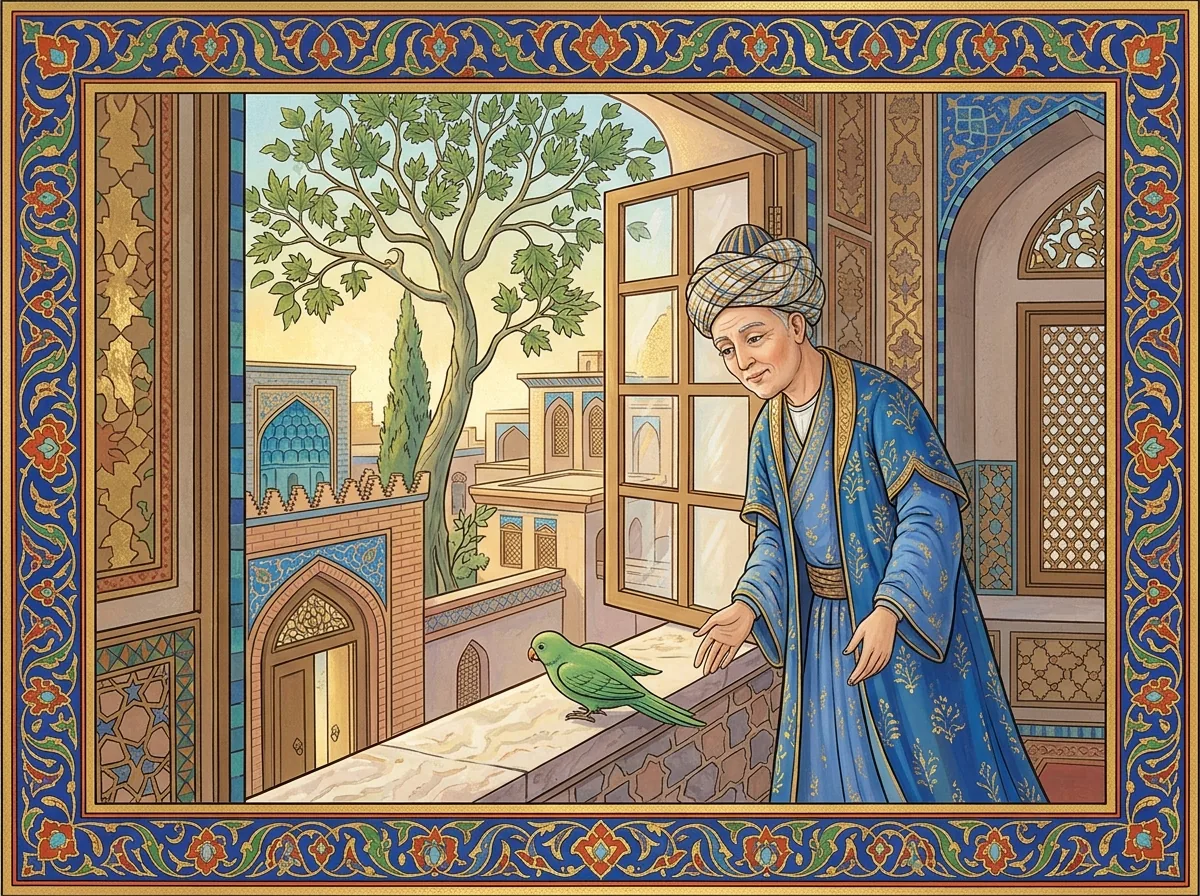
The merchant could not understand what he had just seen. He cried out. He struck himself on the head. The household crowded into the doorway. At last he opened the cage. He lifted the small green body out, with both hands, the way you carry something that has just stopped being alive. He carried it to the open window. He bent his head and let it slip from his fingers down onto the wide stone sill.
Up to the Highest Branch
کآفتاب شرق، تُرکیتاز کرد
like the eastern sun loosed across the sky.
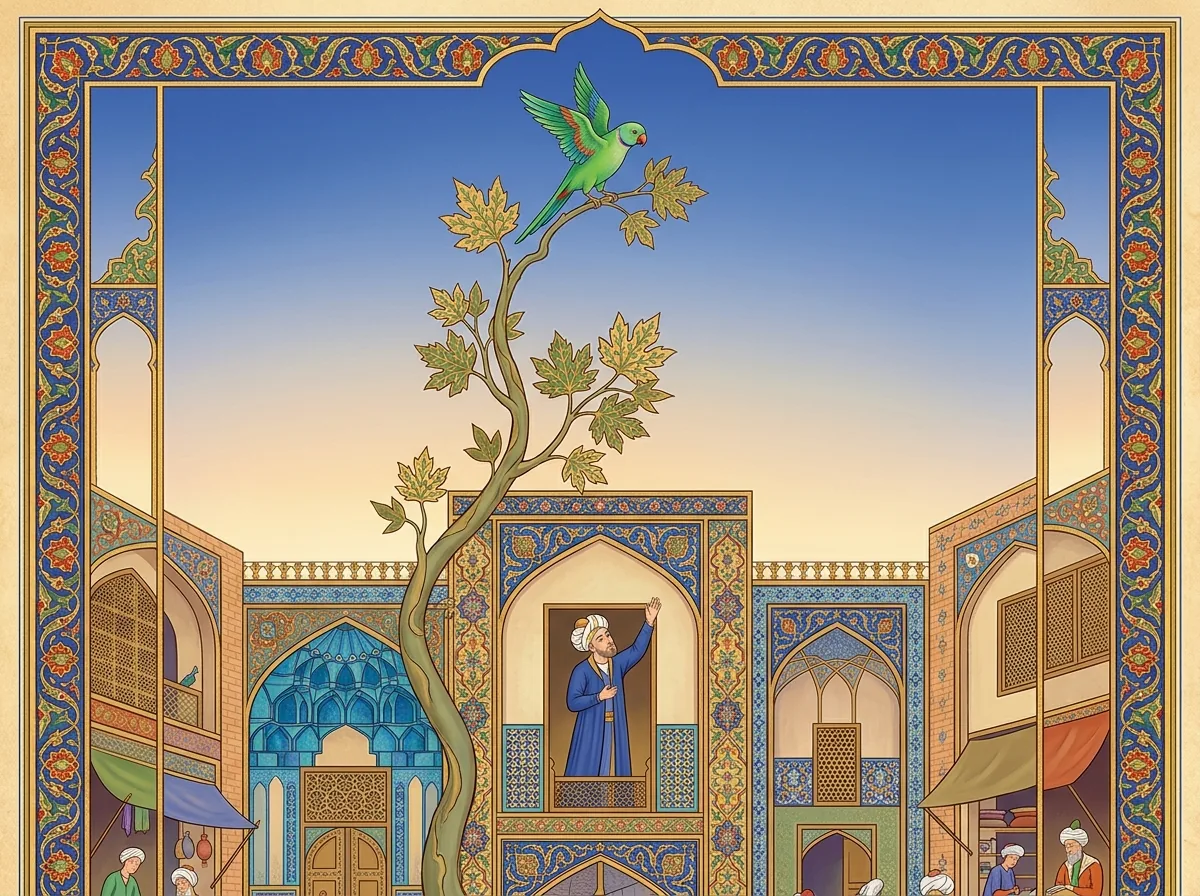
The parrot opened its wings. It rose from the sill in a clean upward curve, and in two beats of its wings it had crossed the courtyard, and in three more it was up among the highest branches of a tall plane tree across the street, where it stood looking down at him.
The merchant could not move. He stood at his own window with his empty hands open at his sides. "Oh, sweet singer," he called up at last, "what did that other parrot do, that you learned this from?"
The parrot looked down. "He gave me my answer in the only way he could. His message was: let go of the sweetness of your voice. Your singing is the bar of your cage. He died in front of you so that I would understand. I have died here in front of you so that I could fly. That is the only way out."
بعد از آن گفتش: «سلامٌ، الفِراق»
What the merchant had been mourning was not a death. It was the only message a caged bird can send to the one who keeps it: moutu qabla an tamutu — die before you die. Become so empty that no cage can hold you. Then go.
"My own soul cannot be less than a parrot's," the merchant said quietly. "A soul too should know how to fly like that."