Pangu Separates Heaven and Earth
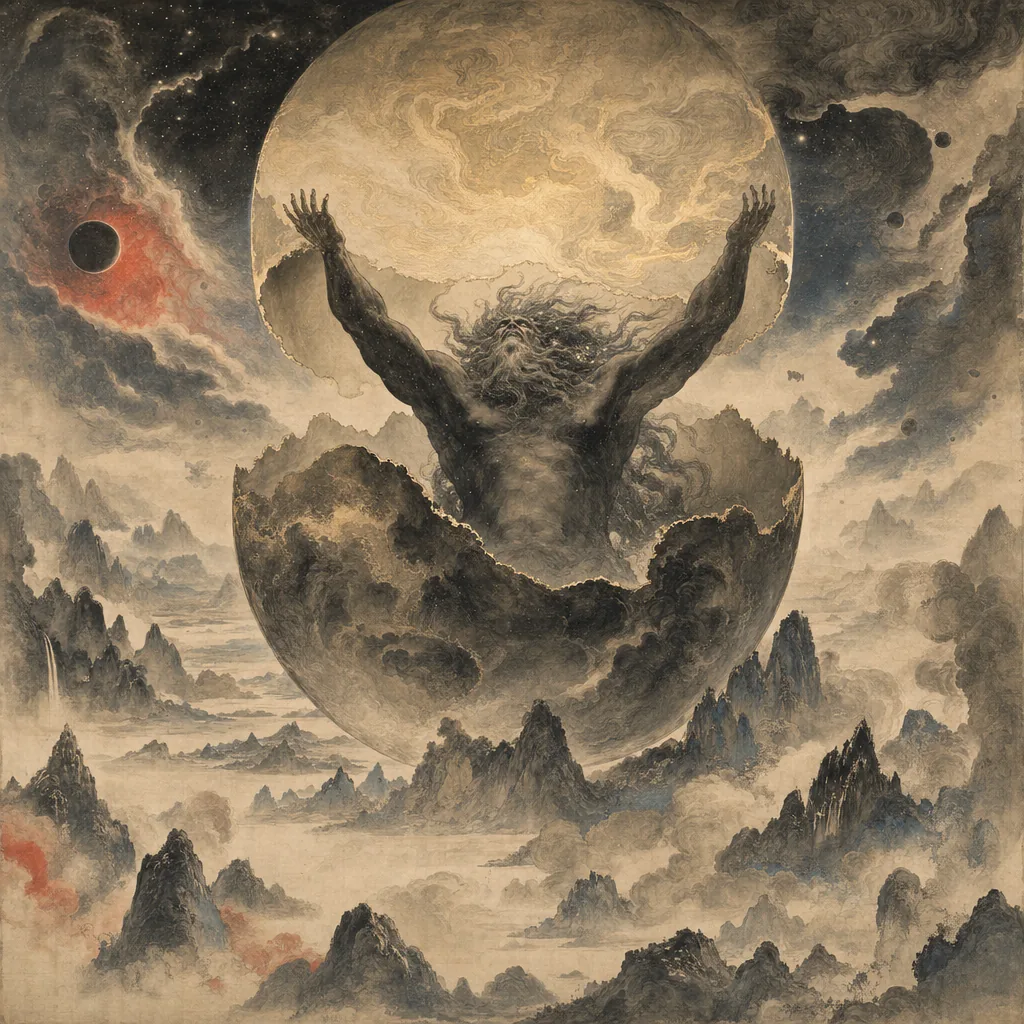
Before there was time, there was an egg. Inside the egg was a darkness without shape and a brightness without place, mixed and turning slowly. Inside the egg, asleep, was Pangu.
He slept eighteen thousand years. The yolk that surrounded him was thick and humming. Around him the heavy dropped and the light rose, but each so slowly that they could not part, and so they swayed together, dim and warm, while he grew. He grew toward the inside of the shell.
When he woke, he was as large as the egg. He could not move. He saw nothing. He pushed against the dark with his shoulder, and the dark gave a little. He pushed again, and a thin crack opened over his face. Through it came a sound like wind passing through a forest at the edge of the world.
He set his shoulders against the lower half of the egg and his palms against the upper half, and he pressed.
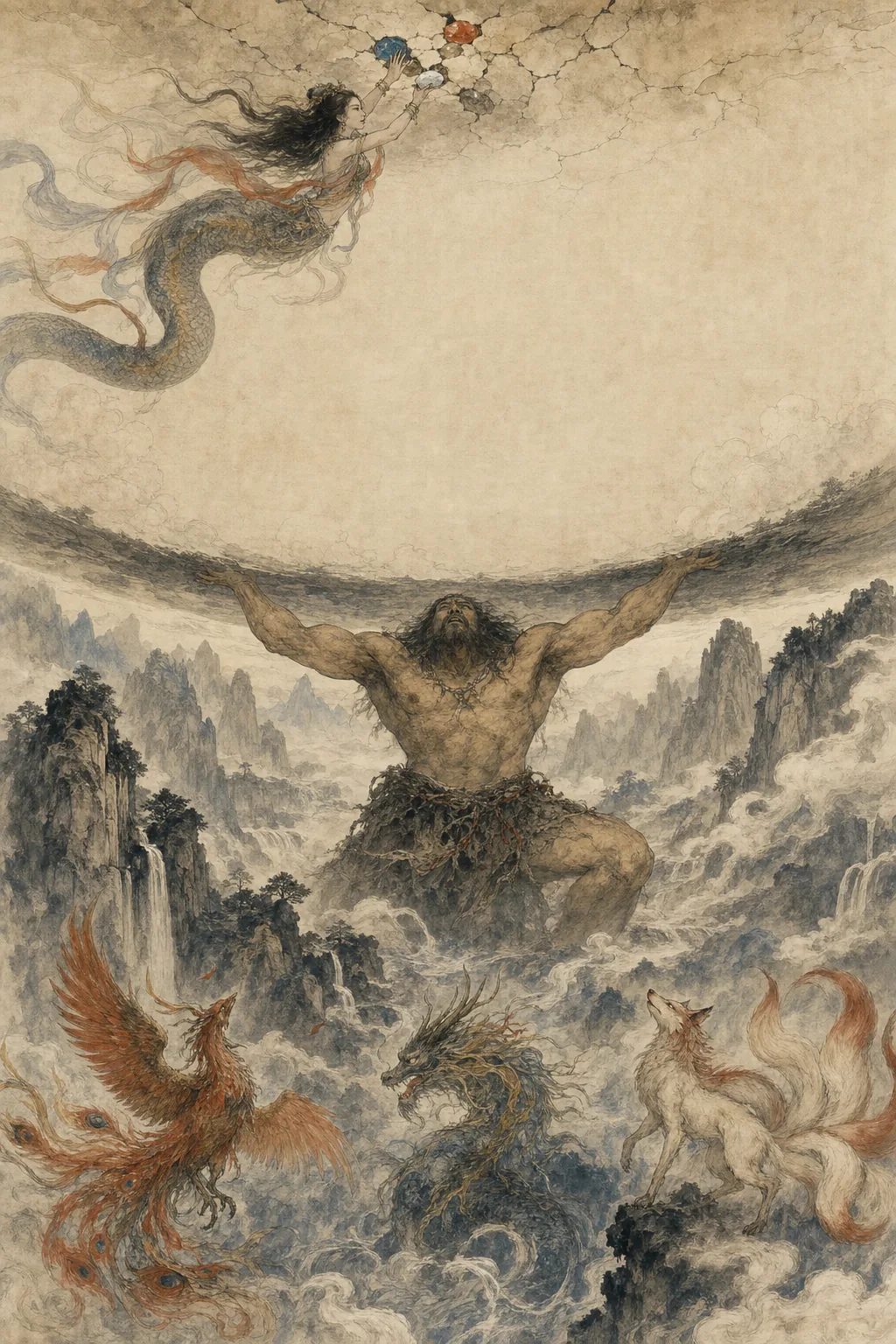
Slowly the dark beneath him settled and grew heavy. It became the earth. The brightness above him drifted up and grew thin. It became the sky. The two pieces of the egg pulled apart, finger-width by finger-width, and Pangu held them apart with his body. Each day the sky rose ten feet higher. Each day the earth grew ten feet thicker. Each day Pangu grew ten feet taller, lifting one and pressing the other.
Eighteen thousand more years he stood. The sky climbed beyond reach. The earth dropped past sight. He grew lonelier with every breath. There was nothing in the space he had made except him.
When the sky was so high that no man would ever touch it, and the earth was so deep that no spade would ever bottom it, Pangu lay down. He had finished. His breath, going out, became the wind that passes through grasses. His voice, leaving him, became the rolling sound that follows lightning. His left eye, opening, became the sun. His right eye became the moon. His four limbs and five extremities became the great mountains, set at the corners of the world. His blood ran out and became the rivers. His sinews stretched and became the roads through the hills. His flesh softened and became the soil of the fields. His hair drifted up and became the stars. His teeth and bones sank and became the metals and the stones. His sweat became the rain that washes the earth. The small living things that had crept upon his skin became the human beings, scattered and small and looking up.
He himself was nowhere anymore. He had gone into everything. From him was made everything that has shape, and inside everything that has shape, he is still working. The sky still rises a finger-width each year. The earth still settles a finger-width. The space between them is the place where things happen.
This was the first work. After it, the world was ready to be filled.
Nuwa Shapes the People
In the early days the world was beautiful and empty. Mountains stood without names. Rivers ran without bridges. Forests rose without paths. The deer ran in herds. The geese moved across the sky in lines. There was no one to see them.
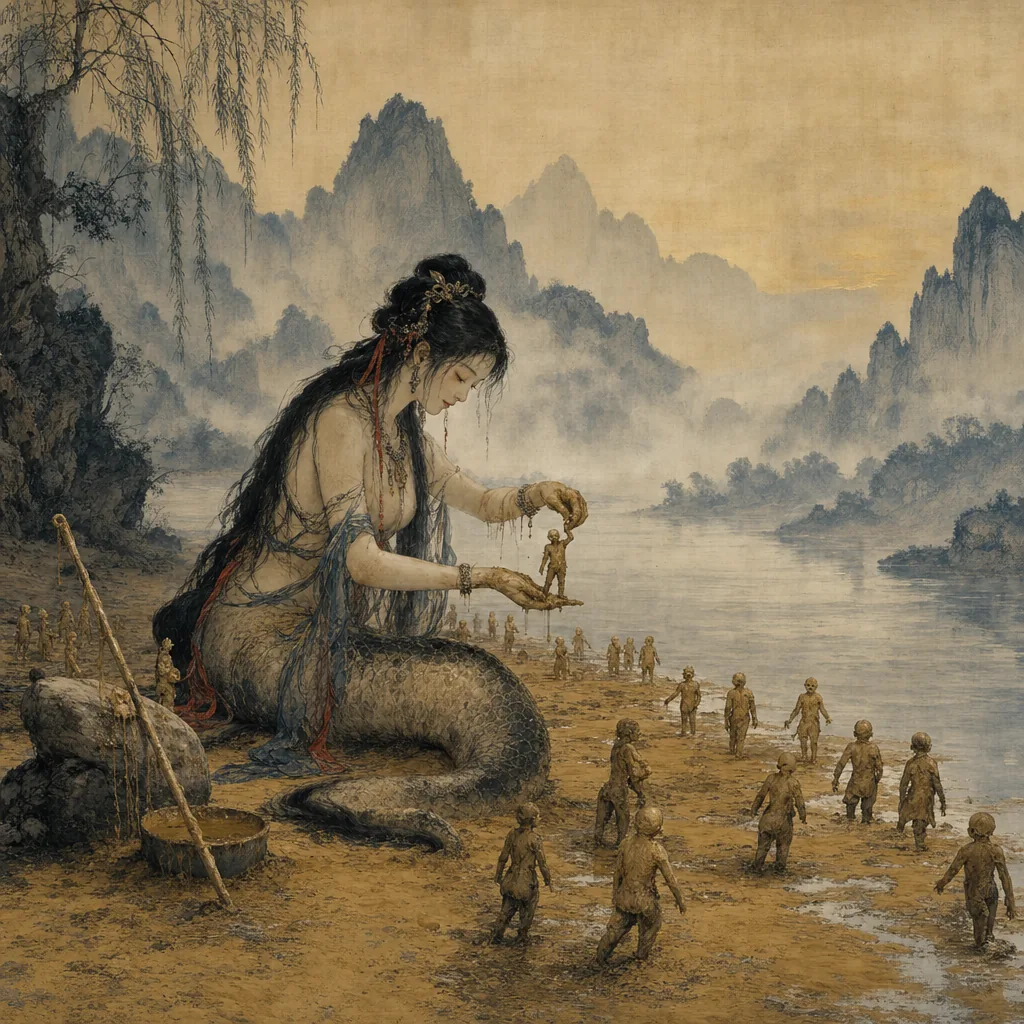
Nuwa walked the new earth alone. Her face was a woman's face. Her body, below the waist, was a great snake. She moved through the fields and the marshes, and her track was a long curving line in the dust. She heard the wind in the reeds. She heard the call of the cranes. She did not hear another voice.
She came to the bank of the Yellow River. The water there was thick and yellow and slow. She bent down and looked at her own face in the water. The face on the surface looked back, and for a moment she felt less alone, but the face on the surface could not speak.
She put her hand into the bank and took up a fistful of soft yellow clay. She kneaded it on her palm. She thought of the cranes and the deer, of the dragonfly with its narrow wings, of the tiger with its broad shoulders. She thought of her own face. She shaped a small figure with two arms, two legs, a torso, a head. She gave it eyes, a mouth. She set it on the bank.
She breathed on it.
The figure stood up. It looked at her. It opened its mouth and made a sound. Then it laughed.
She laughed back. She had been alone. She was not alone now.
She made another. And another. She made hundreds, then thousands. They scattered across the bank. They climbed up the slopes. They built fires. They called to one another across distances. They gave each thing a name. They began to need many things at once.
She kept making them. The clay was soft and the day was long, but the day ended. Her arms grew tired. The world was vast — the plain, the desert, the steppe, the wide forests. There were not enough of her people to fill all of it. She stood on the bank and looked at the empty places, and her hands ached.
She broke a willow branch from the tree above her and dipped it in the slurry of the bank. She lifted it and shook it. Drops of clay flew from the tip. Where the drops fell, small figures rose up and stood. They were rougher than the ones she had shaped by hand. Their lines were less even. But they breathed and walked and called to one another, and they were her people too.
Some say that those whom Nuwa shaped slowly with her hands became the lords and the careful makers, and those whom she flicked from the willow branch became the workers and the wanderers. Both are her children. Both speak with the same mouth and weep with the same eyes. She made no distinction in her affection. She only ran out of time.
When the work was done she lay back against the trunk of the willow and watched her people. They moved across the plain like a slow tide. They were already inventing language. They were already inventing trouble. She understood that the next of her work would not be making them, but mending what they did to themselves and to the world. She closed her eyes for a moment. Then she stood and went to begin.
The rest is waiting.
58 illustrated classics. Cinematic, anime, and kids editions. $4.99 a month — about the price of a coffee.
Gonggong Strikes Mount Buzhou
Subscribe to read this chapter.
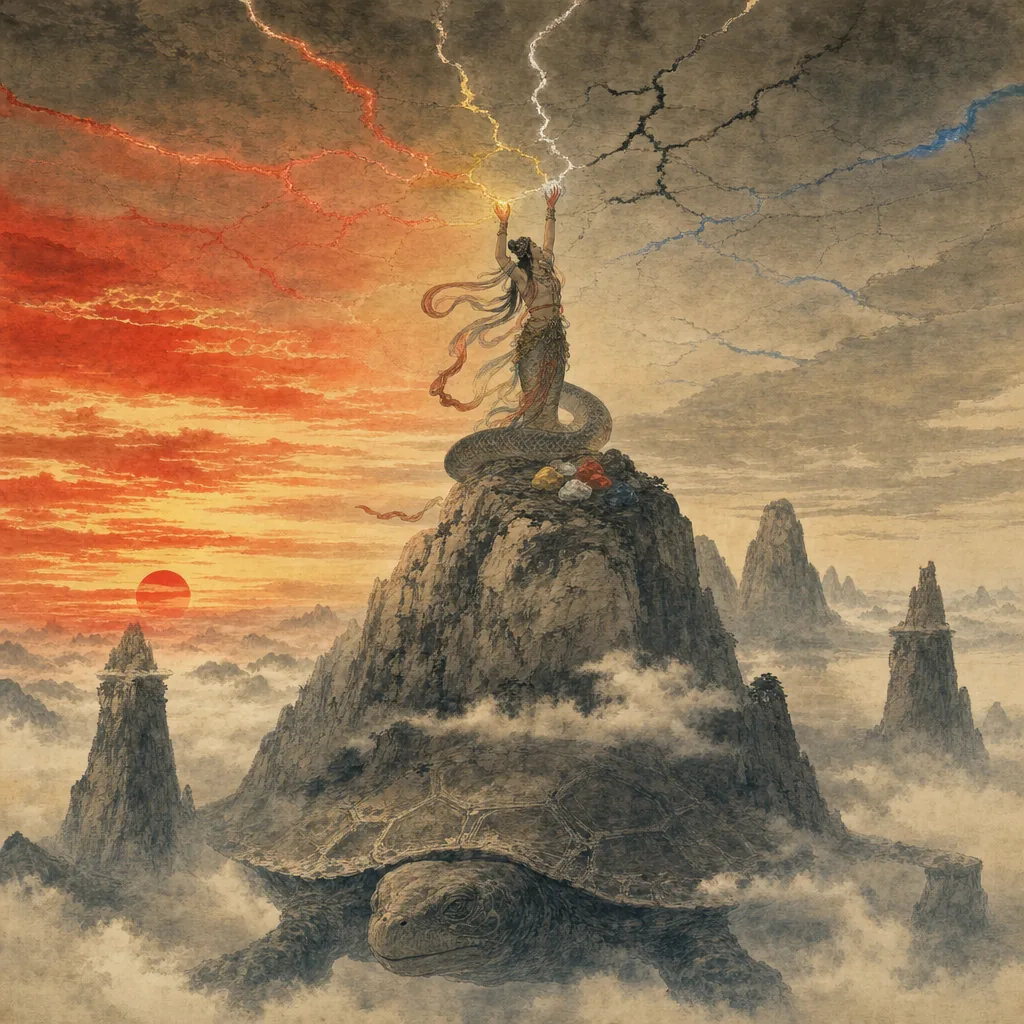
Nuwa Mends the Sky
Subscribe to read this chapter.
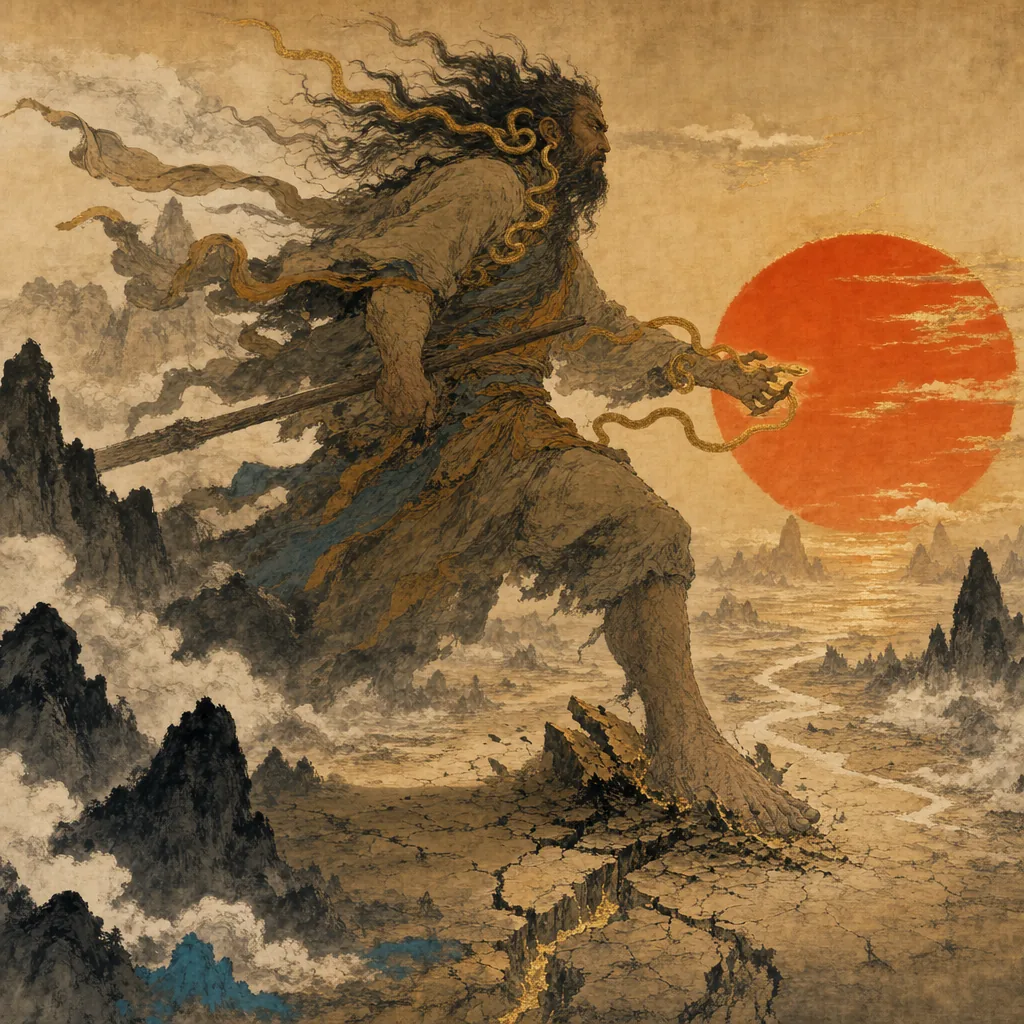
Kuafu Chases the Sun
Subscribe to read this chapter.
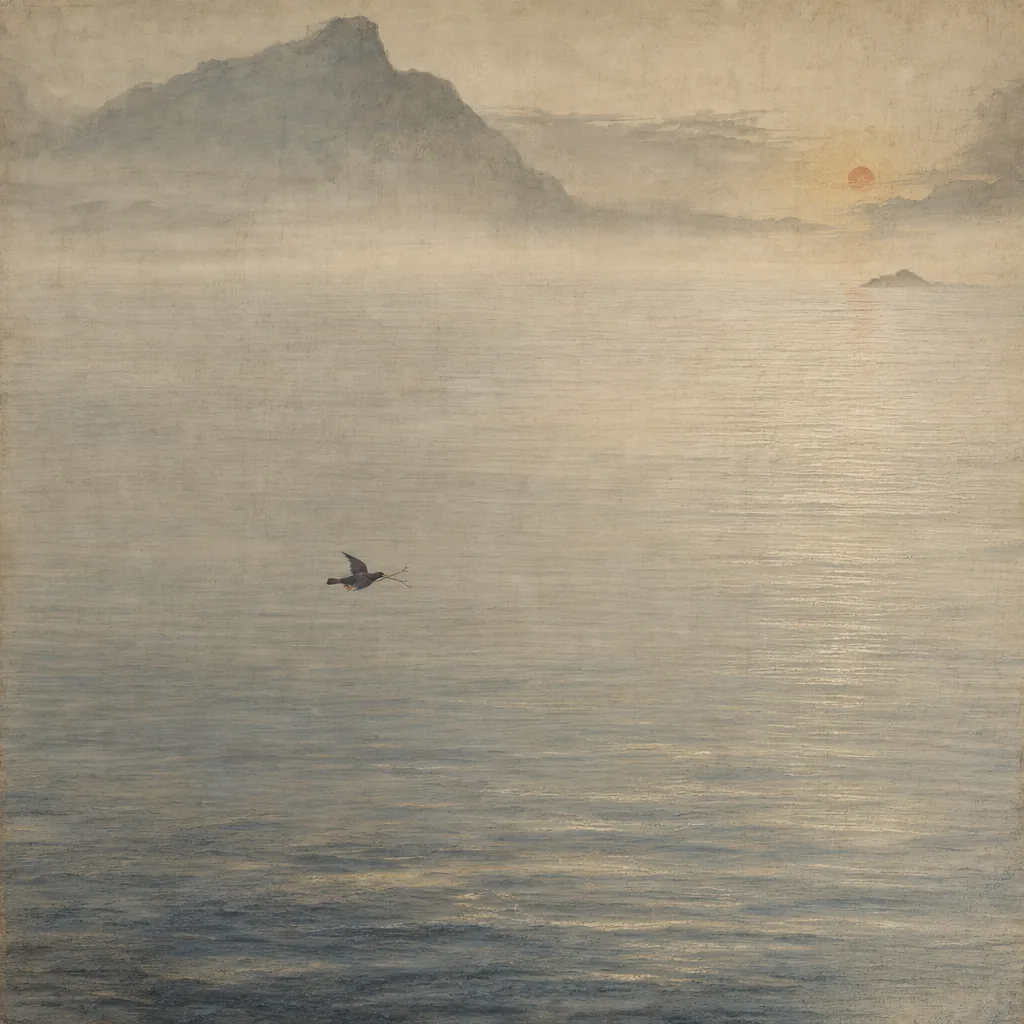
The Bird Jingwei and the Sea
Subscribe to read this chapter.
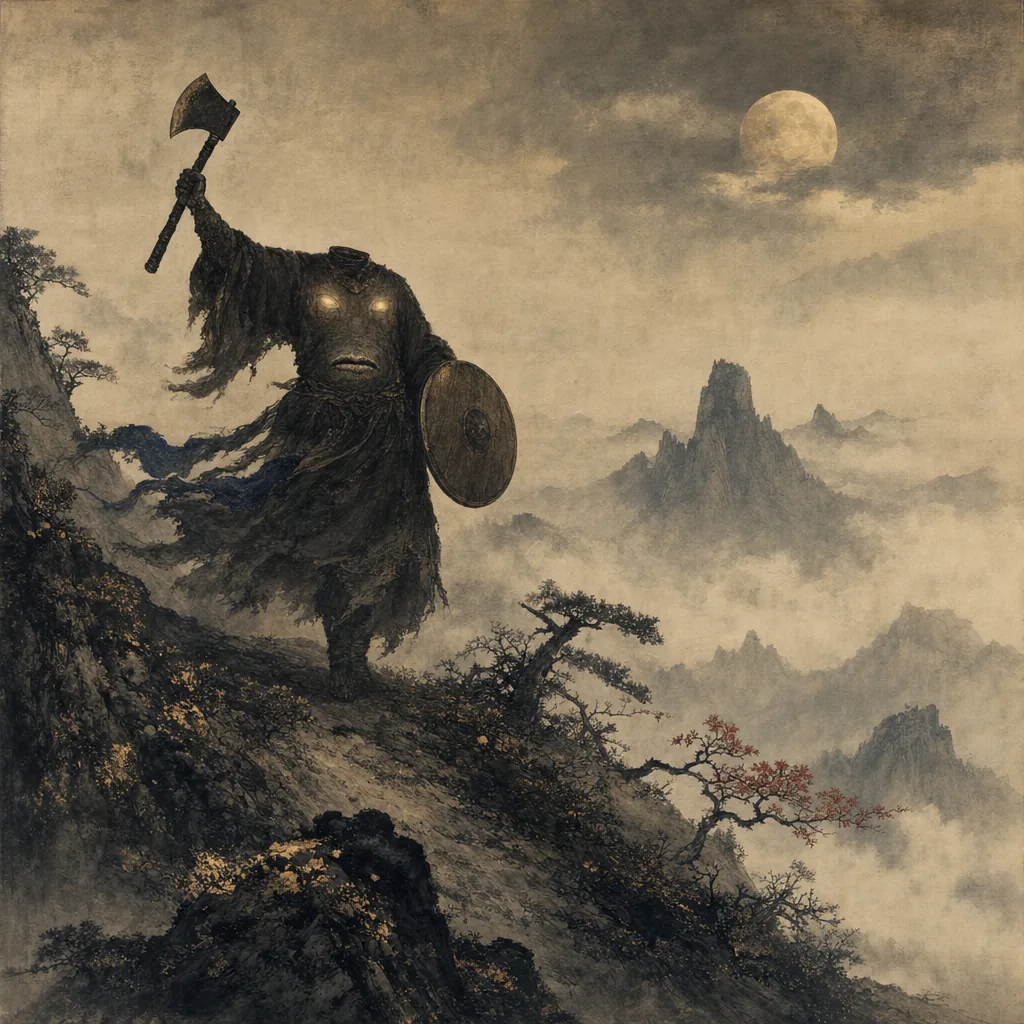
The Dance of Xing Tian
Subscribe to read this chapter.
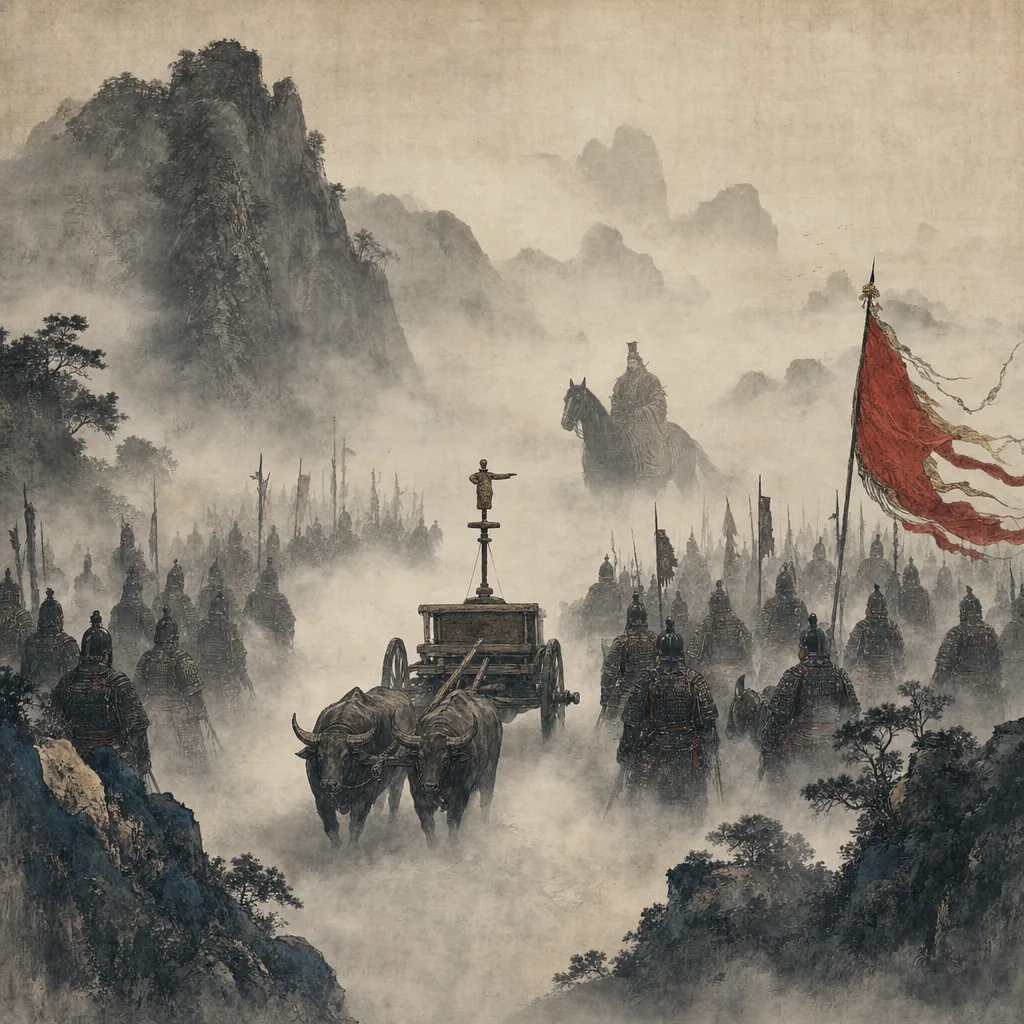
The Yellow Emperor and the Fog of War
Subscribe to read this chapter.
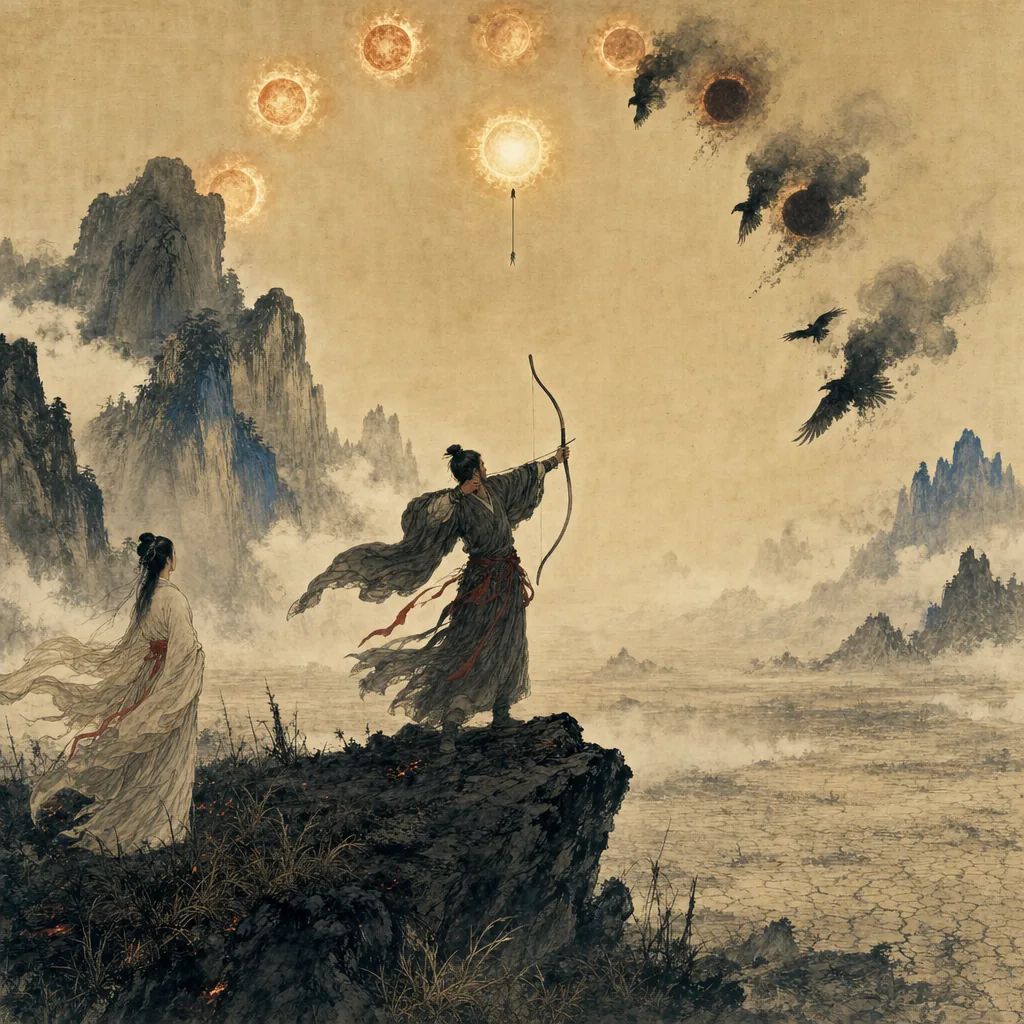
Hou Yi Shoots the Suns
Subscribe to read this chapter.
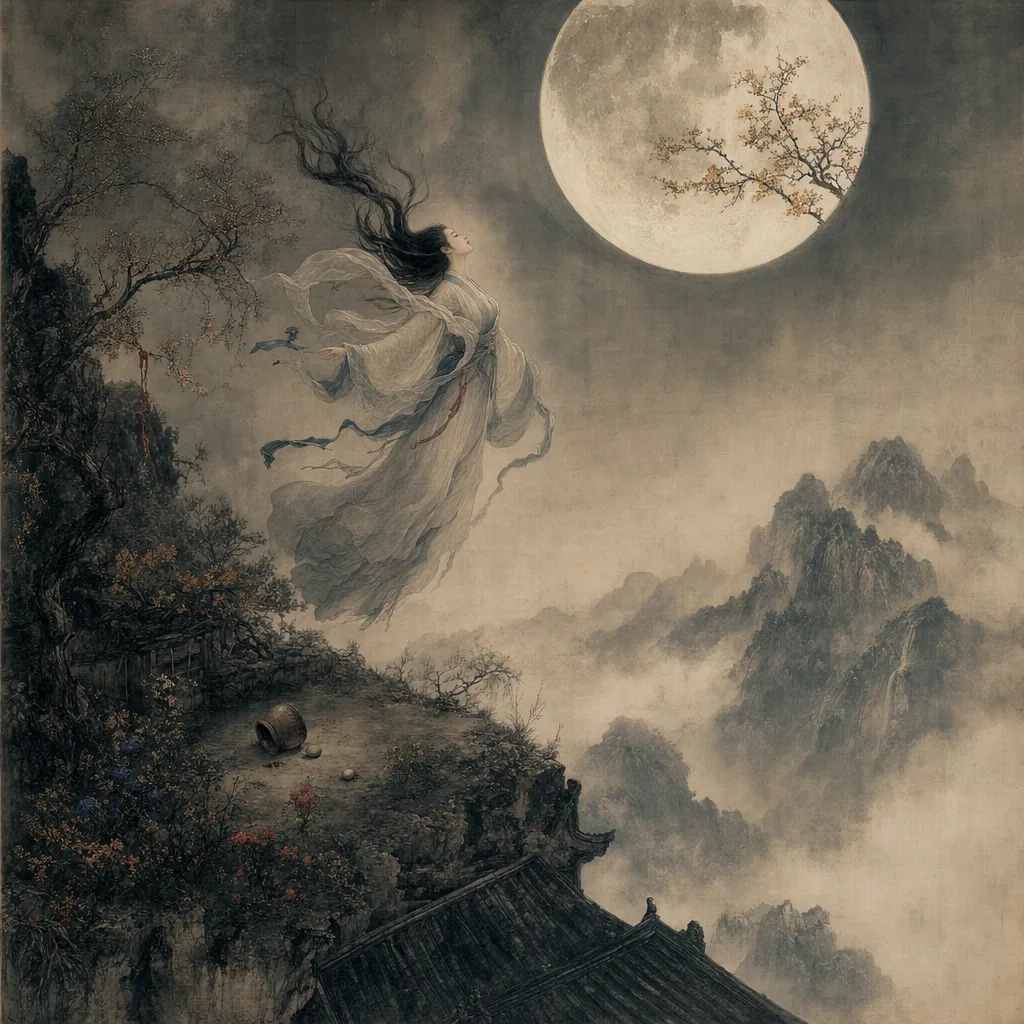
Chang'e Ascends to the Moon
Subscribe to read this chapter.
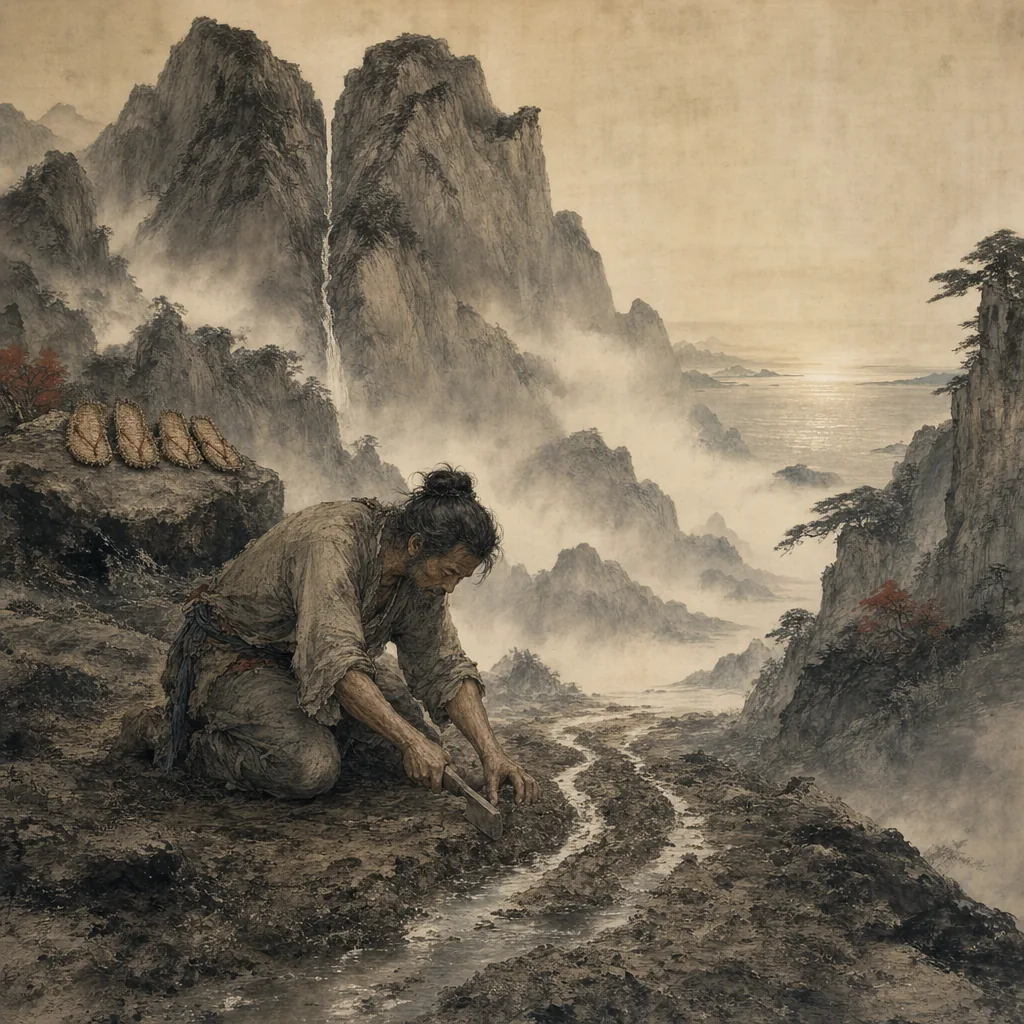
Yu the Great and the Flood
Subscribe to read this chapter.
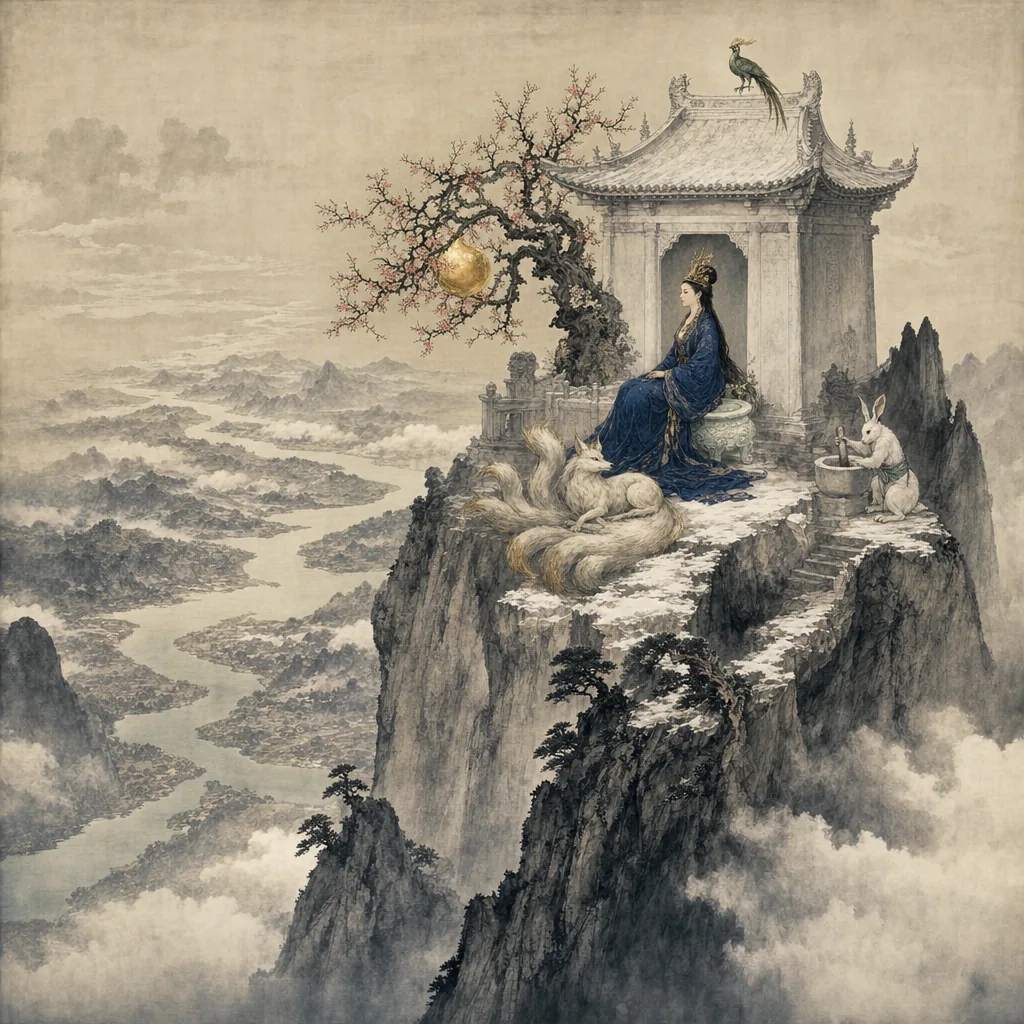
Xi Wang Mu of Mount Kunlun
Subscribe to read this chapter.