Free and Easy Wandering
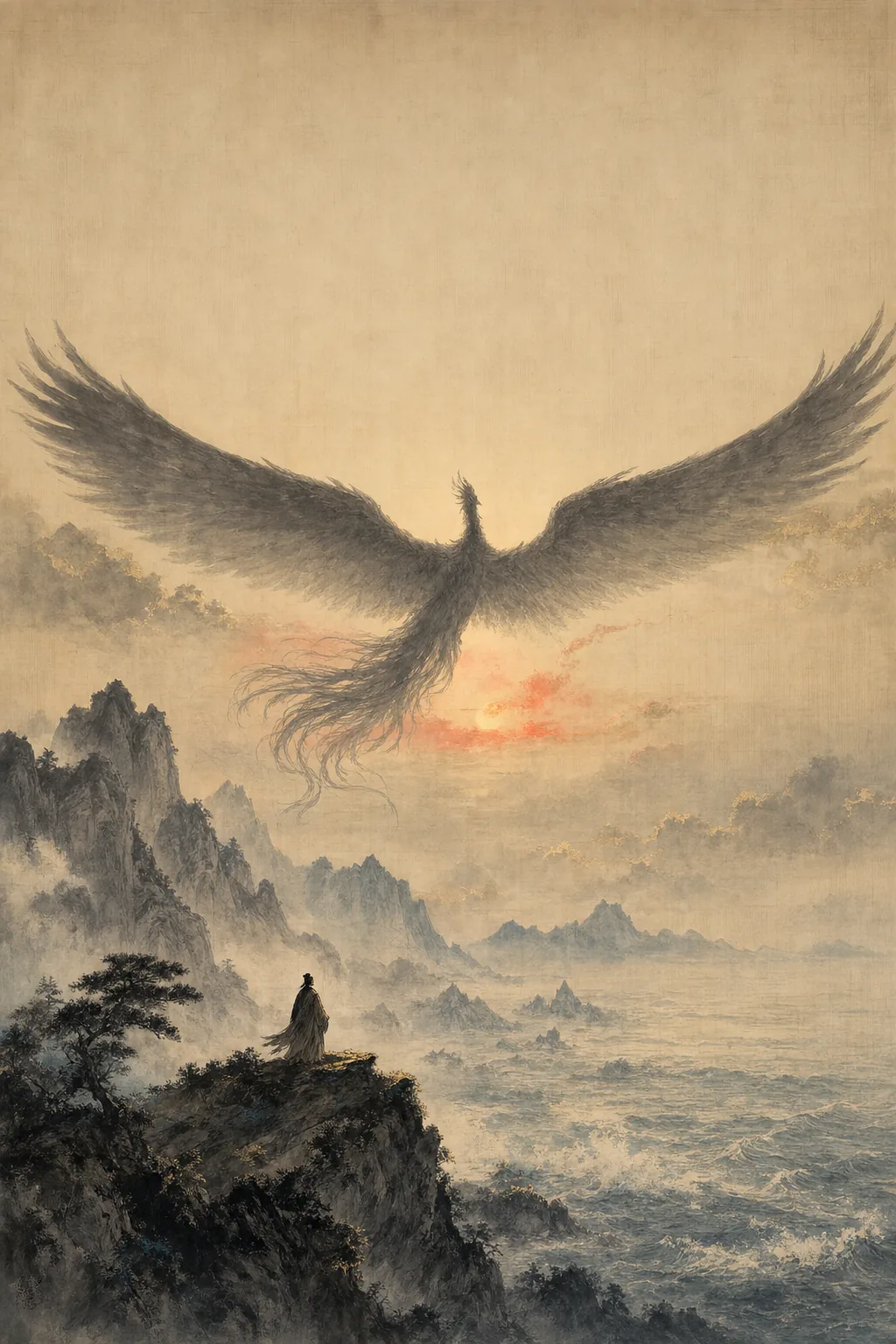
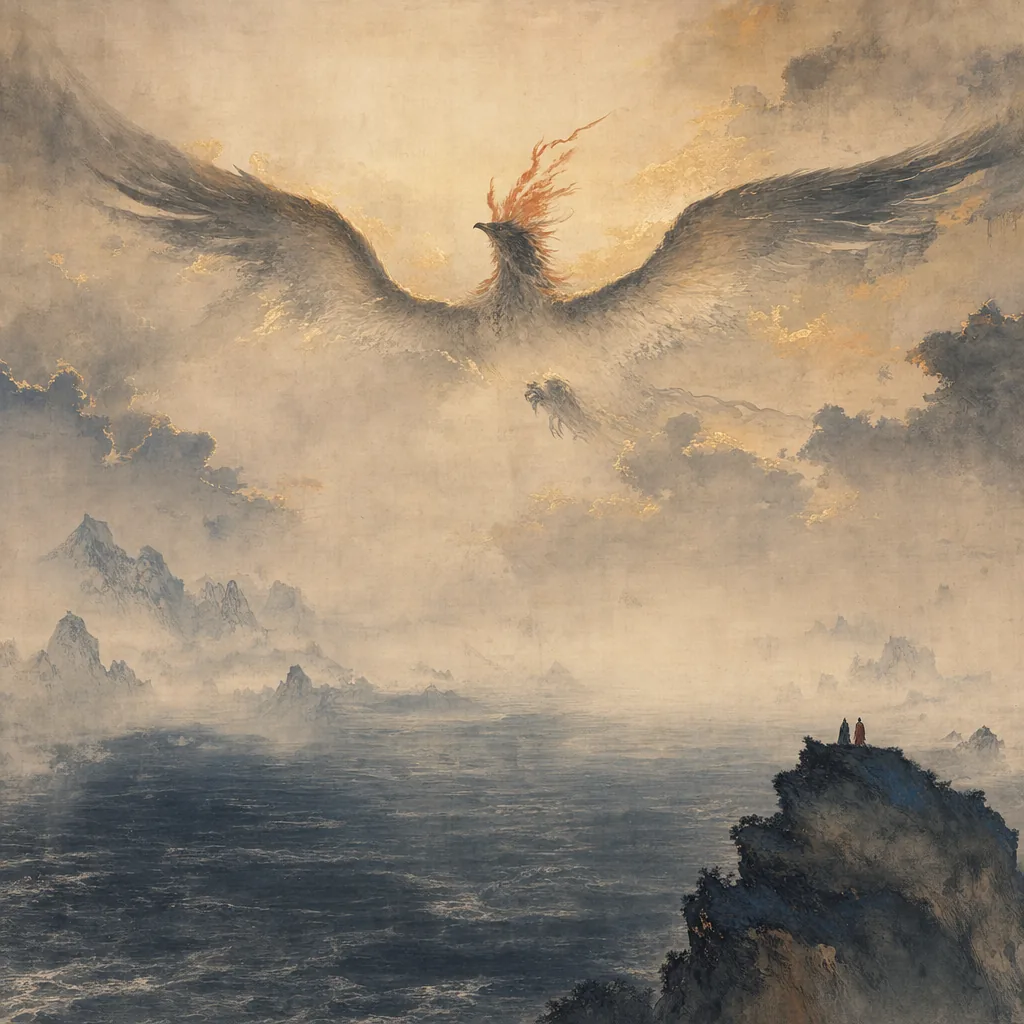
In the dark waters of the northern ocean lives a fish called Kun. No one knows how many thousand miles it stretches. When the season turns, Kun changes — its scales become feathers, its tail a great spreading sail. It rises from the sea as the bird Peng, whose back is wide as a country, whose wings when he climbs are like clouds reaching across the sky.
Peng beats the water for three thousand miles before he can lift. He spirals on the rising air for ninety thousand miles. Only then does he begin his crossing to the southern ocean, the Pool of Heaven. Six months later, he descends.
A cicada and a small dove laugh at him from the bushes. We fly when we want, the cicada says. We rise to the elm and stop, or we fall back to the ground. What is all this talk of ninety thousand miles? What is south?
The man who walks to the next village packs a single meal. The man who walks a hundred miles grinds rice for the night. The man who walks a thousand miles gathers provisions for three months. What does the small bird know of distance?
There are knowers whose understanding fills a single office. There are people whose virtue suits a single village. There are rulers whose competence matches a single state. They look at themselves the way the cicada looks at itself, and they are pleased.
Then there is Song Rongzi, who could be praised by the whole world without growing prouder, and condemned by the whole world without growing smaller. He had located the line between the inside and the outside. Even so, something in him was not yet rooted.
Liezi could ride the wind. He went lightly for fifteen days at a time before returning. He had freed himself from walking. Yet he still depended on the wind. The truly free man rides the breath of heaven and the changes of the six energies, wandering in the boundless. Such a man depends on nothing.
Hui Shi came to Zhuangzi and complained: The king of Wei gave me the seed of an enormous gourd. I planted it. The gourd that grew was so vast that when I tried to fill it with water, its own weight broke it. When I cut it into ladles, the ladles were too wide for any pot. I shattered the thing. It was useless.
You are clumsy with what is large, Zhuangzi said. There was a man in Song who knew how to make a salve that kept hands from cracking in winter. His family used the salve to wash silk in cold rivers, generation after generation. A traveler bought the formula for a hundred pieces of gold. He sold the formula to the king of Wu. That winter, Wu fought a sea-battle against Yue, and the king's soldiers, hands unbroken in the cold, won. The traveler was given a fief. Same salve. Different use.
You have a gourd as large as five bushels. Why not lash it to your waist and float on the rivers and lakes? You complain it has no use because you cannot put it in a kitchen.
Hui Shi tried again: I have a tree. Its trunk is so knotted no carpenter would touch it. Its branches are so twisted no surveyor's line will lie on them. It stands by the road, useless.
Why not plant it, Zhuangzi said, in the village of Nothing-Whatever, in the wilds of nowhere, and stretch out under it doing nothing? An axe will never come for it. Nothing in the world will harm it. Where is the trouble in being of no use?
The Equality of Things
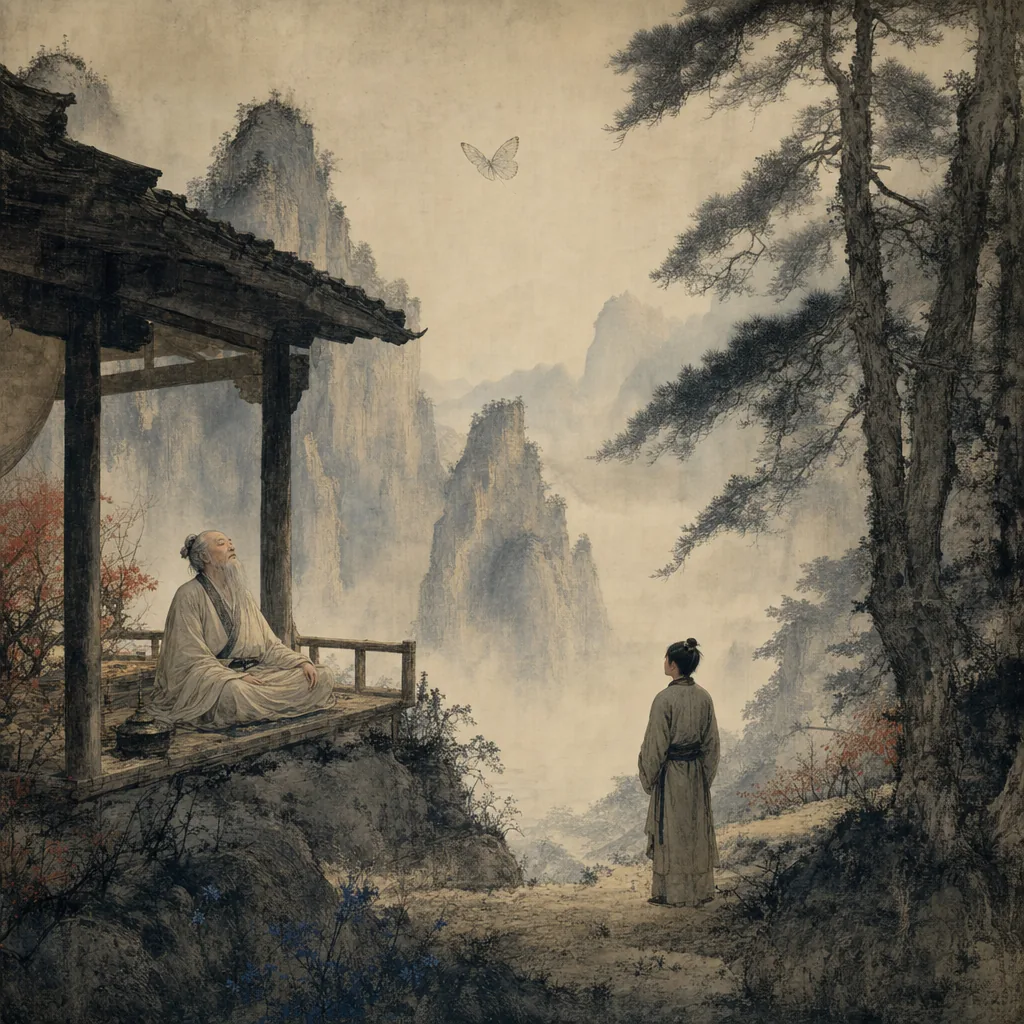
Ziqi of the South Wall was sitting against his armrest, breathing slowly, looking up at the sky. He seemed to have lost his other half, the one always in him. Yancheng Ziyou stood before him, watching.
What is this, the disciple asked. Can a body be made like dry wood, and a mind made like dead ashes? The man leaning on this armrest today is not the man who leaned on it yesterday.
A good question, Ziqi said. Today I have lost myself. Do you understand what that means? You have heard the piping of men. You have heard the piping of earth. You have not yet heard the piping of heaven.
The piping of men is flutes and bamboo. The piping of earth is wind passing through the great forest, where every hollow in every trunk gives a different cry — some like a drinker's gasp, some like a hush, some like a snarl, some like the sound of weeping. When the wind drops, the forest is silent. The piping of heaven is something else. It blows on the ten thousand things, and each gives its own sound. Each thing chooses its own cry. Who is the one blowing?
Words are not just blown air. Words are about something. But what they are about is unsettled. Are they really speech? Or only the chirping of fledglings in the nest? Right and wrong appear, and the moment they appear they multiply, and where they multiply the Way is hidden, and where the Way is hidden the great dispute begins.
Some say a thing exists. Some say it does not. From the standpoint that it exists, it exists. From the standpoint that it does not, it does not. A road is made by walking. Things are so by being called so.
In matters of right and wrong, sages do not pick sides. They illuminate from heaven. To affirm the affirmation of the other is to mistake yourself for them. The sage uses neither yes nor no, and lets the contraries rest on the lathe of heaven.
A monkey-keeper handing out chestnuts said, Three in the morning and four at night. The monkeys all flew into a rage. He said, All right, four in the morning and three at night. The monkeys were delighted. The total had not changed. Only the words had moved. He had simply followed the way the monkeys felt.
Suppose you and I are arguing. If you defeat me, are you really right and am I really wrong? If I defeat you, am I right? Are we both partly right? Then who can decide? If we get someone who agrees with you, that person already agrees with you. If we get someone who agrees with me, that person already agrees with me. If we get someone who agrees with neither, that person can decide nothing.
Once Zhuang Zhou dreamed he was a butterfly, fluttering and content, going where he liked, knowing nothing of Zhou. Suddenly he woke. He was solidly Zhou again. But now he could not tell. Was Zhou dreaming he was a butterfly? Or was a butterfly dreaming it was Zhou? Between Zhou and the butterfly there must be some difference. This is what we call the transformation of things.
The rest is waiting.
58 illustrated classics. Cinematic, anime, and kids editions. $4.99 a month — about the price of a coffee.
The Secret of Caring for Life
Subscribe to read this chapter.
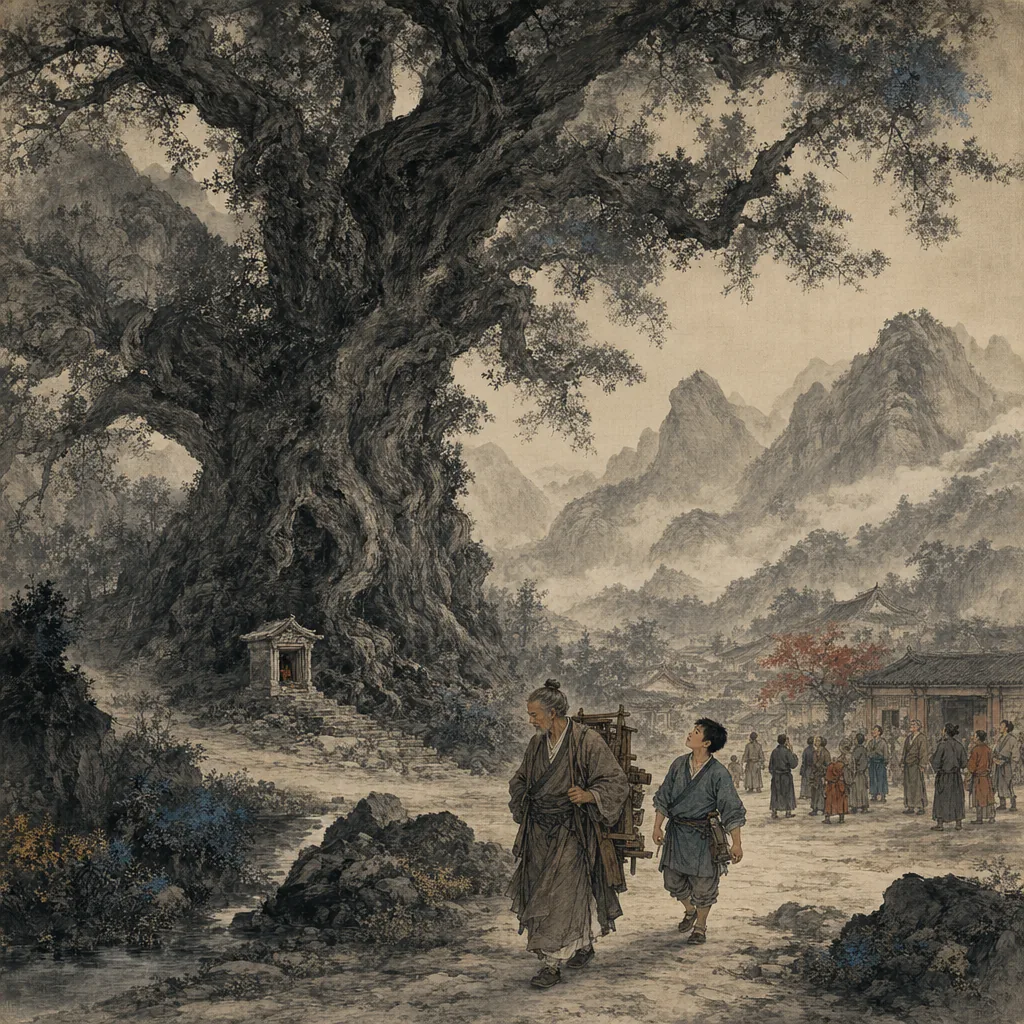
In the World of Men
Subscribe to read this chapter.
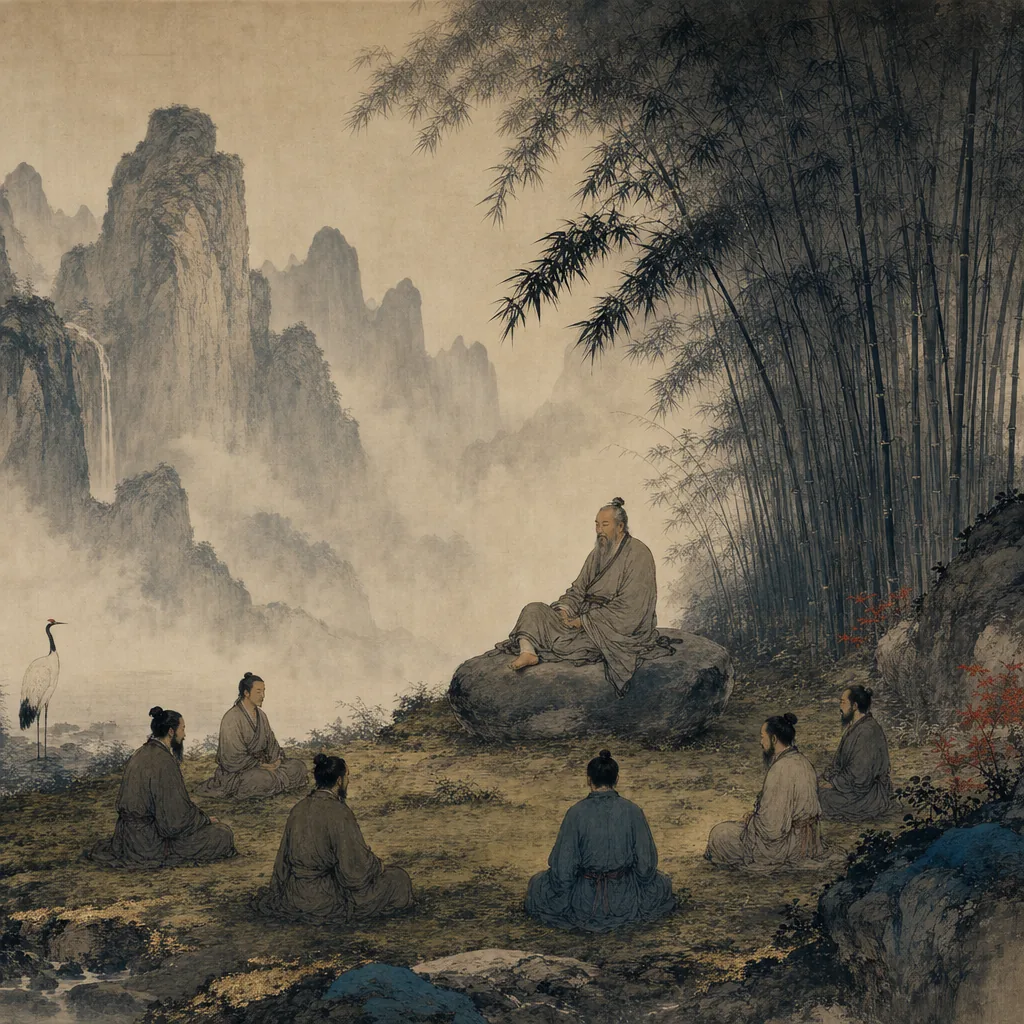
The Sign of Virtue Complete
Subscribe to read this chapter.
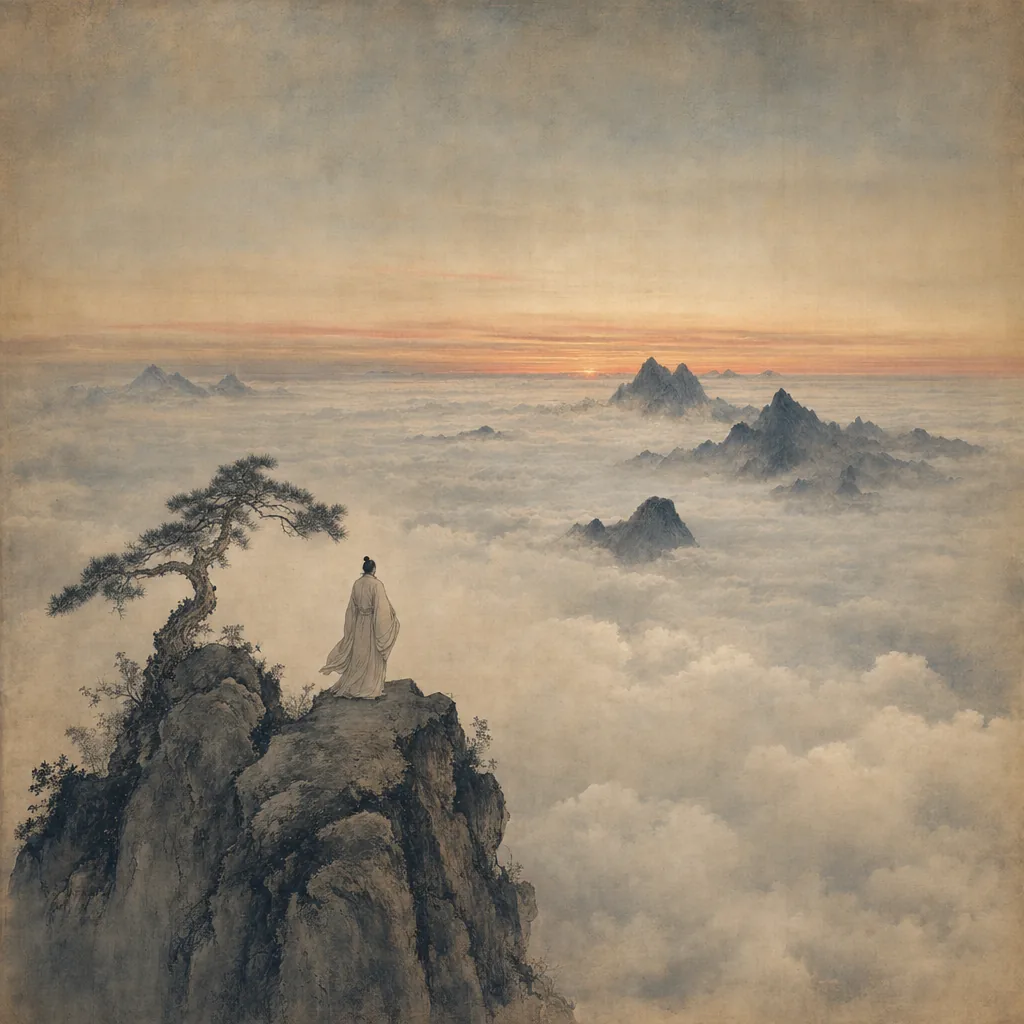
The Great and Venerable Teacher
Subscribe to read this chapter.
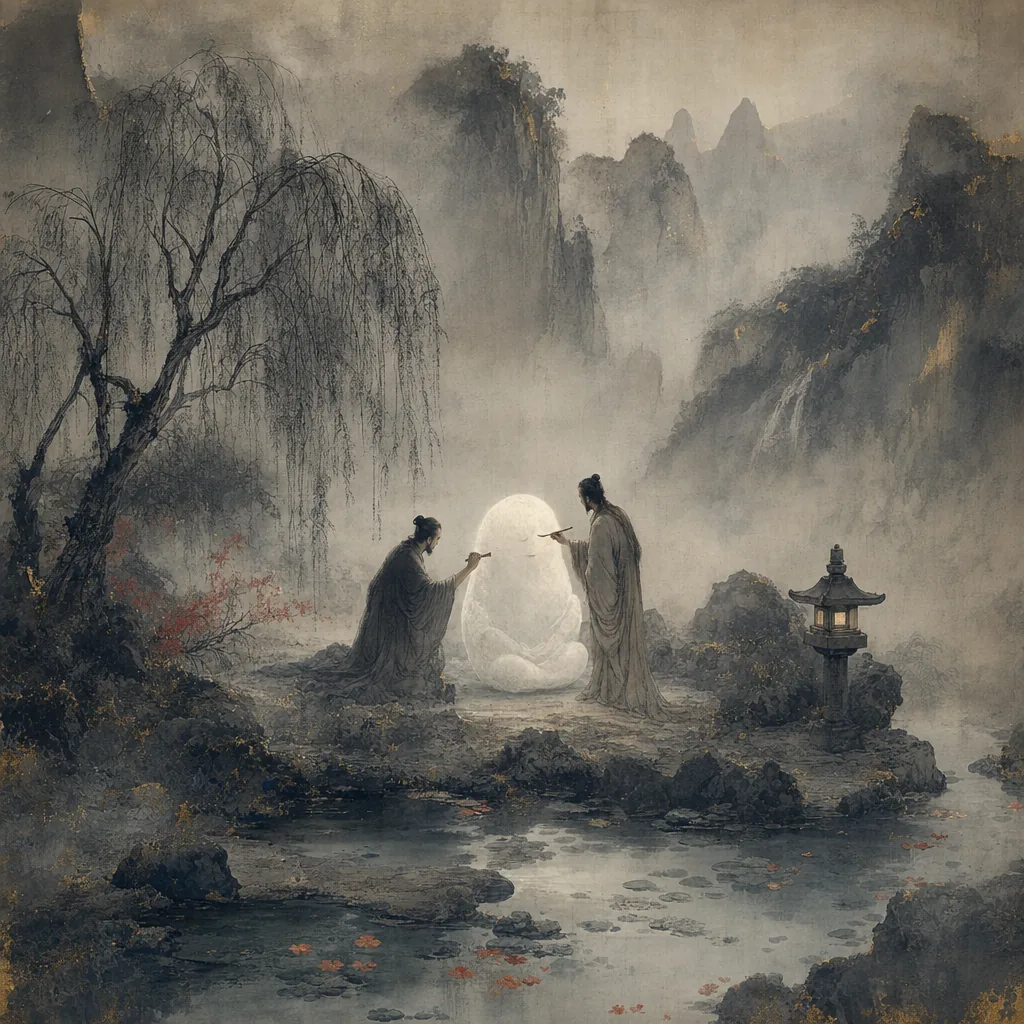
Fit for Emperors and Kings
Subscribe to read this chapter.